Mr. Amos Kwabena Osei, a 53-year-old businessman, has been adjudged the overall Best Farmer in the Juaben Municipality at the 41st National Farmers’ Day celebration held at Peminase.
The award recognises his outstanding commitment, contributions, and long-standing dedication to agriculture in the municipality.
Mr. Osei is actively engaged in livestock rearing, including cattle, goats, pigs, and sheep, as well as crop cultivation and cocoa farming across several communities in Juaben.
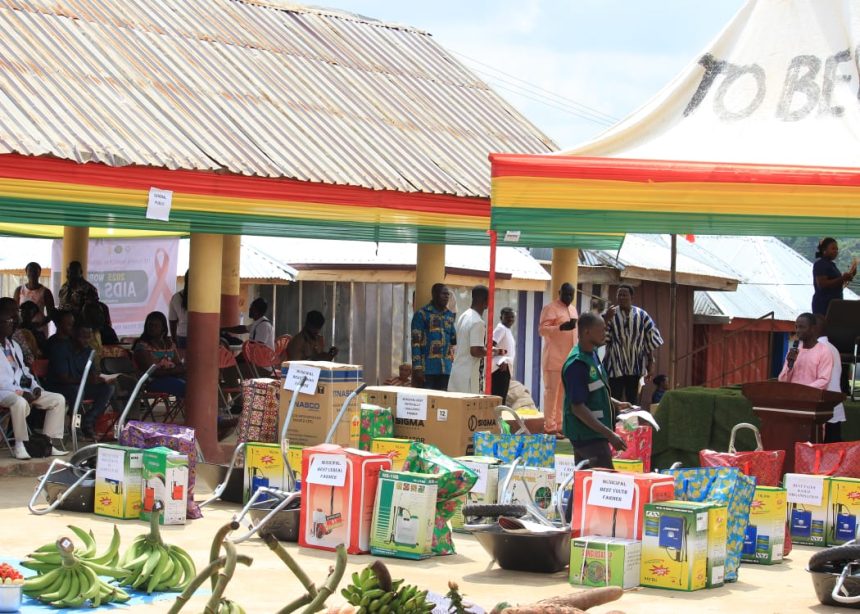
For his prize, he received a tricycle, a pair of wellington boots, a knapsack sprayer, cutlasses, farm inputs, and a certificate.
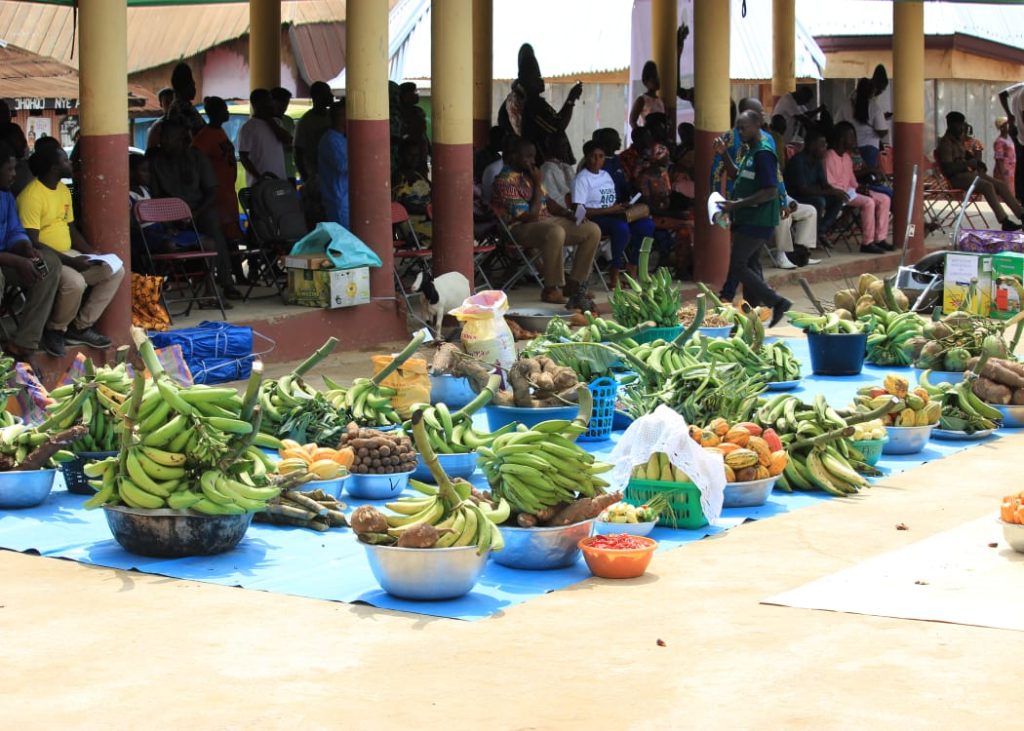
In total, 16 distinguished farmers were honoured for their achievements under the national theme: “Feed Ghana, Eat Ghana, Secure the Future.”
Mr. Osei thanked the Municipal Agriculture Department for their guidance and the Municipal Assembly for their continuous support.
He encouraged the youth to take up farming, noting that agriculture had enabled him to build a hotel and support three of his children to travel abroad.
He also appealed to the government to introduce soft loans for farmers, stressing that limited access to finance remained a major barrier preventing many young people from venturing into agriculture.
Mr. Alex Adu-Gyamfi, the Municipal Director of Agriculture, urged farmers to make effective use of extension officers in their communities to improve their practices and increase yields.
Mrs. Eunice Ohenewaa Ansu, the Municipal Chief Executive (MCE), commended farmers for their resilience and immense contribution to sustaining the local economy.
She said farmers remained the backbone of national development, and the theme for the celebration reflected Ghana’s commitment to ensuring long-term food security.
The MCE outlined flagship programmes under the government’s Agriculture Modernization Agenda, including the Nkoko Nketenkete Poultry Initiative, the Agricultural Modernization Fund, expanded mechanization services, irrigation development, youth agribusiness initiatives, and support for value addition and agro-processing.
These interventions, she noted, were aimed at reducing food imports, boosting local production, and creating jobs.
GNA