The Volta River Authority (VRA) has underscored the critical role of engineers in steering Ghana’s transition to reliable, renewable, and resilient energy systems.
The Authority during the 33rd Annual Conference of the Society of Volta River Authority Engineers (SOVRAE) therefore called on its engineers to lead Ghana’s shift to renewable and resilient energy systems, emphasizing innovation and sustainability at the Conference held in Asuogyaman.
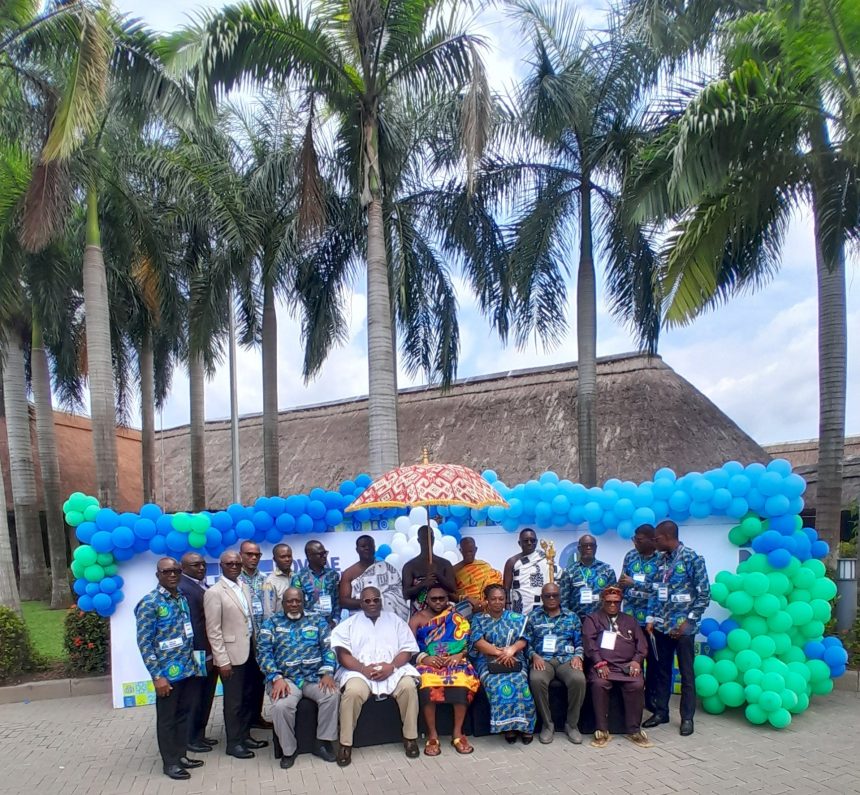
The one-day conference, themed “Engineering the Energy Transition: Reliable, Renewable and Resilient,” brought together policymakers, traditional leaders, engineers, and energy experts to deliberate on practical steps toward sustainable energy development in Ghana and Africa.
Opening the event, VRA Chief Executive Mr. Edward Obeng-Kenzo, an engineer, commended SOVRAE for its partnership with management, noting that the collaboration had strengthened the Authority’s quest to become “a model of excellence for power utilities in Africa.”
He stressed that VRA and SOVRAE shared a common goal: advancing Ghana’s socio-economic development through engineering excellence and innovation.
“It is of utmost necessity for VRA and SOVRAE to continue to collaborate to influence public policy, sustain our campaign towards the growth of engineers, and build a sustainable authority,” he said.
Mr. Obeng-Kenzo highlighted global energy discussions, including the upcoming climate conference in Brazil, as reminders of Africa’s need to embrace renewables.
“Africa is blessed with abundant sunshine, and the renewable energy drive, particularly solar, presents a unique opportunity for us,” he said, cautioning that “since the sun does not shine 24 hours a day, we must have a reliable base load generation that complements renewable opportunities.”
To achieve this balance, he revealed VRA’s plan to deploy over 1,000 megawatts of combined-cycle power plants within five years, sourced from efficient plants worldwide and relocated to Ghana.
“Our strategic focus is to deliver affordable and reliable electricity because Africa cannot develop without it,” he added.
He noted that the Akosombo Dam, one of the world’s largest electricity storage facilities, positions Ghana to integrate variable renewables effectively within the West African grid.
“The energy transition is not just a global trend; it is our responsibility. VRA must lead the charge through innovation and collaboration,” he stated.
Representing the Akwamumanhene, Nana Akonnor Bekai Ababio V, Osomanyawa of Akwamu State praised VRA engineers for diversifying Ghana’s energy mix from hydro-only generation to include thermal and renewables.
“Energy is not just a technical or corporate issue, it affects communities, culture, and livelihoods,” he said, urging continued investment in solar, wind, and hybrid systems while respecting community interests.
“Projects must include impacted communities from the start. Resettlement, livelihood restoration, and local employment matter greatly for total buy-in,” he advised.
He assured VRA of traditional leaders’ support in facilitating land access and partnerships, adding:
“Engineering projects and traditions alike must be built to last generations. Let us build not just for today, but for the next 50 years.”
The Guest of Honour, Mrs. Carlien Bou-Chedid, engineer, and Past President of the Federation of African Engineering Organisations, encouraged engineers to explore wind energy and green hydrogen development.
“The concept of net zero requires balancing emissions rather than eliminating them entirely,” she explained.
But cautioned that, “Africa still needs energy to develop, but we must produce it responsibly. Energy transition must help us end poverty and achieve the UN’s 2030 Sustainable Development Goals and the African Union’s Agenda 2063.”
Mrs. Bou-Chedid called for greater investment in energy storage, capacity building, and policies that attract private investment into renewables.
She also urged more training in solar energy to position Ghana as a hub for clean energy and green hydrogen production.
The conference reaffirmed VRA engineers’ commitment to accelerating Ghana’s energy transition through innovation, sustainability, and inclusive development, ensuring the nation’s lights remained on while protecting future generations.