
A collaboration between the Department of Children under the Ministry of Gender, Children and Social Protection, in collaboration with Royal Dutch Visio, has strengthened efforts to enhance early detection and care for visually impaired children.
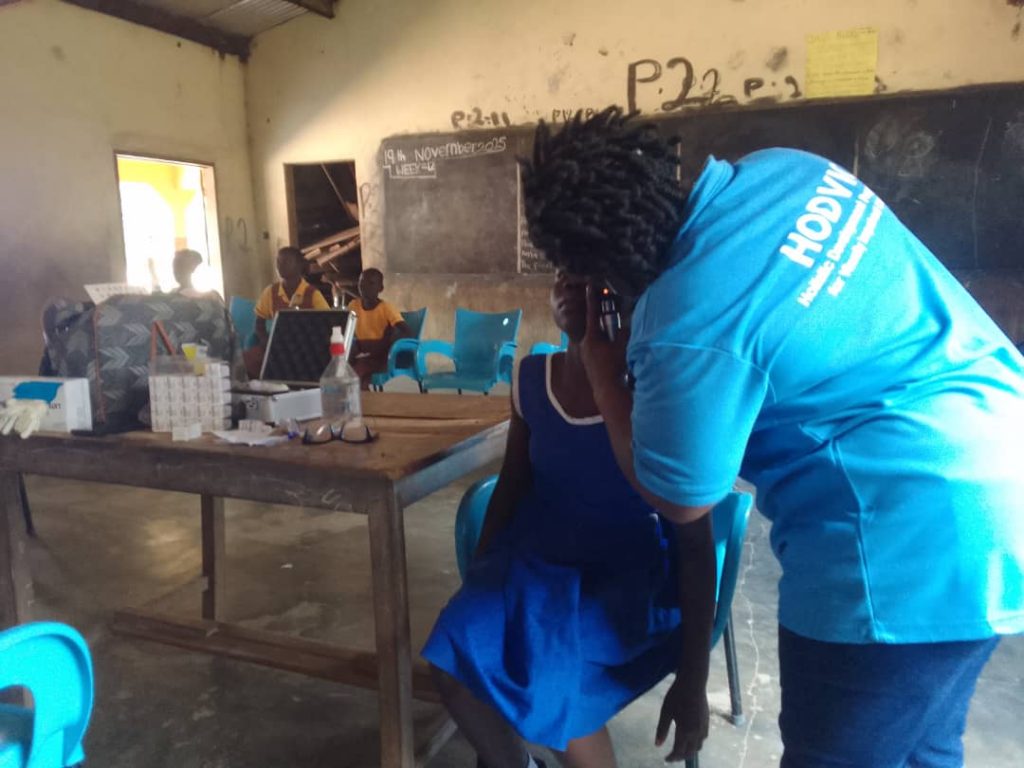
The partnership through a community sensitisation programme and free eye screening exercise at Mafi Dedukorpe in the North Tongu District has brought some relief to beneficiaries.
The initiative forms part of the Holistic Development Programme for Visually Impaired Children (HODVIC), a national intervention ongoing for the past five years, focused on identifying and supporting children aged 0–15 years with visual impairment through screening, assessment, referral, treatment, and continuous family support.
Speaking on behalf of Mr Israel Akrobortu, Regional Director of the Department of Children, Madam Nancy Anyri reaffirmed Ghana’s commitment to child rights, noting that the country was the first to ratify the UN Convention on the Rights of the Child.
She said the principles of non-discrimination, survival and development, and the best interest of the child required that visually impaired children be given equal access to healthcare, education, and social protection.
“Our purpose is to sensitise parents, caregivers and community members on the causes and management of visual impairment, conduct eye screening, identify affected families, and form parent support groups.
These children deserve full protection and opportunities to become productive citizens,” she emphasised.
Mr Albert Henyo, North Tongu District Social Welfare Officer, said visually impaired children often experienced developmental delays due to limited sight, making early intervention critical.
He noted that many parents lacked adequate knowledge to manage such children, resulting in preventable challenges.
“We are educating parents, teachers, and the wider community to understand visual impairment and eliminate stigma. Screening enables us to determine the degree of impairment and make the necessary medical referrals. The involvement of the Battor Catholic Hospital eye team ensures that children who need specialised attention are attended to promptly,” he said.
He urged parents not to hide affected children due to stigma, describing early identification and community support as vital to improving outcomes.
Ms Jennifer Akorfa Sackey, a representative from the Ministry of Gender, said parent support groups formed under the programme received psychosocial counselling and livelihood training to empower families economically and emotionally.
“Many parents keep visually impaired children indoors due to fear of discrimination or beliefs that the condition is a curse. We are educating communities to understand that visual impairment is not spiritual. With proper training and orientation, these children can live independently and function like any other child,” she stated.
The programme is supported by Visio International, the Presbyterian Health Services and the Department of Children, and continues to expand across communities in the country.
GNA