
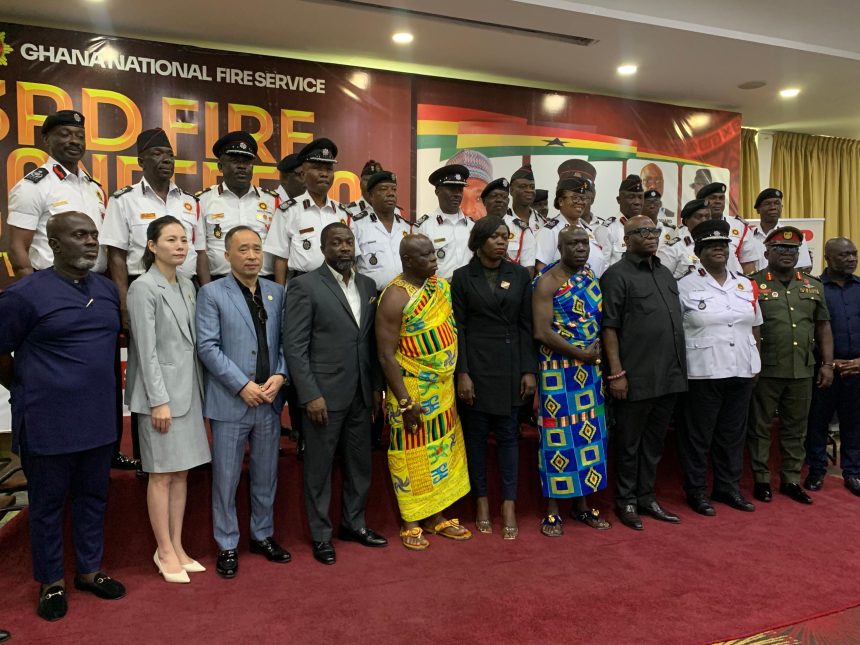
Mrs Daniella Mawusi Ntow-Sapong, Acting Chief Fire Officer, has called for sustained and coordinated stakeholder support to adequately resource the Ghana National Fire Service (GNFS) as it confronts complex fire and rescue challenges across the country.
She said meeting the growing demands of modern firefighting required not only logistics and fire appliances but also continuous investment in training, research, digital innovation and stronger partnerships.
Mrs Ntow-Sapong made the call at the third Fire Conference in Accra on the theme: “Resourcing the Ghana National Fire Service: The Role of Stakeholders.”
She said the theme underscored the nation’s shared responsibility to enhance fire safety through contributions from government, the private sector, development partners, civil society, the media and the public.
The Acting Chief Fire Officer noted that rapid urbanisation, industrial expansion, technological advancement and changing climate patterns were introducing new and evolving fire risks, making firefighters’ work more demanding, necessitating long-term investment.
Resourcing the GNFS must go beyond procuring fire tenders and logistics, she said, adding that the Service needed capacity building and specialised training.
“The Service requires sustained investment in training, research, digital innovation and stakeholder cooperation,” she said.
Mrs Ntow-Sapong disclosed that market fire prevention squads, comprising fire officers and Youth Employment Agency personnel, had been deployed to high-risk markets to educate traders and conduct routine patrols to reduce market fires.
The Service would soon introduce a fully digitised fire safety certification and inspection system to promote efficiency, transparency and accountability in compliance monitoring.
Highlighting logistical constraints, she said many fire tenders had become obsolete, with some in use for more than 15 years, while about 80 districts lacked fully functional fire stations, placing heavy burdens on neighbouring stations.
She emphasised the need for more professionals in industrial fire management, marine fire response, disaster coordination, forensic investigation and fire safety engineering.
“These challenges cannot be solved by government funding alone. A sustainable and well-coordinated partnership with all stakeholders is essential,” Mrs Ntow-Sarpong said.
She encouraged the private sector to support the GNFS by adopting or constructing fire stations, donating equipment, sponsoring specialised training and funding community fire safety initiatives as part of their CSR commitments.
She urged the media to intensify fire safety education and advocate for improved resourcing, and appealed to citizens to comply with safety regulations, report incidents promptly and join volunteer programmes to boost emergency preparedness.
“When we work together to resource the Ghana National Fire Service, we build a nation where every home, school, workplace and public space is fire-safe,” she said. “We protect investments, safeguard lives and secure the future for generations to come.”
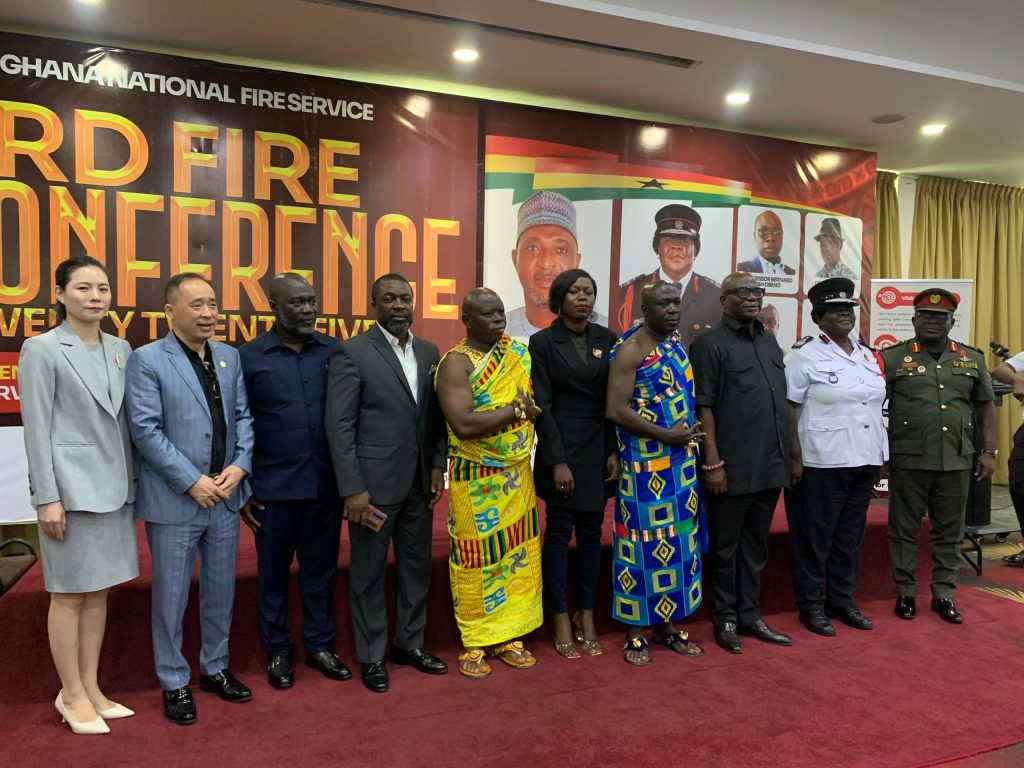
Mr Ebenezer Okletey Terlabi, the Deputy Minister for the Interior, echoed the call for stronger support, noting that fire safety was a collective national duty.
He said the private sector must invest in fire safety infrastructure, provide equipment through CSR initiatives and ensure high safety standards in their facilities.
Mr Terlabi announced that government was working to establish a Domestic Emergency Services Fund to provide predictable financing for emergency services, including the GNFS, to improve response without delays tied to budget approvals.
He acknowledged challenges such as outdated fire tenders and the absence of functional fire stations in some districts, and commended GNFS personnel for their courage and dedication.
“You run towards the flames when others run away. You risk your lives every day to protect our nation,” he said.
Nana Ofori Ahenkan II, Chairman of the Fire Service Council, called for a unified national strategy to address rising fire incidents and resource constraints.
He said from July to September alone, the GNFS responded to more than 1,124 fire incidents nationwide, and urged government to provide policy direction, funding and legislative backing to strengthen the Service.
GNA