
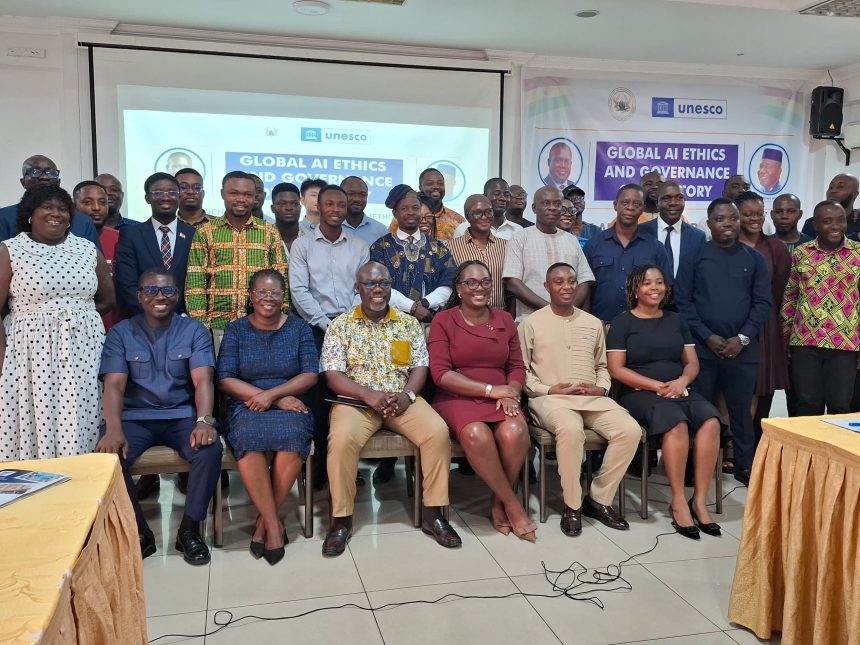
Ghana and UNESCO on Thursday launched the Readiness Assessment Methodology (RAM) for Ethical Artificial Intelligence (AI) to strengthen national systems for the safe and responsible deployment of emerging technologies.
The initiative, led by UNESCO, in collaboration with the Ministry of Communication, Digital Technology and Innovation, forms part of efforts to catalyse Ghana’s preparedness for the ethical use of AI across key sectors.
Mr Samuel Nartey George, the Communications minister, in a statement read on his behalf, said the introduction of the framework marked “a significant milestone in Ghana’s journey towards responsible, inclusive and ethical deployment of artificial intelligence.”
He said AI was reshaping economies and institutions worldwide and had the potential to enhance sectors such as healthcare, education, climate action and innovation.
However, he said challenges relating to bias, privacy breaches, misinformation and surveillance required deliberate safeguards.
“If AI systems are deployed without the right safeguards, policies and institutional will, these challenges may deepen inequality and undermine public trust,” he stated.
The Minister said Ghana considered ethical AI governance a priority and remained committed to working with UNESCO to align national systems with global standards.
The assessment, he explained, would evaluate the robustness of existing laws, skills, institutions and infrastructure, and identify gaps for strengthening governance.
“By adopting this methodology, Ghana seeks to understand opportunities for designing stronger, future-ready AI governance structures,” he said.
Mr George said the Ministry would introduce a National AI RAM Steering Committee to provide strategic oversight and coordinate the assessment process.
It would work closely with UNESCO and support capacity-building for national consultants and technical teams.
Mr Carl Ampah, National Programmes Officer at UNESCO, said ethical considerations were inseparable from AI deployment, noting that the technology held immense potential but carried significant risks if not managed responsibly.
“AI systems are only as unbiased as the data they are trained on,” he said, adding: “If we are not vigilant, these systems can inadvertently perpetuate and even amplify existing inequalities.”
He said promoting fairness, transparency and inclusiveness in AI systems was essential to ensuring that the technology benefitted all segments of society.
The outcomes of the assessment would enhance Ghana’s ability to harness AI for development.
Ghana is developing frameworks to guide the safe deployment of emerging technologies as part of broader digital transformation efforts.
The launch brought together regulators, private-sector actors, academia, civil society and innovators to discuss the ethical and societal implications of AI and contribute to Ghana’s ongoing National AI Strategy.