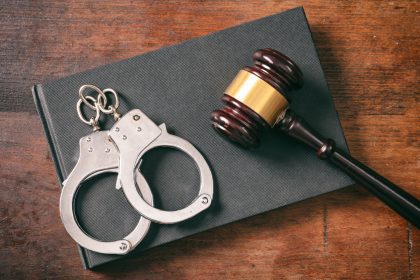
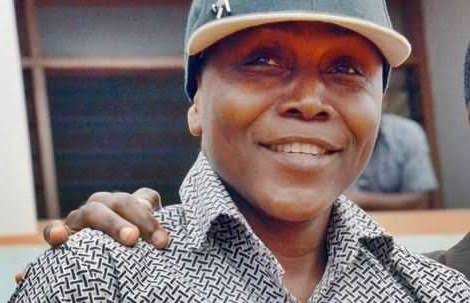
A High Court in Accra has freed Gregory Afoko, ending one of Ghana’s longest and most politically fraught murder cases after more than a decade of arrests, retrials and procedural delays. Justice Marie-Louise Simmons on Monday discharged Afoko and his co-accused, Asabke Alangdi, bringing to a halt a third trial that had stalled for months.
In her ruling, Justice Simmons recounted how the prosecution had repeatedly failed to move the case forward. After the second trial ended in April 2023 with a hung jury, the court ordered that the two men be tried again before a new panel. That third trial opened in early 2024 with the state announcing it would call 16 witnesses. Over the following months only five appeared. From April to November last year the case was marked by adjournments requested by the prosecution, with no meaningful progress.
On Monday, when the case was called, no prosecutor was present to explain the status of the trial. Only five of the seven jurors were in court. The judge noted that jurors had been repeatedly summoned and that the state continued to incur or would incur costs, yet the prosecution had not taken the steps needed to advance the case. She then discharged the accused and formally dissolved the jury.
The decision closes a saga that began nearly eleven years ago. On the night of May 20, 2015, Adams Mahama, then Upper East Regional Chairman of the New Patriotic Party, was attacked outside his home with a corrosive substance later confirmed to be acid. He died shortly afterwards. Prosecutors alleged that Afoko and Alangdi ambushed him as he arrived in his pickup and threw the acid on him from the passenger side window. Mahama’s wife suffered burns while attempting to help him. A post-mortem report cited extensive acid burns and severe shock to the lungs as the cause of death.
Afoko was arrested the day after the attack. He spent almost a decade in custody, much of it on remand, as the case moved through various courts. In February 2025 he was granted bail of 500,000 cedis with sureties after years of unsuccessful attempts. He was released under conditions that required regular reporting to the police.
The ruling also closes a complex legal history. The first trial, which began in 2016, was well advanced when it was abruptly terminated in early 2019 after the Attorney-General entered a nolle prosequi, following the arrest of Alangdi, who had earlier fled. Afoko challenged that decision at the Supreme Court but lost. A second trial, involving both men, began later in 2019. In April 2023 the jury returned a mixed decision. A narrow majority found Afoko not guilty of murder and conspiracy. The jury also returned a 4–3 not-guilty verdict for Alangdi on the murder charge but unanimously convicted him of conspiracy, leading to a death sentence. Because the murder charges did not attract unanimous verdicts, the law required a retrial, resulting in the third trial that has now collapsed.
The long-running case has become emblematic of wider concerns about criminal justice in Ghana, particularly the length of pre-trial detention, the use of nolle prosequi, and the strains on the jury system. Even before Monday’s ruling, legal commentators had pointed to the Afoko proceedings as an example of how prosecutorial discretion and repeated adjournments can stretch cases far beyond reasonable limits.
With the charges now dropped and the jury dissolved, the legal process in the Adams Mahama case has effectively come to an end. For Afoko and Alangdi, the decision brings freedom after more than ten years spent navigating a case that travelled from the police station to the trial courts and, at several points, to the country’s highest bench.