TradeAid Integrated, a non-governmental organisation, has commemorated its 25th anniversary with a renewed commitment to intensify efforts aimed at reducing poverty and improving livelihoods in the Upper East Region.
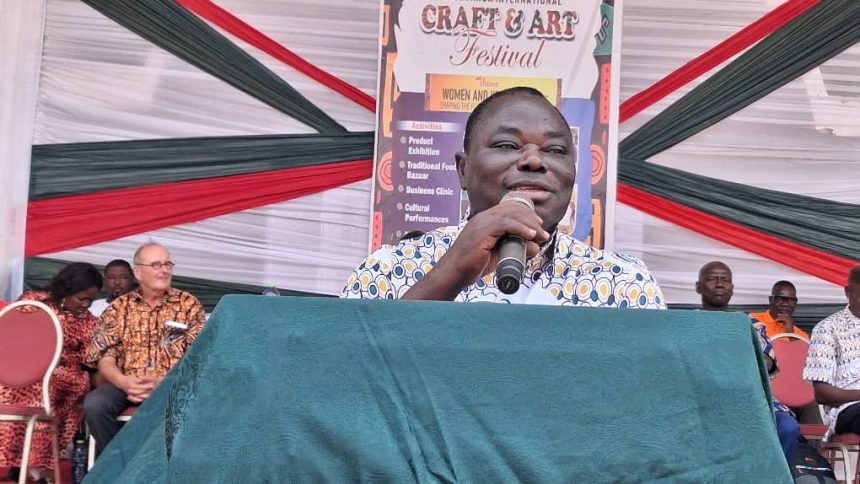
The celebration, held under the theme: “25 Years of Transforming, Advancing Livelihoods and Building Resilience,” brought together development partners, donors, community members, and stakeholders from across the region.
Speaking at the event in Bolgatanga, Mr Nicholas Apokerah, the Executive Director of TradeAid Integrated, expressed heartfelt appreciation to all donors and partners who have supported the organisation’s work over the past two and a half decades.
He singled out Oxfam GB as the organisation’s first donor, noting that its early support enabled TradeAid to begin working with basket weavers.
He also acknowledged the Canadian Feed the Children, which has partnered with the organisation for more than 10 years, as well as SNV and the STAR Ghana Foundation, among other sponsors, for their steadfast support.
Mr Apokerah highlighted the impact of TradeAid’s interventions over the years, noting that the organisation’s work spans basket weaving, food security, climate change, advocacy, anti-corruption efforts, and community empowerment.
He, however, expressed concern that poverty in the Upper East Region has risen in recent years despite earlier improvements.
He attributed the recent increase in poverty levels among rural communities to global and national disruptions, including the COVID-19 pandemic and the Russia–Ukraine war, which have eroded previous gains.
Citing the Ghana Living Standards Survey, he said the current poverty level in the region stands at 24.8 percent, significantly higher than the national average of 10 to 12 percent.
“It means that half of our population is still affected by poverty, so we are not done yet,” he stressed.
Mr Apokerah emphasised that entrepreneurship remains the most sustainable pathway for reducing poverty, underscoring that Europe and North America achieved development through strong entrepreneurial systems, a model TradeAid believes can uplift communities in northern Ghana.
According to him, empowering people to become entrepreneurs would enable them to meet their basic needs, provide education for their children, access healthcare and improve their living conditions.
Looking ahead, he said TradeAid Integrated plans to focus the next five years on expanding support for young people, promoting innovation among farmers, and strengthening climate-smart agricultural practices.
He also highlighted the growing challenge of illegal mining (galamsey), particularly in gold-bearing communities of the Upper East Region and called for proactive strategies to prevent the area from experiencing the environmental destruction seen in parts of southern Ghana.
Mr Roland Atanga Ayoo, the Bolgatanga Municipal Chief Executive, commended TradeAid Integrated for its contribution to advancing local development, describing it as “a dependable partner in poverty reduction, enterprise development and the promotion of sustainable livelihoods.”
He said that over the years TradeAid Integrated has empowered vulnerable women, expanded infrastructure, and improved market access for businesses, providing enormous opportunities for many women and young people in the Upper East Region.
He urged the organisation to strengthen partnerships and continue complementing government efforts to build stronger communities capable of withstanding economic and climate shocks for sustainable transformation of lives.