
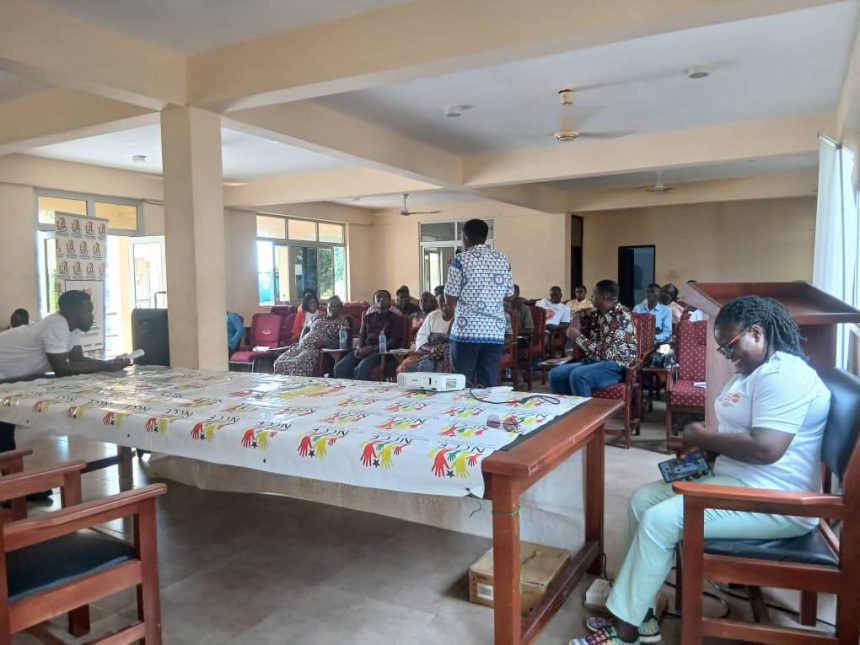
The National Commission for Civic Education (NCCE) in the Anloga District of the Volta Region has said adolescents have a right to quality health services, to improve their lives.
The NCCE at Anloga is conducting various implementation programmes to promote adolescent health, gender equality, and the provision of gender-based violence (GBV) services to curb the rising situation of abuses within its communities.
Torgbui Hatsu III, the Anloga NCCE Director, said this during a public engagement on empowering community and youth for adolescent health, gender equality and preventing GBV through civil engagement.
He said the programme aimed at creating safe spaces for dialogue on adolescent sexual and reproductive health, GBV, and gender equality.
He said the initiative also sought to provide platforms for interaction between communities, healthcare providers including midwives and community health nurses, as well as the police, Domestic Violence and Victim Support Unit, among others, to address the challenges adolescents faced.
He stated that protecting adolescents was not merely a social obligation, but a legal and policy imperative, which, always enshrined in national frameworks and international instruments such as the UN Convention on the Rights of Child and the African Charter on the Rights and Welfare of the Child.
Torgbui Hatsu elaborated that the public should empower the participation of adolescents and provide them with the necessary information to become young men and women with power whose voices would matter in decision-making to build a stronger and more peaceful communities.
He advised parents to give birth to a number of children they could cater for, to prevent the heavy financial burdens on families, to help young adolescents have access to quality healthcare and education to build their future.
Mr Sedudzi Gblorgblorvor, the Public Health Nurse at Anloga, in his presentations during the engagement, said that adolescents in Ghana faced various health challenges, including limited access to empowering information, high levels of anemia, and poor mental health services and the Ghana Health Service was working hard to deliver more adolescent-responsive services and model referral mechanisms.
He explained that the adolescent and Youth-Friendly Health Services (AYFHS) programme was a critical component of adolescent healthcare and offering essential support for sexual and reproductive health, health literacy, and more could be the way forward to curb the challenges.
He said barriers to AYFHS utilisation include personal factors such as gender norms, religious beliefs, and financial constraints, as well as facility-related challenges like medicine shortages and long waiting times, while healthcare workers also require continuous training in adolescent-sensitive care to address unconscious biases and improve interactions with young clients.
Mr Gblorgblorvor stated that adolescents deserve access to quality health services, which were considered as their privileges but not their rights, and lamented about the increasing state of teenage pregnancy in the district from January to December 2025, which include, Anloga sub registering 78 teenage pregnancies (18.3 per cent), Anyanui sub with 79 teenage pregnancies (19.5 per cent).
The rest were Shime sub with 32 teenage pregnancies (16.4 per cents), Tegbi sub with 73 teenage (16.0 per cent), with a total of 262 cases of teenage pregnancies in the district, which represented 17.7 per cent.
He said, to address the challenges, there must be increased investment in adolescent health, including the integration of AYFHS into national healthcare financing mechanisms with community-based interventions and comprehensive sexuality education, which were also crucial for promoting adolescent health.
Mr Gblorgblorvor commended the NCCE’s efforts for the initiative programme, which was a step towards promoting adolescent health and rights and urged the individuals and healthcare providers to help promote quality health services for adolescents.
He said adolescents had a right to quality health services, and it was essential to prioritise their health and well-being and appealed to the government and stakeholders to work together to address the challenges facing adolescent health and ensure that all adolescents have access to the services they need.
Some participants of GNA interviewed expressed satisfaction about the initiative and described the AYFHS programme as a vital component of efforts to improve adolescent health.
They said, addressing the barriers to utilisation and improving service quality, the country could make significant strides in promoting adolescent health and well-being.