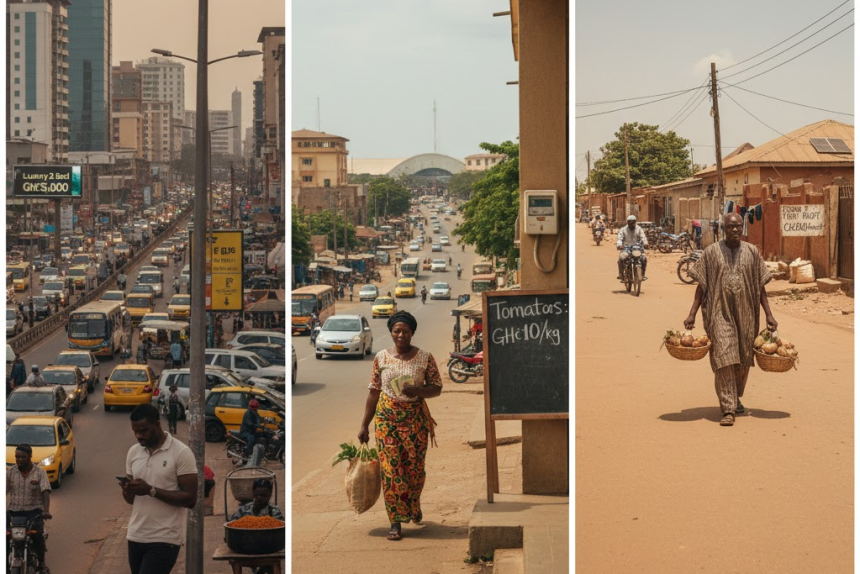
For years, the assumption has been simple: Accra is expensive, Kumasi is moderate and Tamale is affordable. But as Ghana’s economic landscape shifts, the real picture is more complicated. Rising inflation, housing shortages, transport costs and expanding urban populations have changed what it truly costs to live in each city.
A closer look at everyday expenses shows that where you live in Ghana can stretch your income – or squeeze it – in very different ways.
Housing: Accra sits in a league of its own
Rent is the most significant factor separating Accra from the rest of the country.
In the capital, a modest one-bedroom apartment in a middle-income neighbourhood can cost more than a two- or three-bedroom home elsewhere. Areas such as East Legon, Cantonments, Labone and Airport Residential are often priced in dollars, putting them far beyond the reach of most households.
Even “affordable” districts like Spintex, Achimota and Adenta have seen steep increases in rental prices. Advance payments of one to two years remain standard, making the barrier to entry even higher.
In Kumasi, rents are generally lower, though areas like Asokwa, Ahodwo and Patasi are catching up. The city’s expanding commercial activity has pushed demand upward, but prices still remain comfortably below Accra levels.
Tamale offers the lowest average rent of the three cities, especially in residential communities such as Lamashegu, Sagnarigu and Vittin. Many homes are self-contained compounds rather than apartment blocks, and landlords are more flexible with pricing. However, the market is quickly changing as Tamale urbanises and new developments emerge.
Food prices: surprisingly similar, with small but meaningful differences
Food prices in all three cities have risen sharply, narrowing the once-wide gap between them. Essentials like maize, rice, tomatoes, onions and cooking oil now fluctuate across the country depending on supply and transportation costs.
Accra remains the most expensive place to buy groceries and cooked meals, largely because of transportation margins, market fees and higher operational costs for vendors. Eating out regularly in Accra can drain a budget fast, especially in areas with heavy commercial traffic.
Kumasi’s food culture and market system keep prices slightly lower. Kejetia, Bantama and Asafo markets offer a broad range of produce from across the Ashanti Region, giving residents more options at competitive prices.
Tamale benefits from proximity to northern food production zones. Staples such as yam, rice, groundnuts and vegetables often cost less than in the southern cities. But foods transported from Accra or Kumasi, including certain processed goods, can be pricier in the north.
Transport: the hidden budget breaker
Ghanaians often underestimate the financial weight of transport. In Accra, long commutes are common. Residents may spend hours each week in traffic, consuming fuel and increasing transport fares. Ride-hailing services are widely used but costly, and fuel price volatility hits Accra households hardest because of daily travel distances.
Kumasi, with its more compact layout, offers shorter commutes. Trotro fares and ride-hailing services are still lower than in Accra, and traffic, while growing, is less punishing.
Tamale stands out for affordability and ease. Wide roads, lower congestion and shorter distances significantly reduce fuel consumption and transport costs. Motorbikes, a popular means of transport, are far cheaper to maintain than cars or daily ride-hailing trips.
Utilities and digital services: similar tariffs, different usage patterns
Electricity and water tariffs are uniform nationally, but consumption varies by climate and lifestyle.
Accra’s dense housing and hot coastal environment mean more reliance on fans, air conditioners and water storage systems. This pushes monthly bills higher.
Kumasi experiences less extreme heat, reducing the need for constant cooling. Households often record slightly lower electricity consumption.
Tamale’s heat is more intense, but many homes still rely primarily on ceiling fans rather than air conditioners. Where AC use is consistent, however, electricity bills rise sharply.
Data and internet costs are largely the same nationwide, though service quality varies. Accra has the widest coverage of high-speed broadband, followed by Kumasi. In Tamale, mobile data remains dominant and can be more expensive when used heavily.
Social spending and lifestyle costs
Accra’s social life — from restaurants and lounges to beaches and concerts — encourages higher discretionary spending. The city’s fast-paced lifestyle comes with constant invitations to spend money.
Kumasi offers a more balanced social scene, blending affordability with variety. Nightlife, sports viewing centres and eateries are cheaper overall.
Tamale’s entertainment culture is growing but still modest. Residents tend to spend more on community gatherings, family events and traditional ceremonies than on nightlife or dining out.
What a salary means in each city
A salary that feels tight in Accra can feel manageable in Kumasi and comfortable in parts of Tamale.
Conversely, opportunities for certain high-paying jobs — especially in finance, media, consulting and telecommunications — tend to concentrate in Accra, creating a trade-off between income potential and cost of living.
Workers who relocate from Accra to Kumasi or Tamale often experience an immediate drop in monthly expenses, while those moving to Accra must adjust quickly to higher costs and longer commutes.
The bottom line: cost of living is more than numbers
Accra remains Ghana’s most expensive city by a wide margin. Kumasi sits in the middle, balancing affordability with growing urban pressures. Tamale is still comparatively affordable but changing fast as development accelerates.
For households, the difference is not only in prices but in lifestyle, expectations and opportunity. The city you choose shapes how much of your income goes to essentials, how much is left for savings and how far your money stretches each month.
In a time of economic uncertainty, understanding these differences is more than useful — it is essential for anyone considering relocation, budgeting, or long-term planning in Ghana.