For many Ghanaians, investing still feels like something reserved for people with surplus cash, insider knowledge or powerful connections. The assumption is simple: if you do not have thousands of cedis, investing is not for you.
That belief is one of the biggest barriers keeping ordinary people out of Ghana’s financial system. In reality, the country now offers several entry points that allow individuals to begin investing with as little as GHS 100 — sometimes even less.
The challenge is not the amount of money required. It is knowing where to start, what to trust and what expectations to hold.
Why starting small matters more than starting rich
The most important step in investing is not size; it is habit. People who begin investing early with small amounts build financial discipline, confidence and familiarity with how returns work. Those who wait until they have “enough money” often never start at all.
In Ghana’s current economic environment — marked by inflation, currency pressure and uncertainty — letting money sit idle is often riskier than putting it to work carefully.
Starting with GHS 100 is not about chasing profit. It is about learning the system without exposing yourself to serious loss.
Treasury bills: the most common first step
Treasury bills remain one of the safest and most accessible investment options in Ghana. While traditional purchases through banks often required higher minimums, some banks and regulated digital platforms now allow individuals to participate with modest amounts.
Treasury bills are short-term government securities, usually lasting 91 days, 182 days or one year. When you invest, you are lending money to the government and receiving interest at maturity.
For a beginner, treasury bills offer clarity. You know how long your money will be locked away and what return to expect. They are particularly useful for people who want to move beyond savings accounts but are not yet comfortable with risk.
Money market mutual funds: investing without complexity
Money market funds have quietly become a popular entry point for first-time investors. These funds pool money from many individuals and invest mainly in treasury bills, bank deposits and other low-risk instruments.
Many licensed fund managers in Ghana allow people to start investing with GHS 100 or to make small monthly contributions. Returns are not fixed, but they are generally more stable than equity-based investments.
For people who want professional management and flexibility — including the ability to add or withdraw funds — money market funds provide a practical balance between safety and growth.
Digital investment platforms lower the barrier
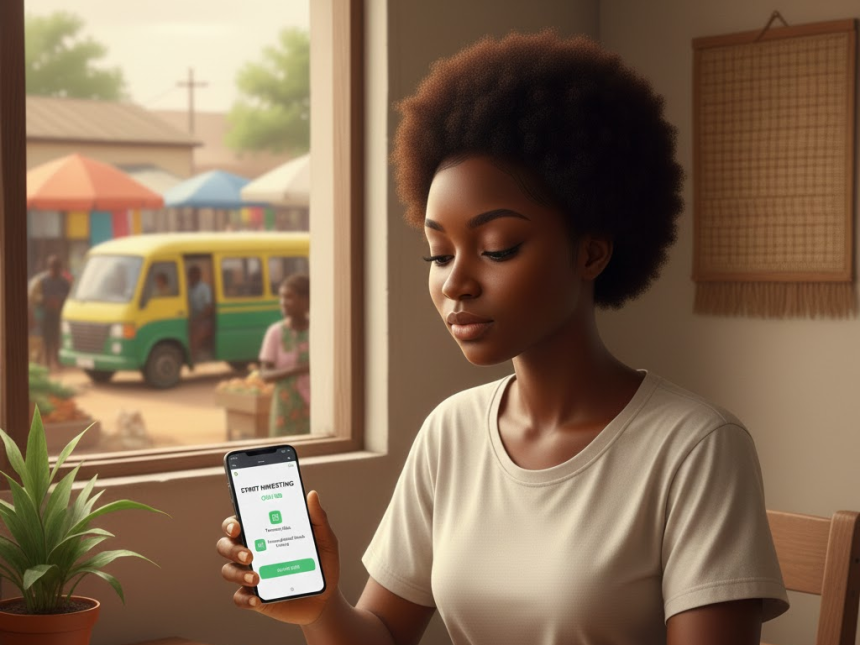
Technology has changed who can invest. Several regulated fintech platforms now allow Ghanaians to invest small amounts directly from their phones using mobile money or bank transfers.
These platforms typically offer access to treasury bills, mutual funds or savings-investment hybrids. For young professionals and informal workers, the convenience removes a major psychological barrier.
However, regulation matters. Any platform used should be licensed by the appropriate authorities and transparent about how funds are invested. Promises of unusually high returns are a warning sign, not an opportunity.
Fixed-income options through savings-style products
Some banks and financial institutions offer products that blend savings and fixed-income investing. These allow individuals to contribute small amounts regularly and earn higher interest than ordinary savings accounts.
While returns may be modest, these products help new investors develop consistency and discipline. They also offer familiarity for people who are more comfortable dealing directly with banks than investment firms.
What not to do with your first GHS 100
Starting small does not mean lowering your guard. Some common mistakes can turn a learning opportunity into a painful lesson.
Avoid unlicensed schemes, informal “investment clubs” with no accountability, and products that promise guaranteed high returns in short periods. These schemes often rely on new contributions rather than real investment activity.
Avoid tying your first investment to money you may need urgently. Investing should not replace emergency savings.
Avoid rushing into complex products you do not understand. The goal at the beginning is stability, not sophistication.
Setting realistic expectations
Investing GHS 100 will not change your life overnight. Returns will be small in absolute terms. That is normal.
What matters is consistency. Investing GHS 100 every month for a year does far more than investing GHS 1,200 once. Over time, compound growth and habit formation matter more than initial amounts.
The purpose of starting small is to build trust — in yourself and in the system.
The mindset shift Ghana needs
One of the quiet revolutions happening in Ghana’s financial space is the slow democratisation of investing. What was once the preserve of institutions and high-net-worth individuals is becoming accessible to teachers, traders, drivers and young professionals.
Starting with GHS 100 sends a powerful message: investing is not about wealth; it is about intention.
In a country where inflation steadily erodes idle cash, learning how to invest — even modestly — has become a form of self-protection.
For many Ghanaians, the most important investment decision is not choosing the perfect product. It is deciding to start.
And today, starting no longer requires thousands of cedis. Sometimes, it takes just GHS 100 and the willingness to think long-term.