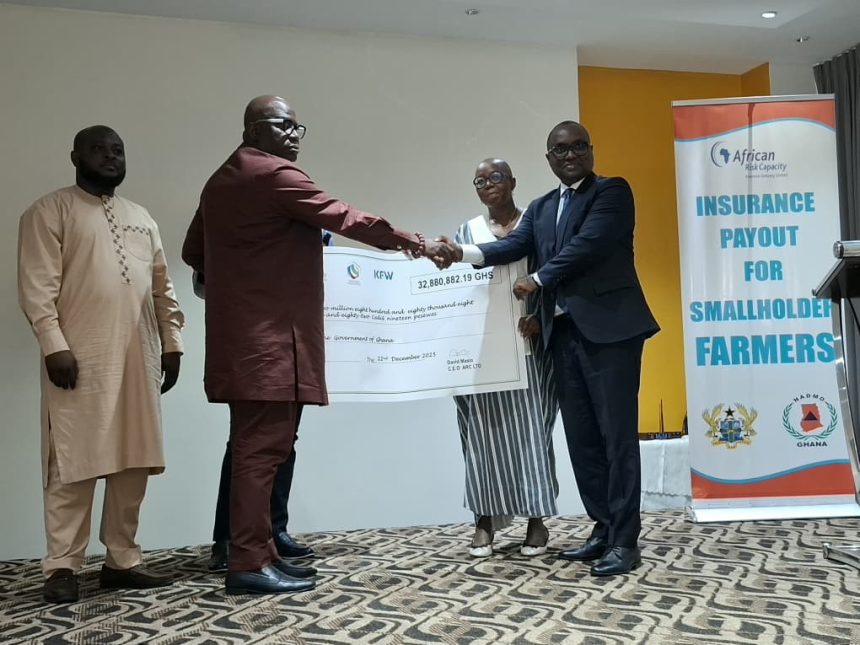
Ghana has received US$2.86 million from African Risk Capacity Limited under its first sovereign drought insurance policy to support households affected by the 2024 drought.
The payout, officially presented on Monday, followed severe drought conditions that affected farming communities in the northern and southern belts during the 2024 planting season.
The funding is to support about 109,000 vulnerable households impacted by crop failure and food insecurity and to strengthen resilience ahead of the next agricultural season.
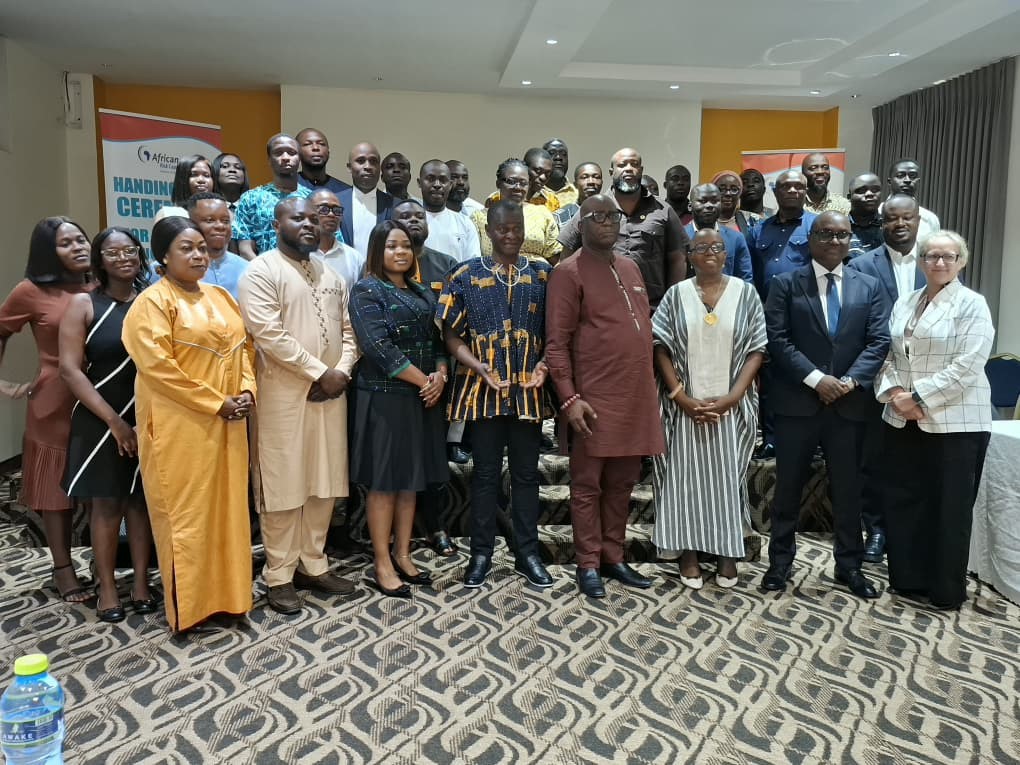
Dr Jean Chrysostome Ngabitsinze, Director-General of the ARC Group, presented the cheque to government officials, including Mr Ebenezer Okletey Terlabi, Deputy Minister for the Interior, and Major (Rtd) Dr Joseph Bikanyi Kuyon, Director-General of the National Disaster Management Organisation (NADMO).
Mr Terlabi said the payout would “significantly complement ongoing efforts, enabling the scaling up of assistance to affected communities, strengthening food security and enhancing resilience among the most vulnerable populations.”
He said climate shocks were “no longer distant threats but present-day realities,” and said government remained committed to “strengthening early warning systems, expanding social protection mechanisms and deepening partnerships.”
Dr Ngabitsinze said the payout comprised US$960,202 for the northern season and about US$1.9 million for the southern season, with a total equivalent of GH¢32.9 million.
“Behind these figures lies something far more meaningful than numbers. They reflect the strong political will of the Government of Ghana to stand by its people in times of hardship,” he said.
Dr Ngabitsinze commended Ghana for “setting a standard of leadership that deserves recognition” by investing in preparedness and resilience.
Major (Rtd) Dr Kuyon described the ARC payout as “a powerful affirmation of foresight, partnership, and collective resolve.”
He said NADMO had coordinated inter-agency actions to ensure that relief reached the right beneficiaries “in a timely, transparent, and accountable manner,” adding that the support “helped preserve dignity, stabilize livelihoods, and prevent the erosion of long-term development gains.”
The 2024 drought was reported to be among the worst in decades, with rainfall deficits recorded across eight regions.
Data from the Ghana Meteorological Agency and the Food and Agriculture Organization indicated that July rainfall fell to seven millimetres, compared with the long-term average of 24 millimetres, severely affecting maize, rice, groundnut and yam production.
More than 928,000 farmers were affected, with estimated investment losses of GH¢3.5 billion and revenue losses of GH¢10.4 billion.
Government, through NADMO and development partners, including the World Food Programme, conducted a drought impact assessment and implemented early interventions such as cash transfers, relief items and the distribution of drought-tolerant seeds and fertilisers.
The payout was made possible through premium support from Germany’s KfW Development Bank under the Global Shield against Climate Risks initiative, enabling Ghana to access insurance coverage while easing fiscal pressures.