
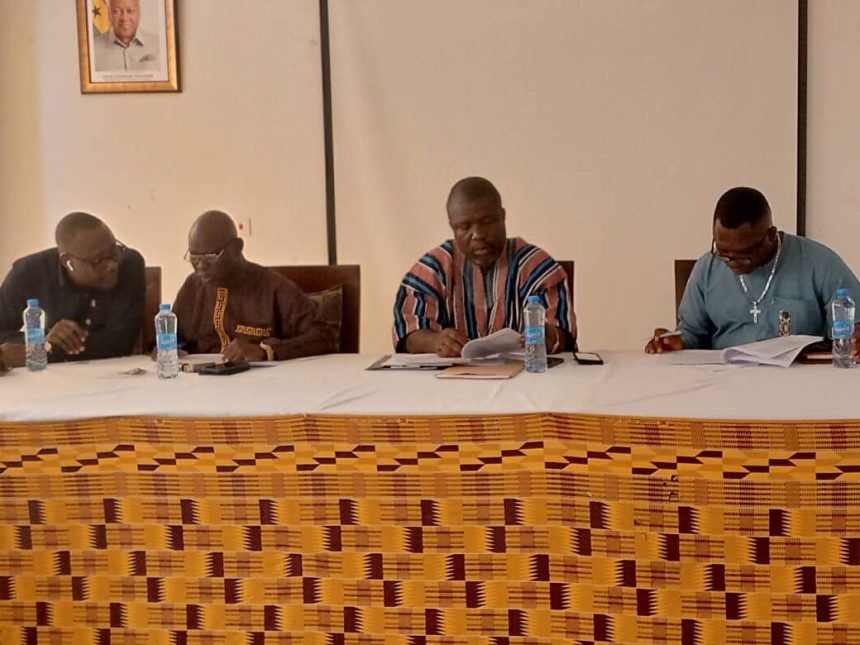
Mr Daniel Yao Dushie, Deputy Managing Director of PPMC International Limited, the consulting firm overseeing the Aflao Market and the proposed 24-Hour Economy Market projects, has provided an update on the status of the projects.
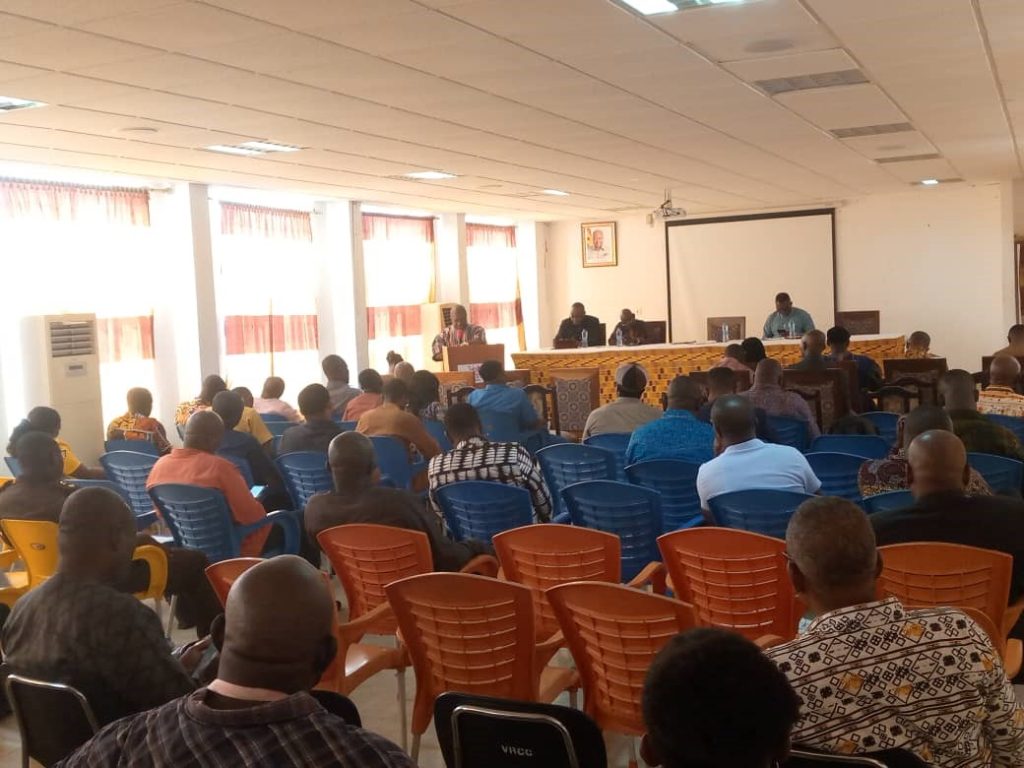
This was done in the Volta Region at the second Regional Coordinating Council (RCC) meeting of the year.
Mr Dushie explained that the presentation focused on the various models designed for the 24-Hour Economy Market initiative.
He outlined four proposed models with varying costs: Model One at GH¢32 million, Model Two at GH¢39 million, Model Three at GH¢28 million, and Model Four at GH¢11 million.
According to him, the choice of model depends largely on the size and suitability of the project site, noting that each option comes with its corresponding financial implications.
He said PPMC was recommending Model Three for all Assemblies in the region because of its scalability, explaining that the design allowed for easy expansion as additional funds become available.
“With Model Three, assemblies can start with what they can afford and gradually add more shops and facilities in the future, unlike some of the other models,” he noted.
“An assembly can begin by constructing, for instance, 100 or 138 shops, and as more funds become available, additional facilities can be added,” he explained, adding that the full project duration is estimated at three years.
Mr Dushie also presented details of the Aflao 24-Hour Economy Market, estimated to cost about GH¢110 million. He disclosed that the Chinese Government had committed approximately GH¢30 million to support the first phase of the project, making a phased approach necessary.
The proposed Aflao market, he said, was designed to meet comprehensive commercial and transport needs, including a transport terminal for buses, taxis and tricycles, a mechanical workshop, open market space capable of accommodating about 4,000 traders, approximately 500 shops, and a dedicated farmers’ market with space for about 360 sellers.
The design also includes a police station, fire service station and administrative offices. He stressed that the modular nature of the project allows for incremental development.
On the status of the Aflao market, Mr Dushie said the project had reached the land acquisition stage and that feasibility studies had been completed and approved by the Chinese Government.
However, he indicated that the release of funds for Phase One was contingent on the land being fully vested in the name of the Government of Ghana.
Although traditional authorities had expressed their intention to release the land, he said the process required formal documentation and compensation.
“The chiefs have made it clear that compensation issues must be addressed. They have requested engagements with the appropriate authorities, either at the regional level or the Ministry of Foreign Affairs, to reach a mutual understanding before the land can be fully transferred,” he stated.
Meanwhile, some Municipal and District Chief Executives (MDCEs) in the region have rejected PPMC’s proposal to adopt Model Three of the 24-hour Economy Market as a uniform option for all districts.
Speaking to the Ghana News Agency, the Municipal Chief Executive for Ketu North, Rev Martin Amenaki, said the decision contradicted earlier assurances given to assemblies.
Rev Amenaki explained that during earlier engagements in Accra, it was agreed that Model One would be designated for metropolitan assemblies, Model Two for municipal assemblies, Model Three for district assemblies, and Model Four where applicable.
He said many municipal assemblies, including Ketu North, had anticipated benefiting from Model Two.
“We were disappointed to hear that the entire Volta Region is now being asked to adopt Model Three,” he said, adding that Ketu North’s existing market at Dzodze was overstretched and facing imminent demolition due to ongoing road construction.
He noted that the municipality had secured about six acres of land, with Model Two requiring only four acres, leaving room for future expansion.
According to him, Model Two offers more space, more shops and better functional separation of facilities, such as dedicated blocks for security services, compared to Model Three, where facilities are more compressed.
“We are planning for the future, not just for today. The people expect the full promise of the 24-Hour Economy policy to be delivered, and for Ketu North, Model Two best serves that purpose,” Rev Amenaki stated, stressing that the municipality would continue to lobby for the adoption of Model Two instead of Model Three.