Ghana continues to lose vast areas of its natural vegetation raising fresh concerns about ecosystem degradation particularly in the northern parts of the country.
A report by WaterAid Ghana indicated that the country’s vegetation cover declined by about 298,000 hectares between 2013 and 2023, underscoring the urgency for innovative and locally driven conservation approaches.
While the United Nations Sustainable Development Goals (SDG) 15 seeks to protect and restore terrestrial ecosystems by 2030, Ghana’s Forestry Development Master Plan (2016–2040) recognises sacred groves as critical conservation assets that must be protected and integrated into broader landscape restoration efforts.
Against this backdrop of accelerating deforestation and biodiversity loss, the Maltiti Grove at Yiworgu in the Savelugu Municipality of the Northern Region is emerging as a practical demonstration of how indigenous belief systems can promote environmental sustainability.
A sacred forest preserved by tradition
The Maltiti Grove, translated in Dagbani as “Make It Well for Us”, is in Yiworgu and is estimated to be over three decades old.
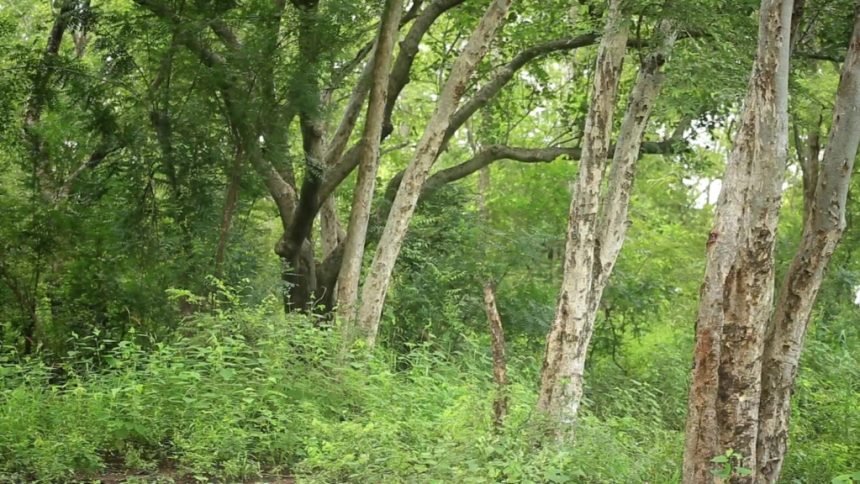
Covering about 12 acres, the grove hosts indigenous tree species such as shea, dawadawa and baobab alongside numerous medicinal plants and herbs that serve both physical and spiritual needs of residents and visitors.
A visit to the site by the Ghana News Agency (GNA) on October 14, 2025, revealed that the grove has remained largely intact due to strict adherence to customary practices, taboos and traditional sanctions, which have effectively prevented encroachment, deforestation and indiscriminate exploitation of the resources.
Gundanaa Abubakari Wumbei, Chief Priest at the Grove, told GNA that the site served as a spiritual bridge between the people and their gods.
He explained that the grove had long been a place where barren couples, individuals seeking divine favour, career breakthroughs or justice in protracted court cases come to seek spiritual intervention.
He said, “During periods of drought and other misfortunes, people also come here to pray and seek relief.”
The Chief Priest added that beyond its spiritual significance, the grove had nurtured a strong environmental ethic within the community discouraging indiscriminate tree felling and resource abuse.
Spiritual deterrence as environmental discipline
Madam Sayibu Pagwuni, a Chief Priestess at the Grove, said the fear of spiritual consequences had helped to entrench environmental discipline among community members.
She said, “Even collecting firewood is avoided because people understand the sacred nature of this forest.”
She noted that protecting sacred groves such as Maltiti could instill environmental stewardship in younger generations, making respect for nature a deeply rooted moral obligation rather than one enforced only through state laws.
Groves as biodiversity refuge
Sacred groves are patches of natural vegetation protected through traditional beliefs, taboos, and customary laws.
They are often linked to ancestral spirits or deities and preserved for cultural, spiritual, and ecological reasons.
Ubor Wumbei Dawuni, Chief of Bunbon in the Yendi Municipality, told GNA that the existence of sacred groves reflected a long-standing indigenous rejection of deforestation.
He said long before formal environmental laws were introduced, traditional belief systems prohibited indiscriminate tree cutting with droughts and misfortune believed to be punishments for offenders.
He said “Today, we are witnessing similar hardships because those traditional values are no longer respected.”
The Chief explained that sacred groves functioned as biodiversity refuges protecting indigenous tree species, medicinal plants and wildlife while also serving as carbon sinks and natural buffers against climate extremes.
He said, “Preserving groves strengthens landscape resilience, safeguards soils and water sources, and supports Ghana’s climate and biodiversity commitments, and urged policymakers to integrate indigenous conservation systems into formal environmental governance.
Government and civil society collaboration
The Government, working with civil society organisations (CSOs), has a critical role to play in safeguarding sacred groves for environmental sustainability.
One such organisation, the Regional Advisory Information and Network Systems (RAINS), is promoting afforestation and sustainable agricultural practices in the area to reduce pressure on forest resources.
RAINS encourages tree planting, organic farming and compost production among smallholder farmers particularly women as part of efforts to check deforestation while improving livelihoods.
Mr Hardi Tijani, Executive Director of RAINS reaffirmed the organisation’s commitment to empowering vulnerable communities, especially women and girls through sustainable agriculture and climate-smart practices.
He said strengthening community-led conservation grounded in indigenous knowledge could significantly enhance Ghana’s climate change mitigation and adaptation efforts.
Mr Alhassan Fuseini, Municipal Chief Executive for the Savelugu Municipal Assembly, expressed the Assembly’s readiness to collaborate with non-governmental organisations, traditional authorities and development partners to scale up similar initiatives.
He said the government’s nationwide tree-planting campaign was complementing community-driven conservation efforts across the municipality.
Recommendations/Way Forward
It is important to strike stronger institutional support to protect the Maltiti Grove and other sacred groves across the country.
It is advised that government facilitates formal recognition of sacred groves as community conservation areas, structured co-management arrangements between state agencies and traditional authorities.
It must also facilitate the provision of technical and incentive-based support for communities safeguarding these sites.
There is also the need to integrate indigenous knowledge systems into national environmental and climate policies alongside sustained public education and research on indigenous-led conservation models.
Conclusion
As Ghana intensifies efforts toward sustainable land use and climate resilience, the Maltiti Grove at Yiworgu offers compelling evidence that indigenous institutions remain vital allies in protecting the country’s natural heritage.