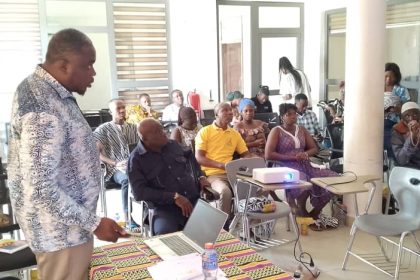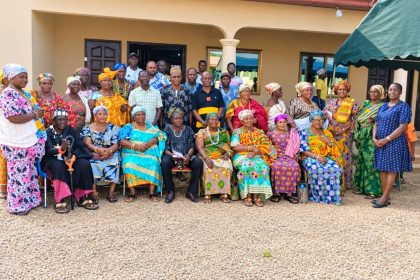
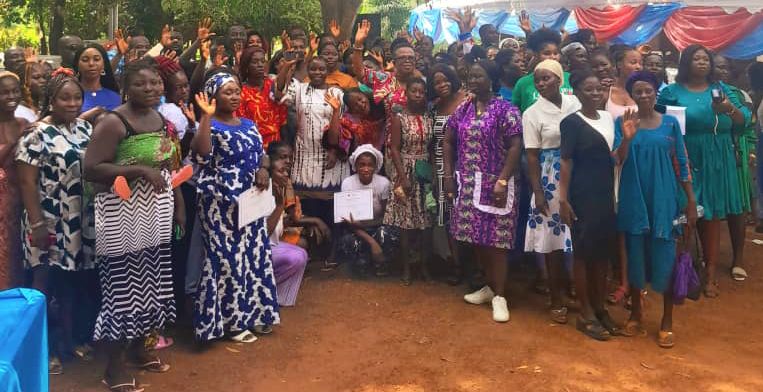
The International Child Development Programme (ICDP), in collaboration with the Yilo Krobo Municipal Assembly, has trained and graduated 200 young mothers in various livelihood skills.
The skills training was held at Somanya in the Eastern Region with support from Mastercard Foundation, UNESCO and other partners.
The training programme forms part of the Digital Access and Rural Empowerment (DARE) Programme, a joint initiative, aimed at empowering rural women, young girls, and teenage mothers through vocational training, digital literacy, and entrepreneurship to promote sustainable livelihoods and economic independence.
Mrs. Joyce Larnyoh, Country Director for the International Child Development Programme, said the beneficiaries received hands-on skills in trades such as pastries and baking, hairdressing, sewing, soap and detergents making, decoration, make-up artistry and other income-generating skills.
The digital literacy included how to use social media to advertise their products for marketing.
She said the participants received certificates of participation, and start-up tools to enable them start their businesses immediately.
The tools were sewing machines, hairdryers, ovens, gas cylinders, flour, oil, chemicals for soap-making, among others.
The initiative is also designed to support national efforts to address issues such as teenage pregnancy, school dropout, unemployment, and other vulnerabilities confronting young girls.
She told the Ghana News Agency in an interview that ” data analysis on teenage pregnancy, school dropout, and girl-child vulnerability is prevailing in Somanya, that demands quick intervention. ”
Mrs. Larnyoh said the programme included components on childcare, safeguarding, reproductive health and responsible parenting to enable beneficiaries to balance work and family responsibilities.
She explained that the programme also introduced village savings and loan associations to help beneficiaries develop a savings culture and later link them to financial institutions to access credit for business expansion.
“When you are empowered and working, issues like teenage pregnancy reduces. We are building your capacity to take care of yourselves and your children.”
She urged the beneficiaries to remain focused and called for community support to sustain their businesses.
On his part, Mr. Richmond Atta-Williams, DARE Project Officer at UNESCO, said, “the graduation goes beyond a mere celebration of completion of a training, rather it marks alresilience, determination, and opportunity. ”
He described the start-up kits presented to beneficiaries as instruments of hope and empowerment, and charged them to use their skills to inspire positive change within their communities.
Ms. Joyce Tettey, a beneficiary, trained in soap making, said the programme had transformed her life, describing her lifestyle before the acquisition of the training as miserable.
Mr. Francis Akumatey Addo, Municipal Chief Executive of the Yilo Krobo Municipal Assembly, said the DARE Programme was timely intervention that aligned with national digital transformation and poverty reduction goals.
He stressed that the digital and entrepreneurial skills were important, particularly for rural communities, and urged graduates to use the tools responsibly.