Madam Cecilia Soyelleh, the Lawra Municipal Chief Executive (MCE), has encouraged Ghanaians to adopt a non-partisan approach towards the National Sanitation Day (NSD), describing it as an initiative that will benefit all citizens irrespective of political affiliation.
“It is not an exercise to benefit only the government and, therefore, I appeal to everybody, especially the youth, let’s use our strength for productive exercise such as cleanliness,” she stated.
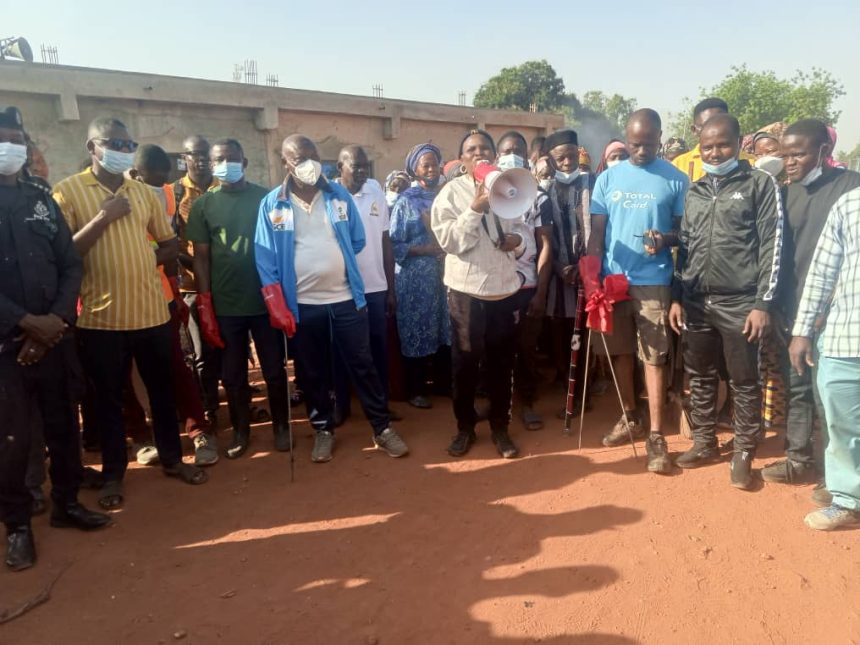
Madam Soyelleh said this during the NSD exercise held at Babile in the Lawra Municipality, where residents from different political backgrounds participated actively.
She stressed that the sanitation day was a national exercise aimed at promoting healthy living across the country and emphasised the need for every person to take it seriously.
Madam Soyelleh also encouraged the people of Babile not to make the clean-up exercise a one-off event but a regular activity.
She commended the people, particularly the youth and community leaders, for their active participation in the exercise.
Mr Bede Ziedeng, the Member of Parliament (MP) for the Lawra Constituency, explained that the NSD, introduced by the President John Mahama-led government, demonstrated the importance of cleanliness for national development.
He said the declaration of every first Saturday of the month as NSD was not meant to limit sanitation activities to that day alone, but to encourage daily cleanliness at homes and public places.
Mr Vitus Kadoe Dapilah, the Regent of Babile, reiterated the community’s commitment to ensuring environmental cleanliness since it was key to promoting good health.
He said the people’s enthusiasm for the exercise was rooted in the belief that “cleanliness is next to godliness,” and added that a clean environment was essential for healthy living.
Pognaa Rose Yirikuu Dakuar, the Queenmother of Babile, commended the community members for their dedication and commitment to the exercise.
She, however, expressed concern about the persistent challenge of indiscriminate littering in the community and called for intensified public education to address the problem.
The Queenmother emphasised the need to start sanitation education from the home, noting that children who were taught proper waste disposal practices early would grow up with responsible attitudes towards sanitation.
She emphasised that women, as primary caregivers, played critical roles in educating children not to litter but to dispose of waste in designated containers.
Mr Daniel Faalung-Enge, a community leader, appealed for the placement of more dustbins at vantage points, especially at marketplaces, to help prevent indiscriminate littering, particularly on market days.