One year after the oath of office, Accra offers a useful diagnostic.
The President’s instruction to Metropolitan and Municipal Chief Executives to confront sanitation failures was clear. Authority was asserted. Responsibility was named. The expectation was that the command would correct drift. A year on, the city reveals what command can do—and what it cannot.
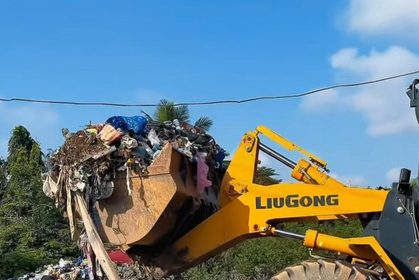
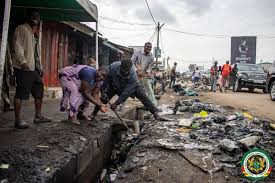
Accra continues to produce waste at a scale that overwhelms its visible systems. Collection occurs. Clean-ups recur. Yet the same materials return to the same drains, markets, and peripheral dumpsites. This persistence is not accidental. It reflects incentives that remain unchanged.
Sanitation policy in Accra has long been framed as discipline and effort. Enforcement, mobilization, and episodic interventions dominate the repertoire. These tools address appearance, not structure. The result is a city that oscillates between urgency and neglect without accumulating progress.
The error lies in classification.
Waste is treated as an externality to be removed, not as a material stream to be governed. Once collected, it raises policy concerns. Where it goes, who processes it, and what value is recovered rarely enter official accounting. The system rewards removal, not conversion.
Predictable behavior follows. Municipal leadership prioritizes visible cleanliness at inspection points. Contractors are paid for tonnage hauled, not value created. Informal actors absorb risk and volatility while remaining outside recognition. The city appears active while remaining static.
This is not an administrative failure. It is an economic absence.
Waste lacks a price signal. Where inputs lack buyers, disposal dominates. Where dumping is cheaper than processing, dumping becomes rational. Instruction cannot override this logic.
The political economy costs are cumulative. Budgets absorb recurring clean-ups while forfeiting revenue from material recovery. Employment exists but remains informal and uncounted. Procurement rules favor virgin materials, while the sanitation policy speaks of recycling. The state works against itself without friction because no metric forces reconciliation.
The first year is therefore instructive. It shows that accountability framed as instruction produces compliance theatre. Audits without altered payoffs confirm behavior. Municipal leadership cannot redesign flows it does not control economically.
The relevant questions are no longer whether streets are cleaned, but whether the same waste returns; not how many trucks move, but how much material exits disposal; not how often enforcement occurs, but whether behavior upstream changes.
Cities reveal priorities through what they measure and what they pay for. Accra measures effort and pays for removal. The city behaves accordingly.
This journal begins here—not to assign blame, but to trace causality. Where incentives remain misaligned, outcomes will repeat with mechanical reliability.
Acta ponderanda sunt, non verba.
About the Author
Richard Dablah is a Ghanaian waste entrepreneurship practitioner focused on urban governance, sanitation systems, and the political economy of cities. His work examines how incentives, markets, and institutional design shape municipal outcomes, with particular attention to waste management as economic infrastructure rather than civic hygiene. This journal documents an ongoing diagnostic of Accra’s sanitation system and municipal performance.