The Ghana Red Cross Society (GRCS) has initiated an intervention aimed at enhancing the resilience of rural women and youth against climate change by empowering them to adopt sustainable and climate-smart agricultural practices.
The initiative dubbed: “The Green Woman Project ” is also expected to improve food security, livelihoods and household incomes in rural communities.
The project is an innovative climate and livelihoods initiative being implemented by the youth wing of the GRCS at Loho in the Nadowli-Kaleo District of the Upper West Region through the establishment of a demonstration garden to introduce the beneficiaries to climate-smart farming practices.
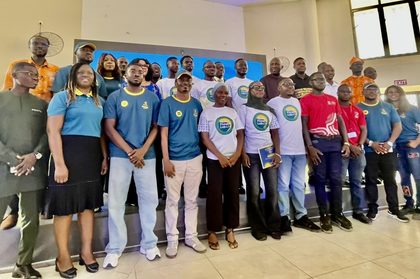
Briefing a team from the GRCS national and Upper West Regional offices, led by Dr Edward Donkoh, the National President of the Society, at the project site, Mr Emmanuel Nutaaye Banye, the Project Manager, expressed optimism about the project’s long-term impact on the beneficiaries.
He indicated that it was a one-year pilot project with the hope of being scaled up to other communities across Ghana due to its success in enhancing the climate resilience and livelihoods of the women.
He added that The Green Woman Project also had the potential for international scale-up over the next decade, using community-based volunteers as drivers of change.
The Green Woman Project is directly benefiting about 100 women and youth, particularly members of the GRCS’s Mothers’ Club in the Nadowli-Kaleo District, with about 2,000 expected indirect beneficiaries.
The project, which was funded by the Empress Shoken, had established a solar-powered mechanised borehole with an overhead tank to support all-year-round vegetable production at the demonstration garden.
“The project seeks to address the challenges of climate change, water scarcity and poor waste management through an integrated approach consisting of a reliable water supply, tree planting and composting,” Mr Banye explained.
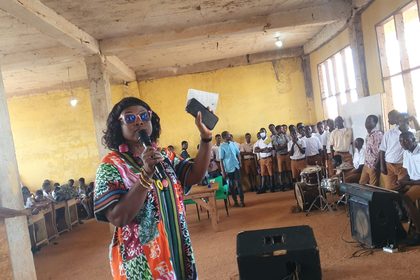
The beneficiaries were also receiving practical training in climate-smart agriculture and composting, which would enable them convert organic waste into fertiliser to improve soil fertility and crop yields.
Dr Edward Donkoh, the National President of the GRCS, observed that through this project, the Society would empower and position women as leaders in climate action, sustainable agriculture, and community development.
He suggested a water pump with high horsepower at the garden to enable them harness the solar energy produced and enlarge the demonstration field to increase the project’s impact.
The beneficiaries expressed gratitude to the GRCS and the project funders for the intervention, which they said would greatly enhance their livelihoods and economic resilience.
Madam Sherifa Majeed from Gbanko indicated that the intervention had reduced their reliance on charcoal burning to sustain their families, especially during the dry season.
She stated that they were engaged at the demonstration garden to produce vegetables alongside the learning, where they used the proceeds to support their families.