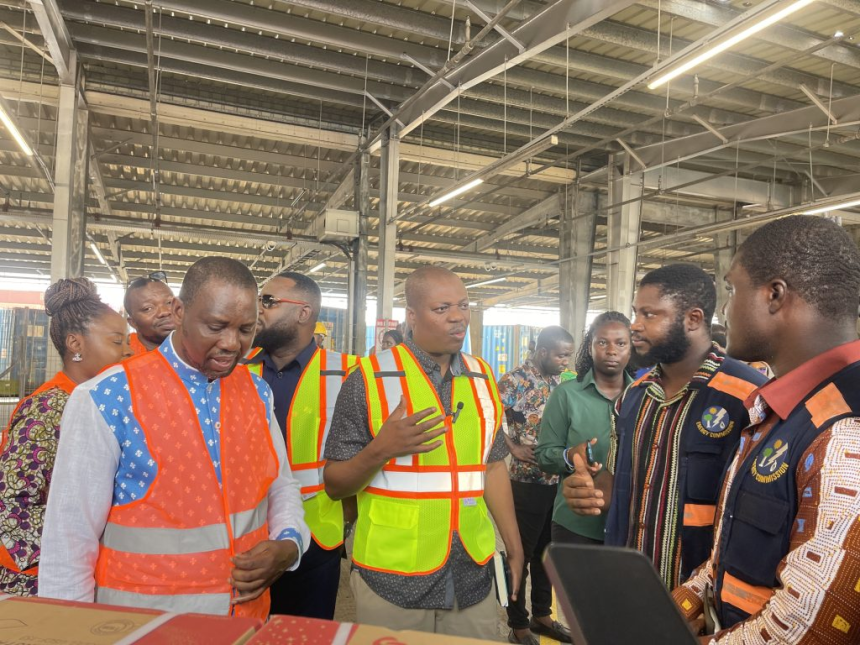
The Board and Management of the Energy Commission (EC) has intensified surveillance and enforcement activities at its Inspectorate Unit at the Tema Port.
This forms part of efforts to prevent substandard and unregulated electrical and energy products from entering the Ghanaian market and endangering public safety.
The move followed an internal investigation commissioned by the Board after it assumed office in August, which uncovered several irregularities in the importation of regulated products, including solar PV systems, electrical appliances and other energy-related equipment.
During a visit, Professor John Gartchie Gatsi, the Board Chairman, Energy Commission, said the Board and Management were at the port to witness at firsthand, the work of the Commission’s inspectors and to assess operational challenges that could weaken enforcement.
Prof. Gatsi revealed that the Commission’s investigation found that about 98,000 solar PV units were imported into Ghana between December 2024 and August 2025, with the majority allegedly brought in without the required licences and proper payment of fees.
He said the period of government transition often created regulatory gaps, especially when boards were not constituted early, which could be exploited by unscrupulous importers.
The Board Chairman added that the Commission’s surveillance drive was not only about revenue but also about protecting lives and property.
He warned that the entry of non-compliant electrical wires, batteries and appliances could lead to increased fire outbreaks, equipment failures and exposure to toxic materials.
“If you allow items which do not fall within our standards, it means people will get electrical wires that are not within the standard, and we will be seeing more fires within the country,” he said.
Prof. Gatsi also raised concerns about the importation of EV batteries that may not meet safety standards, describing such products as potentially hazardous to both users and the public.
He disclosed that in the last three months alone, the Commission’s inspectors at the port had seized about 300 fridges and other items that failed to meet required standards.
Prof. Gatsi said some importers allegedly brought in large quantities of regulated products under the guise of personal use, exploiting loopholes in the system, which highlighted the blurred distinction between commercial importation and items declared as personal effects.
He said the report also raised concerns about how detained items were handled, noting that some seized goods were reportedly moved to warehouses belonging to the same importers, without clear oversight by the Commission.
“To address this, the Commission is considering collaboration with the Ghana Revenue Authority to use bonded warehouses, or alternatively leasing warehouse facilities costs that may be passed on to importers in line with the law,” he added.
The Board Chairman noted that the investigation found instances where clearing agents signed detention documents, a practice that was not supposed to happen, reinforcing the need for stronger internal controls and improved enforcement structures.
While the Commission could not immediately quantify the full financial impact of the irregularities, Prof. Gatsi said the state was losing significant revenue, with implications for the Commission, Customs and the GRA.
He said the Commission’s staffing at the port was limited, and that more personnel would be deployed to ensure effective monitoring and supervision.
Prof. Gatsi said items that were not permitted to enter the country were disposed off in collaboration with the Environmental Protection Agency (EPA), because of their environmental and health implications.
He said the Board would soon meet to consider the report and its recommendations, adding that the port visit was a crucial step to gather firsthand information before implementing reforms.