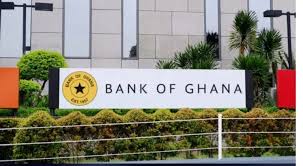

Bank of Ghana (BoG) Governor Dr. Johnson Pandit Asiama has announced that pension fund assets have officially surpassed GH¢100 billion, positioning the industry as one of the largest reservoirs of long-term investible capital in the West African economy.
Speaking at the inauguration of the Steering and Technical Committees for the Bank Listing Project on Wednesday, Dr. Asiama stated that the milestone reflects a broader rebound in macroeconomic stability and a resurgence of investor confidence.
“Domestic long-term capital is growing rapidly,” he said.
“Pension funds now hold between 15 and 35 per cent equity in several listed banks. This demonstrates that local institutional investors are ready to anchor bank ownership when the regulatory frameworks are right.”
Dr. Asiama emphasised that the Bank Listing Project is not merely an exercise in equity transactions, but a structural policy tool aimed at embedding transparency, governance, and market discipline into the financial system.
“We are deliberately connecting domestic savings to the banking sector to support sustainable growth,” he noted.
The Governor acknowledged that Ghana’s banking landscape is not uniform. While some institutions are publicly traded, others remain majority-held by foreign parent groups or the state.
As such, he called for a “flexible and sequenced” listing framework that accommodates diverse ownership models without compromising prudential standards.
According to Dr. Asiama, the increasing market-orientation of banks carries implications beyond the equities desk.
As lenders become more exposed to market forces, equity valuations and investor sentiment are beginning to influence financial stability and the transmission of monetary policy.
“The work before you sits at the intersection of banking supervision, capital markets, and monetary policy,” he told the newly inaugurated committees.
“Market development and financial stability must advance together.”
The committees, which draw expertise from Financial Markets, Banking Supervision, academia, and key stakeholder groups, have been tasked with delivering a credible, locally-attuned framework to facilitate orderly listings and preserve systemic confidence.
“I encourage you to approach this with rigour and a strong sense of public responsibility,” Dr. Asiama concluded.