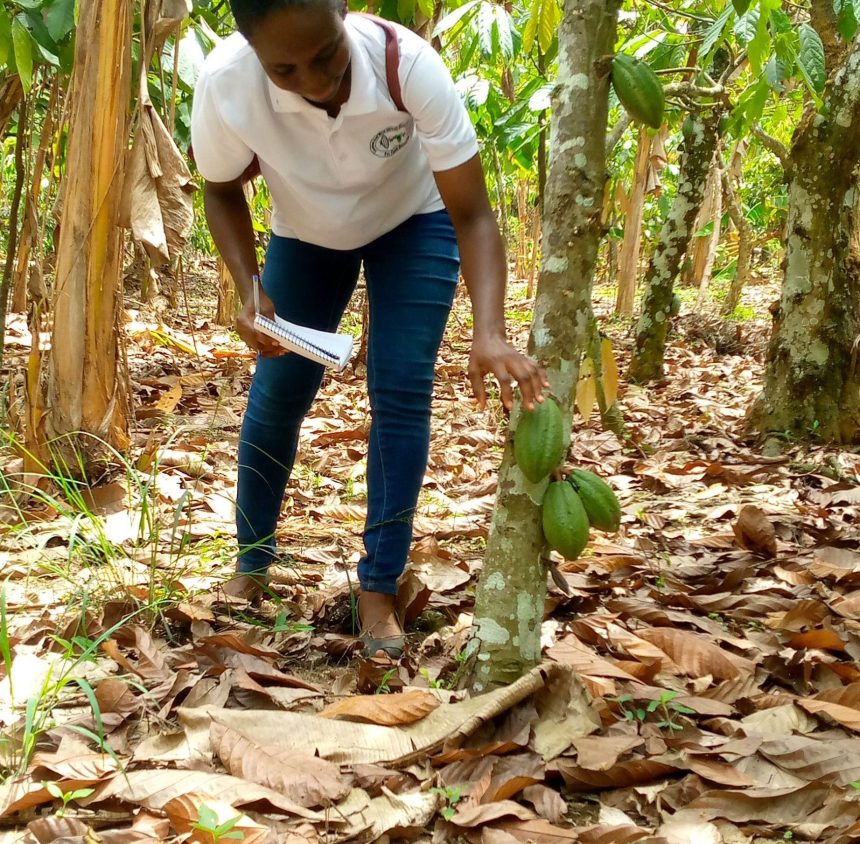
Cocoa farmers in the Eastern Region have asked the Ghana Cocoa Board (COCOBOD) and the government to speed up payments for beans they supplied since November 2025.
The farmers said the delay in receiving their funds was deepening financial hardship across cocoa‑growing communities.
In an interview with the Ghana News Agency, the farmers acknowledged signs of economic stabilisation but said delayed payments were straining household budgets, forcing many to borrow to cover basic expenses and eroding confidence in the cocoa purchasing system.
The appeal comes at a time when COCOBOD is reported to be experiencing liquidity challenges due to global price fluctuations and high financing costs, raising concerns about the sector’s sustainability and the welfare of smallholder cocoa producers.
The producer price for the 2025/26 season was set at GHS3,625 per 64 kg bag, but farmers say they have yet to receive payments, leaving them unable to meet basic needs.
“Yesterday, my children could not go to school because I couldn’t sell my cocoa,” said Comfort Tetey, a farmer at Obotumpan. “I was frustrated because it is my source of income as far as my children’s education is concerned.”
At Ampedwee, Emmanuel Kpodo, a single parent, also said his five bags of cocoa had been with a purchasing clerk since November.
“There is no sign of getting money. I am deeply dissatisfied,” he told the Ghana News Agency.
Farmers in larger communities, such as Dade Mantse, expressed similar frustrations, noting that unpaid arrears were making it impossible to settle labour costs. Some have resorted to loans from traders and moneylenders to survive.
Dr Randy Abbey, the Chief Executive Officer of COCOBOD, acknowledged the crisis, citing liquidity challenges and heavy debt obligations.
He disclosed that the Board inherited GHS32.91 billion in debt, including USD commitments of $481 million and GHS commitments of GHS10.06 billion due in 2025/26.
He explained that rollover contracts had worsened the situation and that COCOBOD contracted 333,768 tonnes at $2,661 per tonne but delivered 235,394 tonnes purchased at a producer price of $3,100 per tonne, requiring an additional $103 million to meet farmer payments.
The rollover also cost COCOBOD US$941.58 million in lost revenue, as beans could have been sold at the market price of $6,600 per tonne, while incurring GHS4 billion in debt.
He further noted that an AFDB facility of $350 million meant to rehabilitate 156,400 hectares of Cocoa Swollen Shoot Virus Disease-affected farms had been fully spent, yet only 40,000 hectares were completed.
An additional GHS 700 million was required to finish the programme.
COCOBOD’s annual wage bill of GHS 2.64 billion for 10,014 permanent staff and 8,671 contract, casual and NSS workers, alongside GHS 26 billion in cocoa roads’ commitments against an allocation of GHS 4.7 billion, has further strained finances.
“We can appreciate the concerns, pain, and apprehension. Government and COCOBOD are seriously looking at how to address it,” Dr Abbey said.
Meanwhile, the government held an emergency cabinet meeting on Wednesday, February 11, to deal with problems in the cocoa industry and come up with ways to speed up payments to farmers and stabilise financing for cocoa purchases.
The cabinet also looked at plans to increase cocoa processing in the country and make the whole value chain more resilient.
Mr Felix Kwakye Ofosu, the Minister for Government Communications and Spokesperson, said that Finance Minister Cassiel Ato Forson will talk to the press on Thursday at the presidency.
He will talk about a new way to finance cocoa purchases, plans to pay off debts, and ways to make buying more efficient.
He will also outline reforms being looked at to increase domestic processing to reduce exposure to global price swings and add more value.
The steps are meant to bring back farmers’ trust and make sure the sector stays stable over the long term.
Some farmers, like Nana Ama Ofosua, have diversified into plantain and cassava to cushion the impact.
“Diversification has helped me avoid hardship. I encourage others to adopt such practices,” she said.
Despite such coping strategies, most farmers remain dependent on cocoa.
The farmers are urging the government and COCOBOD to act swiftly to restore confidence in Ghana’s most important export industry and safeguard livelihoods.