With their nets at the ready, tens of thousands of fishermen were poised to take part in a traditional festival in northern Nigeria last weekend after a six-year break due to Covid and security concerns.
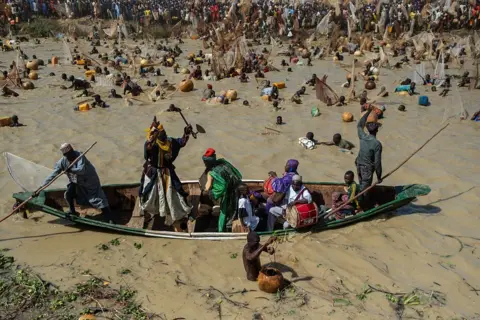
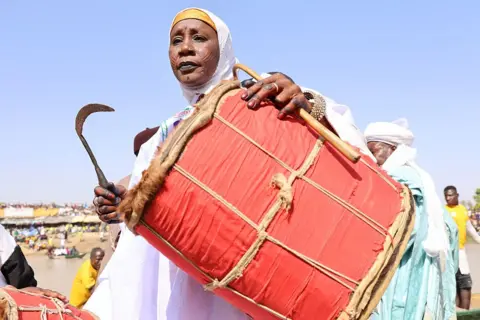
The drummers beat out the traditional rhythm of the Kabawa people as the Sarkin Ruwan, or custodian of the river, performed a ceremony before the competition could begin at this decades-old event.
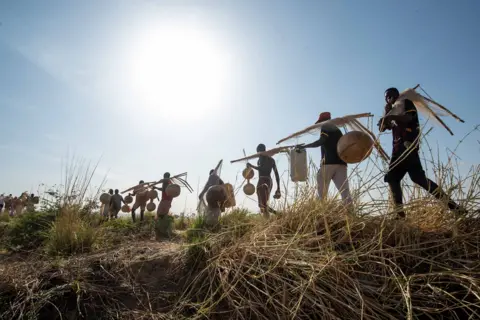
Participants had been gathering since early in the morning.
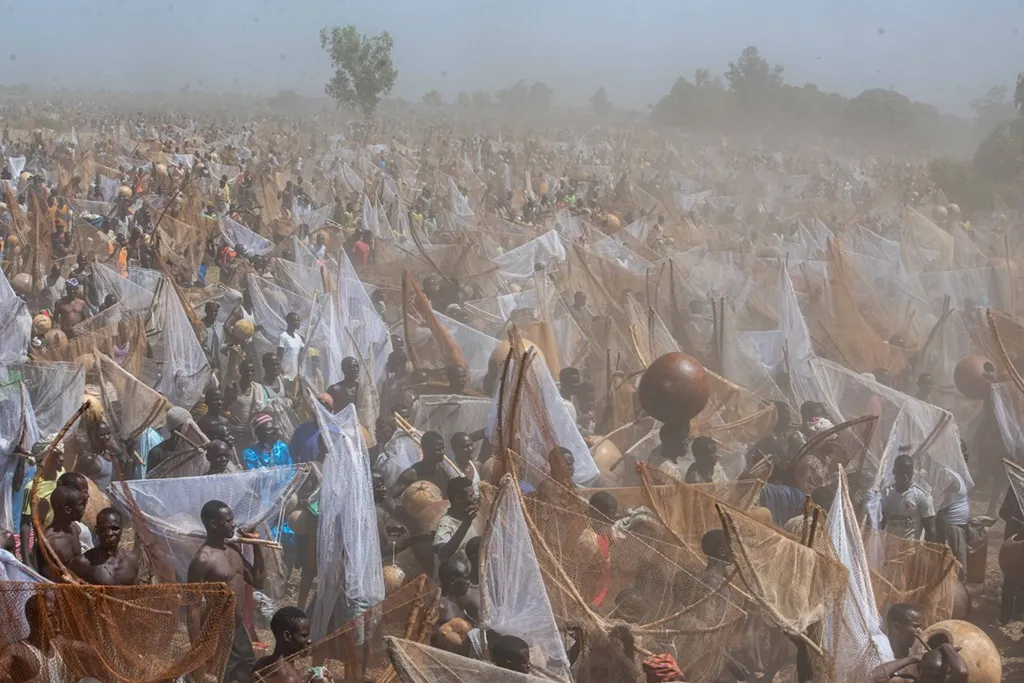
They then began the sprint towards the Matan Fada river, which is closed for the rest of the year to allow fish stocks to grow ahead of the festival.
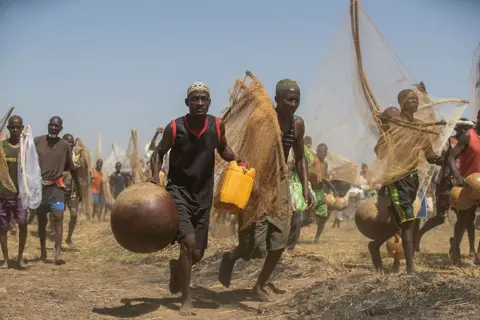
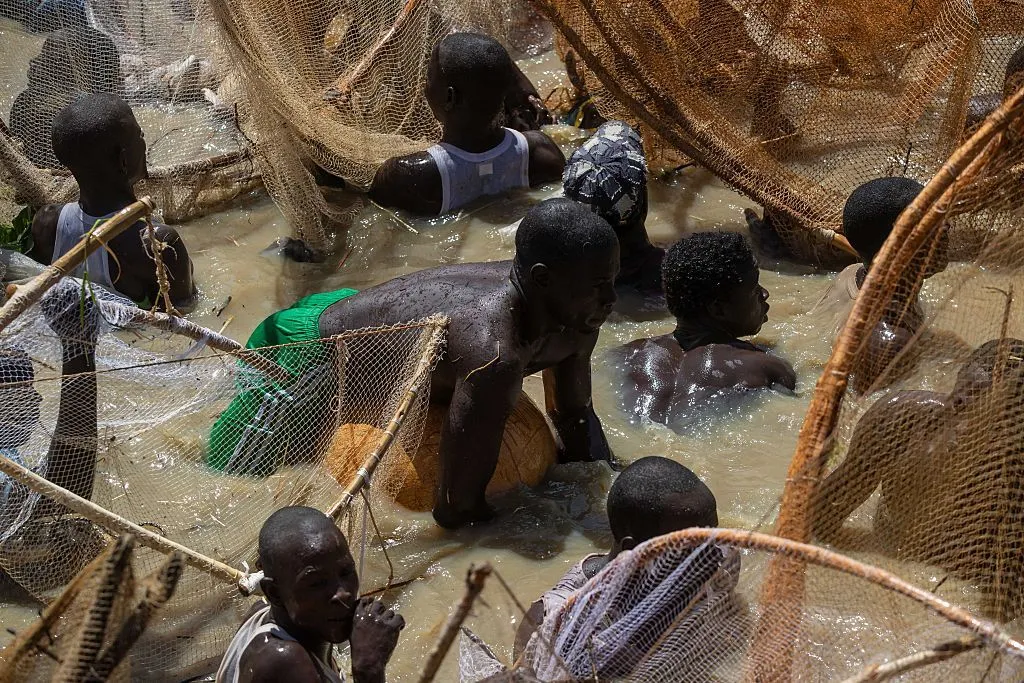
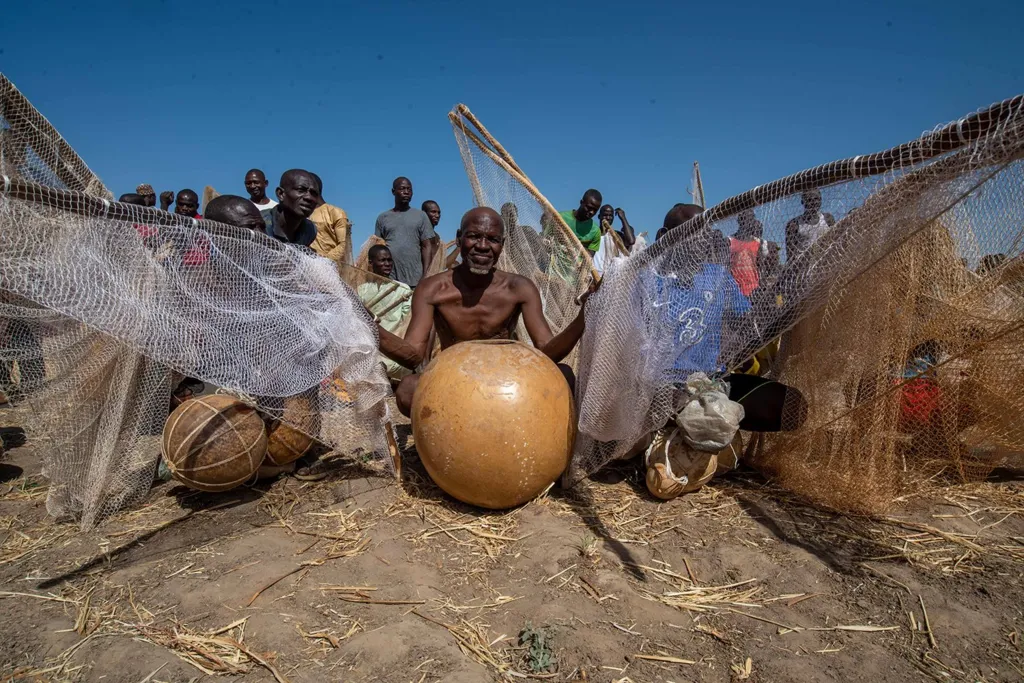
The fishermen waded through the water, which reached to their chins in parts, and dragged their nets along the bottom. The gourd was used as a buoyancy aid and a place to put the catch.
The Sarkin Ruwan oversaw the competition from his canoe.
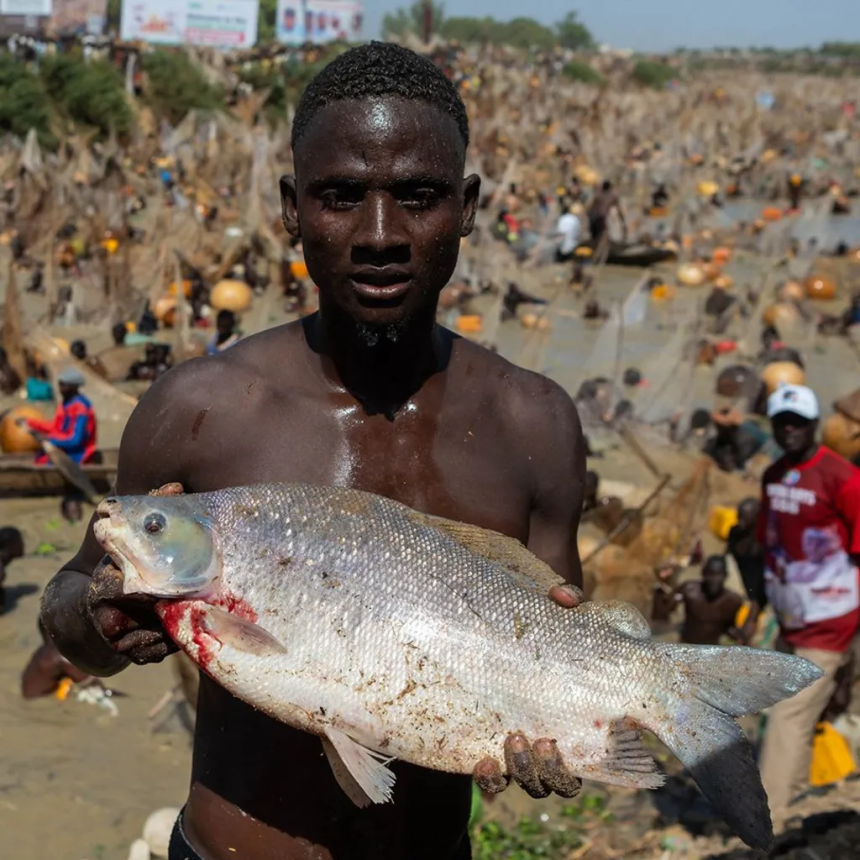
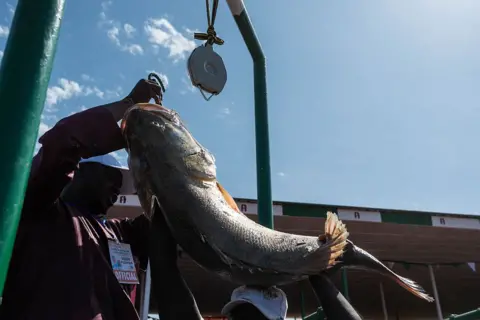
Once on dry land, the fish were handed to the judges, who hauled the enormous creatures onto the scales.
The winner caught a giant croaker fish weighing 59kg (9st 2lb) and was awarded two new cars and 1m naira ($740; £550) in prize money.
Other huge fish, like the one below, were also pulled out of the river but fell short of first place.
With roots stretching back a century, the festival formally began in 1934 as a way to cement peace between two previously warring sides – the Kebbi Kingdom, and the Sokoto Caliphate.
The Sarkin Ruwan, Alhaji Hussaini Makwashe, above, described Argungu as a place where people can share their love and celebrate the culture of this part of Nigeria.
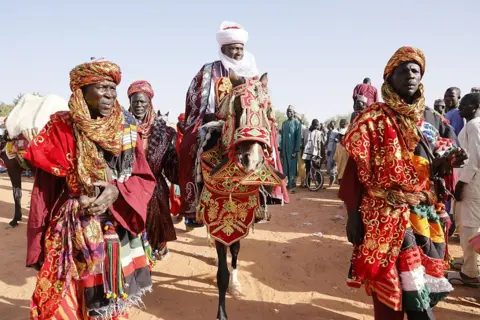
The event, recognised by the UN’s cultural organisation, Unesco, now attracts tens of thousands of participants and spectators from Nigeria and neighbouring countries.
Ibrahim Gulma, above, said that it was the visitors from across Nigeria and elsewhere in the region who made Argungu special.
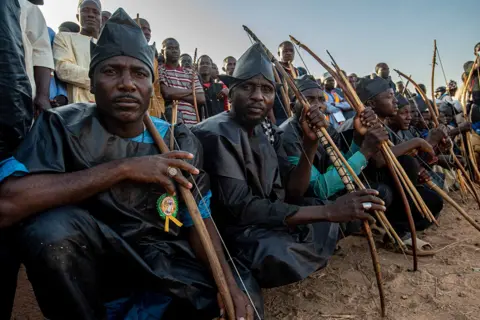
Dozens of other competitions took place in the build-up to the fishing challenge on the fourth day, including archery.
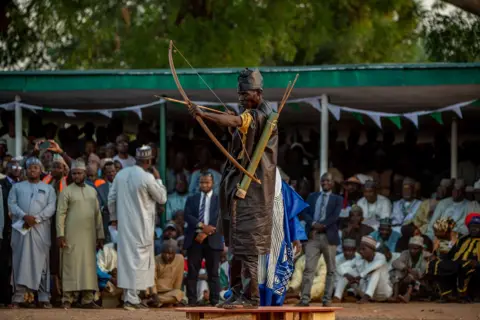
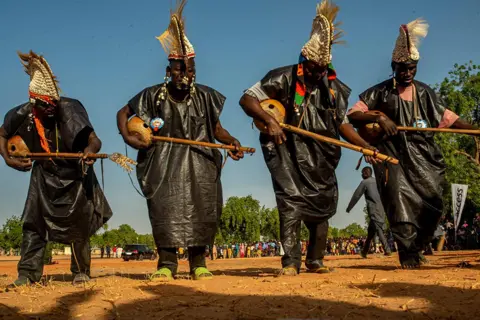
Traditional music and drumming also provided an accompaniment to the activities.
The traditional combat sport of dambe also attracted huge crowds.
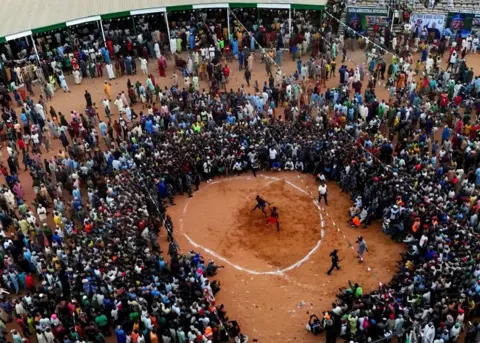
Fighters wrap ropes around their punching hand, named “the spear”, and block oncoming blows with the other, referred to as the “shield”.
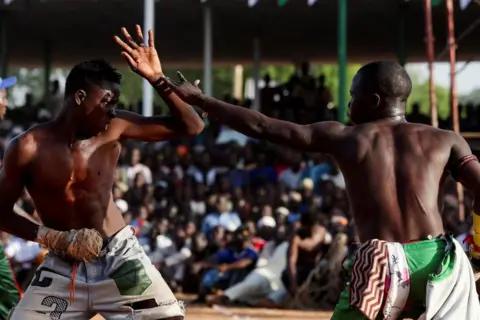
The aim is to knock out or knock down your adversary.
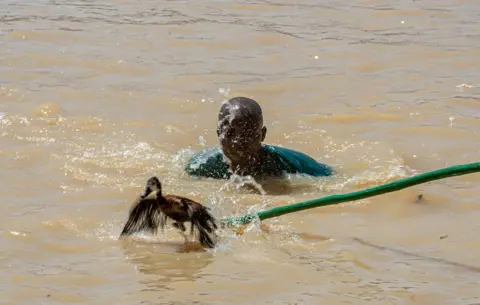
Back on the water, people competed in the wild duck-catching competition.
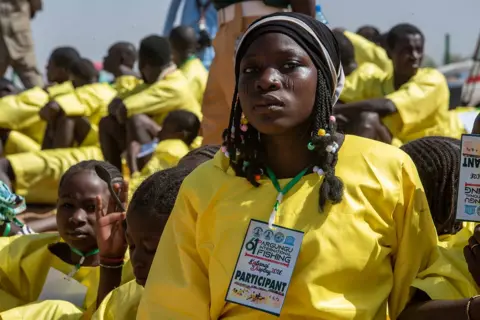
And younger girls got the chance to try their luck in bare-handed fishing.