
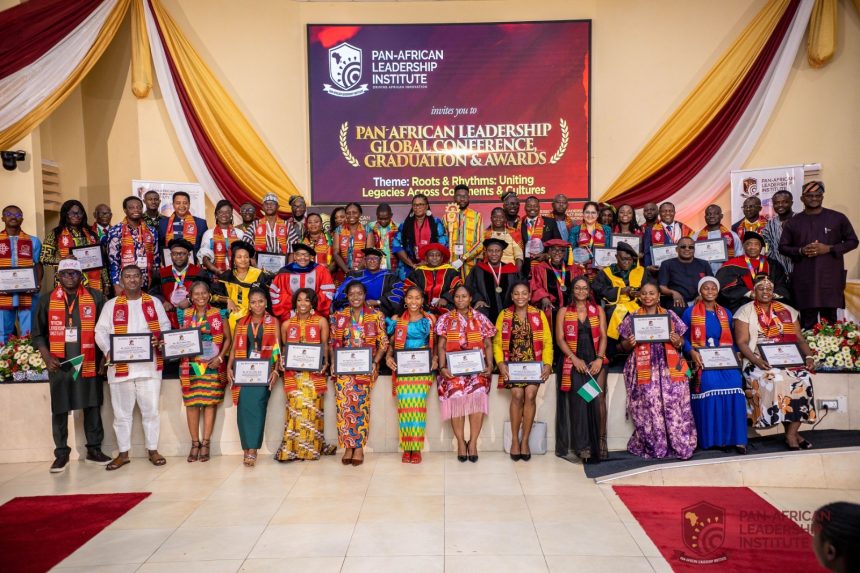
The Pan‑African Leadership Institute (PALI) has urged its 2026 graduating class to assume responsibility for driving a new wave of ethical, disciplined and data‑driven leadership across Africa.
Dr Ade Adebajo, the Chancellor for PALI stated that African leadership was undergoing a significant transition from traditional models toward a more professional, accountable and skill‑driven generation.
He said this at the Pan-African Leadership Institute Graduation and Awards Ceremony, where 327 graduates from 54 countries were honoured at the Institute’s Graduation and Awards Ceremony held in Accra.
The event was held on the theme: “Roots and Rhythms: Uniting Legacies Across Continents and Cultures.”
He said the effectiveness of the graduating cohort was evident, with several serving as Members of Parliament, senators, and business executives, demonstrating PALI’s growing influence in shaping continental leadership.
He urged the 2026 graduates to apply the principles of servant leadership within their workplaces and communities, and to focus on problem‑solving, integrity and value creation as they embark on new responsibilities across the continent and beyond.
Dr Adebajo explained that leadership capacity determined the scale of impact a leader could achieve, noting that development programmes were essential for strengthening decision‑making, institutional competence and personal effectiveness.
He announced that the Institute would introduce new specialised programmes, including Healthcare Leadership, Financial Leadership and Tourism and Hospitality Leadership, to respond to emerging regional needs.
He reaffirmed PALI commitment to developing a new generation of leaders who are globally competent yet deeply rooted in African values.
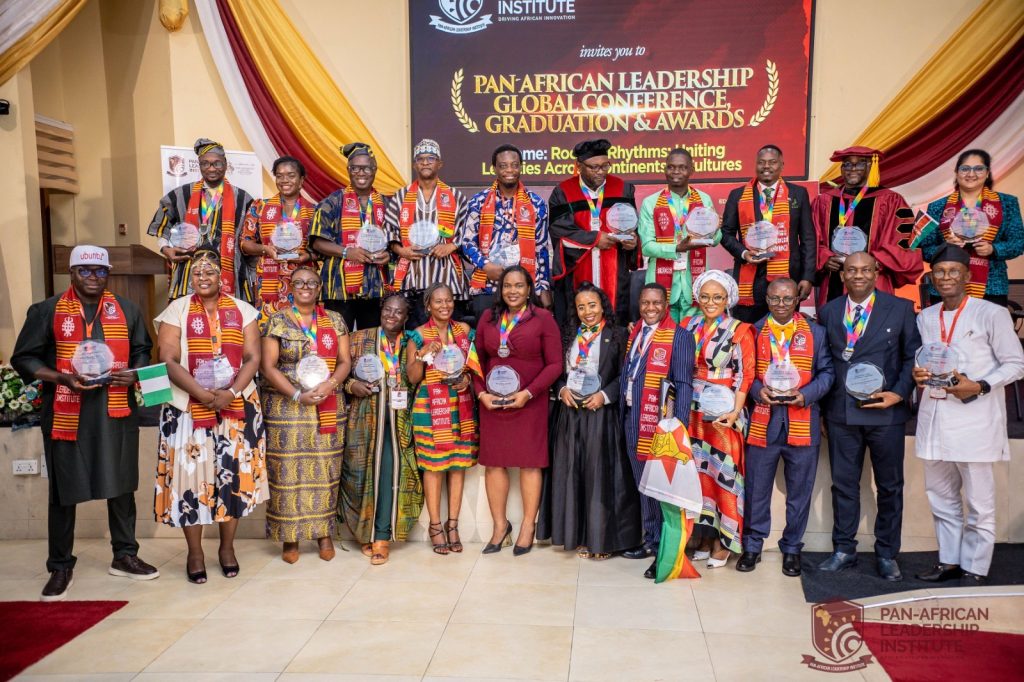
The Chancellor emphasised that as global supply chains shift and South‑South cooperation strengthens, Africa must cultivate leaders capable of building institutions, advancing economic collaboration and translating Pan‑African identity into measurable development outcomes.
Dr Kofi Osei‑Kusi, the President of the Institute emphasised the changing landscape of global cooperation and called for a shift from dialogue-centered engagements to practical economic action between Africa and the Caribbean.
He praised the graduating class for donating US$1,000 to the Princess Elizabeth Centre in Trinidad and Tobago, describing the gesture as an example of servant leadership and continental solidarity.
Dr Osei‑Kusi added that police officers from Trinidad and Tobago who completed PALI programmes would receive formal recognition at a dedicated event to be held later in the year.
GNA