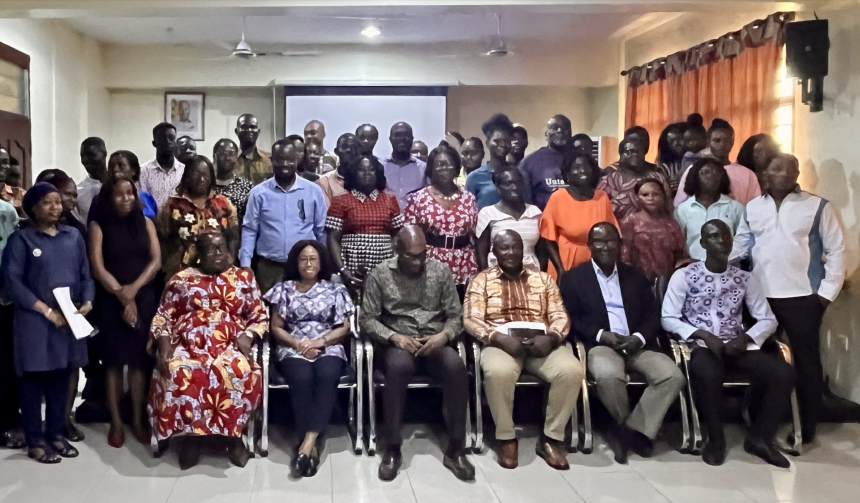
Sixty entrepreneurs are to begin an eight-week intensive training programme in fish value addition aimed at promoting youth employment, reducing post-harvest losses, and strengthening agribusiness development in Ghana.
The training, organised under the ECOWAS Youth Employment Initiative in partnership with the West and Central African Council for Agricultural Research and Development, is being hosted by the Council for Scientific and Industrial Research – Food Research Institute.
Participants will receive practical training in processing a wide range of value-added fish products, including smoked tilapia and catfish, koobi in oil, koobi chunks and powder, fish gut oil, fish chips, fillets, spicy fish chunks, minced fish, and fish sausage.
Speaking at the opening ceremony in Accra, Dr Amy Atter, the Local Training Coordinator, said the programme was designed to bridge the gap between raw fish production and profitable agribusiness enterprises.
She explained that beyond technical training, the initiative would equip participants with essential business development skills such as packaging and branding, record keeping and costing, compliance with Food and Drugs Authority certification requirements, marketing strategies, and the preparation of practical business plans.
By the end of the training, she said each participant was expected to acquire at least 10 product development skills and the knowledge required to establish or expand a sustainable fish processing enterprise.
Mr Edward H. Decker, National Training Coordinator, said the programme went beyond technical training to incorporate entrepreneurship development, mentorship, gender inclusion strategies, and monitoring mechanisms to ensure measurable outcomes.
He noted that by equipping beneficiaries with both practical skills and business development competencies, the initiative would support the creation of sustainable agribusiness enterprises, contribute to food security, and expand employment opportunities for young people.
Mr Decker said the initiative formed part of broader efforts by the Economic Community of West African States to empower young people through agribusiness and value-chain development.
They explained that fish value addition was critical to addressing post-harvest losses in the fisheries sector, extending shelf life, expanding market opportunities, and increasing incomes along the value chain.
Expected outcomes include the training of at least 60 persons in agricultural value chains, the development of at least 90 business plans, the establishment of a network of young agribusiness entrepreneurs, and enhanced employability among participants.
The initiative would also strengthen youth participation in agribusiness while promoting innovation and productivity in the sector.
Mr Decker reaffirmed CSIR’s commitment to delivering high-quality training, ensuring transparency in implementation, and achieving the targets outlined under the initiative.
He noted that investing in youth empowerment was essential for national and regional development, stressing that supporting young people would help drive innovation, productivity, and long-term economic prosperity.
Professor Charles Tortoe, Director of FRI, in a statement delivered on his behalf, said fish was very important to human growth and development but if not handled well, could be poisonous.
The training, he said, was a good empowerment process to innovate, improve income, and contribute to food safety.
GNA