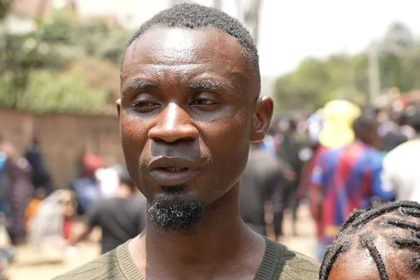
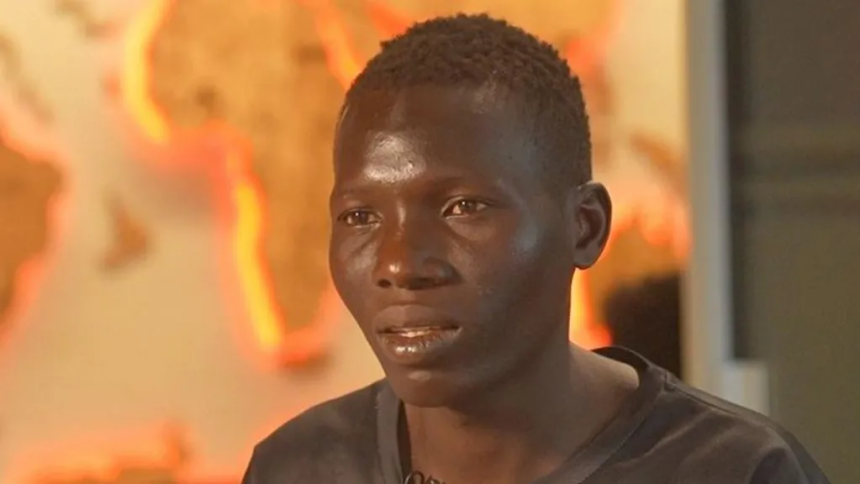
Not listening to his mother cost 23-year-old Nigerian Rasheed Wasiu dearly – more than five years of his freedom for something he did not do.
Now released from prison, where he was stuck waiting for his trial as the judicial process crawled on, Rasheed has no idea where she is. His mother has gone missing.
In October 2020, she had told him not to go out as widespread anti-police brutality demonstrations, known as the End Sars protests, swept into his area of Lagos, Nigeria’s bustling commercial heart.
People’s anger was directed towards the now-disbanded Special Anti-Robbery Squad (Sars) accused of robbing, attacking and even killing innocent people.
The reaction of the security forces to the 2020 demonstrations was to reach a crescendo on the evening of 20 October, when officers opened fire on a group of protesters in the city.
But the protests had been building over the previous fortnight, with some turning violent, and the police along with a local vigilante group began responding by rounding up anyone they thought might be involved.
On the morning of 20 October, Rasheed, 17 at the time, was trying to get to a painting job with a friend in an area called Amukoko, but on their way they learnt that violence had broken out there and so turned around.
When he arrived home, his mother told him to “stay indoors” and not to “go outside because of the protests” that had by that point reached his neighbourhood.
But as a disobedient teenager he ignored her and stepped out on the street again.
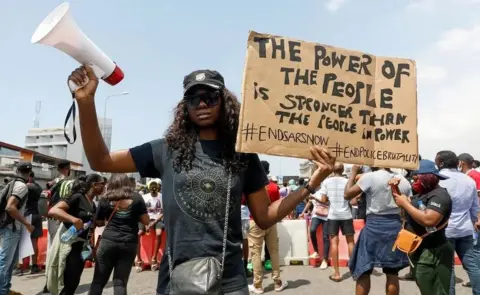
Although he says he did not join the demonstration, members of the vigilante Odua Peoples Congress (OPC) caught him in their dragnet and bundled him into a van alongside weapon‑wielding protesters.
His mother and neighbours remonstrated with the OPC, insisting Rasheed was not part of the group, but their pleas were ignored.
He was first taken to an army barracks and then moved to a prison – Lagos’s Kirikiri Correctional Centre – where he waited for his trial to start.
Rasheed says he was initially arrested on allegations that he had been involved in looting “but when I appeared in court, the offence on my charge sheet was ‘unlawful possession of firearms'”.
His experience and the charges chimed with many who were detained during the protests.
Speaking to the BBC, dressed in worn-out clothes and bathroom slippers, he sounds stressed and bitter as he recalls his incarceration.
“Jail is hell if you do not have money to ease your way through and cater for your needs,” he says.
“The food is miserable; we get weak after eating. The space is really congested. They locked up to 70 people in a tiny room at a time. There is no good healthcare, but if you have money, you can have access to good food, a bed and proper medications.
“There was a time a young man died in my cell, his leg was just getting swollen.” No-one had gone to help diagnose what was wrong.