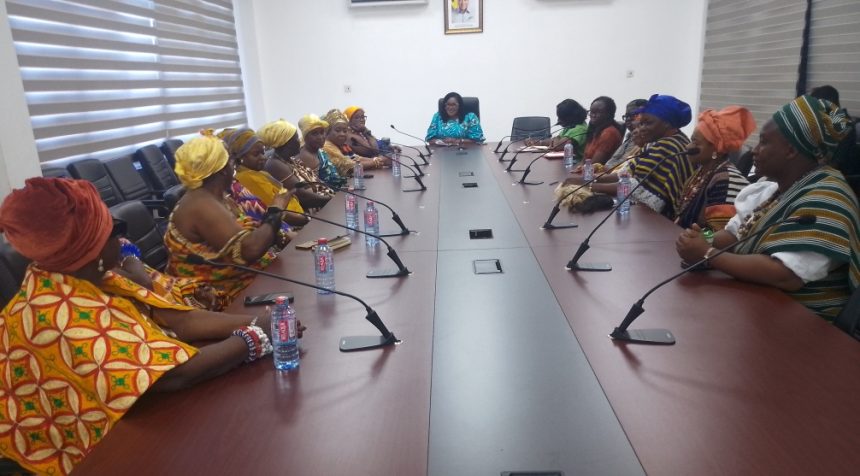
The Ministry of Gender, Children and Social Protection has appealed to regional queenmothers Association to support efforts to achieve 30 per cent women’s representation in leadership by the close of 2026, noting that women remain significantly underrepresented in elected positions.
The Ministry said queenmothers had a critical role to play in identifying, mentoring and grooming the next generation of women leaders.
Speaking at an engagement with regional paramount queen mothers, Dr Agnes Naa Momo Lartey, Minister for Gender, Children and Social Protection and Member of Parliament(MP) of the Krowor Constituency, in the Greater Accra Region, said the Ministry required active collaboration from queen mothers to encourage more women to contest elections.
Dr Lartey said negative stereotyping and the persistent association of female politicians with promiscuity continued to discourage many competent women from seeking leadership roles.
“The attacks, insults and shaming push many capable women out of the race before they even start,” she said.
She urged queen mothers to provide direct support to young women in their communities who aspire to leadership positions.
According to her, such support should include mentoring, coaching and guiding women through the processes of declaring interest, campaigning and navigating political party structures.
Dr Lartey encouraged women to remain persistent in pursuing leadership opportunities despite setbacks.
“Leadership is not always won on the first try. They should not give up if they do not succeed at first,” She added.
Responding on behalf of the Association, Nana Otubea II, President of the All Regional Queen Mothers Association and Paramount queenmother of the Nkonya Traditional Council, described the call as laudable and pledged the Association’s support towards achieving the 30 per cent target.
She commended Dr Lartey and the Ministry for their efforts in advancing the welfare and empowerment of women.
Nana Otubea II also praised Parliament for passing the Affirmative Action (Gender Equity) Act, 2024, describing it as a landmark legislation that would deepen Ghana’s democratic governance architecture.
She said the law would help improve female representation in leadership by mandating progressive targets and promoting gender parity in public life and decision-making.
Nana Otubea II urged that the full implementation of the Affirmative Action Act should include the integration of queen mothers into the National House of Chiefs, describing their exclusion as inconsistent with the principles of equity and inclusion.
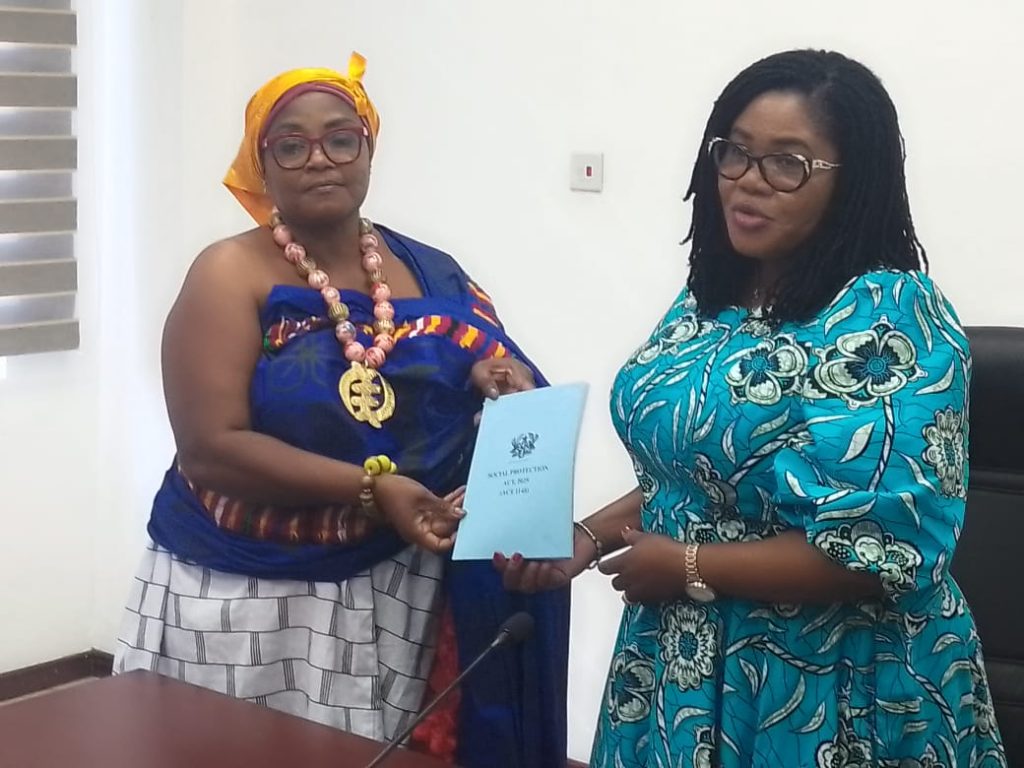
She argued that although queenmothers were recognised custodians of tradition under the Constitution, they remain excluded from the highest decision-making structures within the chieftaincy institution.
“The National House of Chiefs cannot be truly representative when half of our traditional authority structure is absent from the table,” she said.
She noted that queenmothers play central roles in dispute resolution, chief nomination, community development and women’s mobilisation, yet are sidelined when national chieftaincy policies are formulated.
Nana Otubea II cited the composition of judicial committees within regional and national Houses of Chiefs as evidence of systemic exclusion.
“When there is a case between a queenmother and a chief and it goes to the regional level, the judicial committee is made up entirely of men with no female representation,” she said.
She called for legal and administrative reforms to permit the election of paramount queen mothers to the National House of Chiefs, suggesting that at least one queen mother from each region be represented.
Nana Otubea II and the Association expressed appreciation to John Dramani Mahama and the Government for facilitating the passage of the Affirmative Action law, describing it as a historic milestone in Ghana’s gender equity journey.
She said the enactment of the law demonstrated political will to address long-standing structural barriers that had limited women’s participation in governance.
“For the first time, Ghana has a law that not only encourages gender equity but mandates it with clear timelines and accountability measures,” she said.
Nana Otubea II noted that queen mothers across the country had actively supported advocacy efforts leading to the passage of the legislation and would continue to monitor its implementation.
She said the Association would work with the Gender Ministry, Attorney-General’s Department and civil society organisations to ensure effective enforcement of the law, particularly in sectors where women remain underrepresented, including chieftaincy institutions, district assemblies and the security services.
“President Mahama has opened the door. It is now our duty as queenmothers, women and citizens to walk through it and ensure every institution meets the 30 per cent target by 2026,” she said.
GNA