
The Komfo Anokye Teaching Hospital (KATH), Ghana’s second-largest referral facility, is strengthening its research culture to improve evidence-based clinical outcomes and enhance tertiary healthcare delivery.
Dr. Paa Kwesi Baidoo, Chief Executive Officer of KATH, said the hospital had earmarked GH¢100,000 annually to support operational research as part of efforts to deepen scientific inquiry and innovation in patient care.
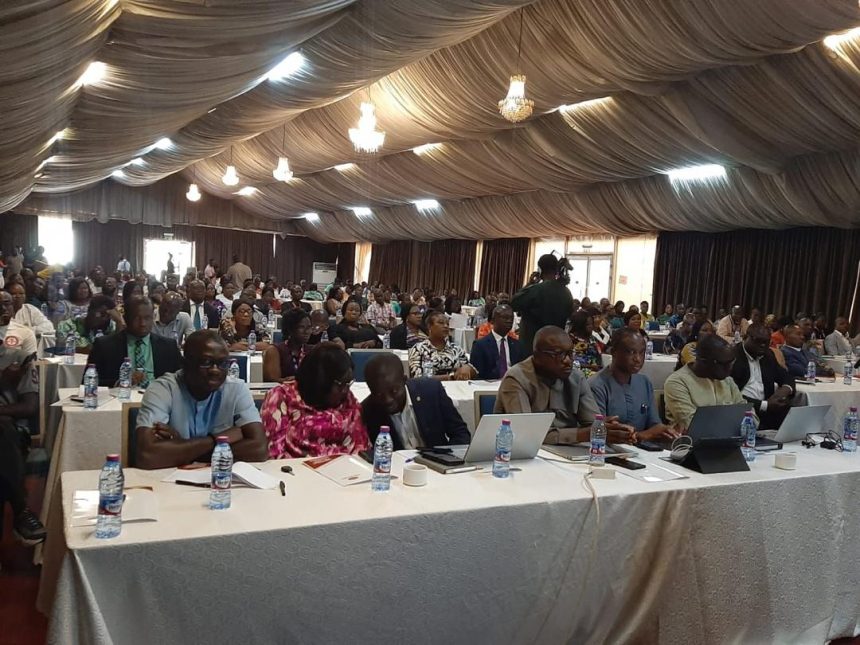
He was speaking at the hospital’s 2025 End-of-Year Performance Review Conference held in Kumasi on the theme: “KATH @70: Advancing Tertiary Health Care on the Pillars of Research, Customer-Centric Care and Clinical Mentorship.”
Dr. Baidoo emphasised that the hospital remained committed to research-driven, patient-centred care, supported by continuous capacity building and collaboration with other health institutions.
Despite challenges, including industrial actions by nurses, he noted that the hospital recorded significant progress across multiple fronts.
Among key infrastructure projects is the construction of a state-of-the-art Catheterisation and Cardiac International Centre, which, when completed, will enhance KATH’s capacity to provide advanced cardiac diagnostic and interventional services, and reinforce its position as a leading specialist healthcare provider in Ghana.
He said management had also rolled out clinical mentorship programmes to support the Ashanti Regional Directorate of the Ghana Health Service and other facilities to strengthen capacity and expand access to specialist care.
Additionally, staff members were supported to participate in international conferences to update their knowledge in emerging fields of medicine.
Dr. Baidoo said work was ongoing to complete the hospital’s Assisted Reproductive Technology (ART) Centre and a Patients’ Relatives Hostel to improve service delivery and patient experience.
He added that rehabilitation of the hospital’s road network and construction of pedestrian walkways were underway to enhance safety on the premises, while the stock of medical equipment had improved to boost quality healthcare delivery.
On performance indicators, the CEO disclosed that institutional deaths reduced by 16 per cent during the review period.
He said emergency attendance reached 26,581, surpassing the annual target of 25,000, while surgeries increased by six per cent, with 18,380 procedures performed compared to the target of 17,268.
Outpatient attendance also exceeded expectations by four per cent, recording 284,225 cases against a target of 273,144.
Dr. Baidoo indicated that radiotherapy, laboratory, and physiotherapy services all recorded marginal improvements.
Professor David Asamoah, Pro Vice-Chancellor of Kwame Nkrumah University of Science and Technology, commended the longstanding collaboration between KNUST and KATH, noting that their joint research efforts had produced practical solutions to healthcare challenges.
He described research as the engine of progress in the health sector and stressed the importance of combining clinical excellence with empathy, respect, and patient engagement.
Professor Asamoah added that the future of tertiary healthcare depended on strong partnerships and renewed commitment to research and innovation.
GNA