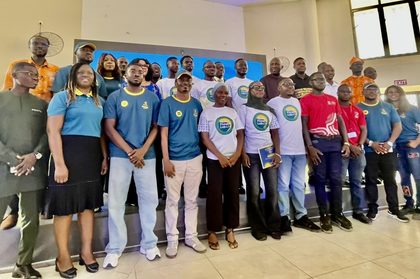
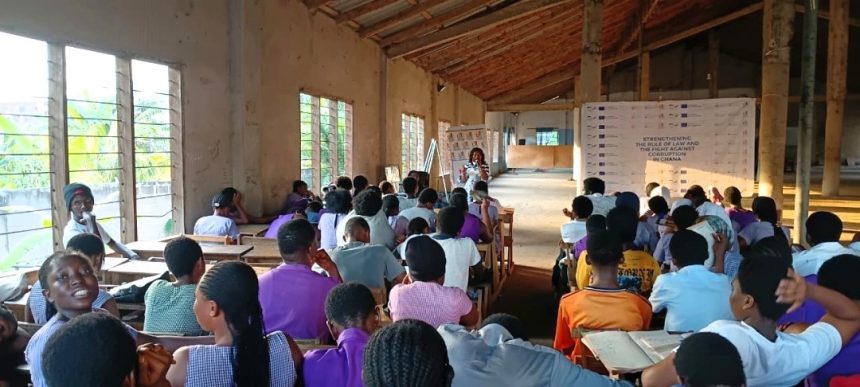
The Oforikrom Municipal Office of the National Commission for Civic Education (NCCE) has engaged students of Ideal College to strengthen their sense of civic responsibility and promote ethical conduct.
The engagement, held for members of the school’s Civic Education Club, aimed at equipping the students with knowledge on accountability, the rule of law and anti-corruption practices to help shape them into responsible citizens.
The programme, supported by GIZ and the European Union, forms part of the Commission’s project on Civic Engagement on the Rule of Law and the Fight Against Corruption.
A total of 81 students participated in the interactive session, which focused on enhancing their understanding of public accountability, ethical leadership, and responsible civic behaviour.
Ms. Rosina Owoo, the Municipal Director, urged the students to cultivate values that would make them responsible and effective leaders in future.
She stressed that accountability and transparency were critical to good governance and the fight against corruption, adding that citizens had the right and responsibility to demand accountability from duty bearers.
Ms. Owoo noted that without strong ethical values, efforts to combat corruption would yield little results, and encouraged the students to allow ethics to guide their actions and decisions.
She advised them to take their academic work seriously, obey the laws of the country, report wrongdoing, and actively participate in national development processes.
Mr. Samuel Appiah of the Commission on Human Rights and Administrative Justice (CHRAJ), took the students through the Whistleblowers Act, 2006 (Act 720) and issues of conflict of interest.
He explained that the law protected individuals who reported corrupt or unlawful practices from victimisation and outlined procedures for disclosure and available incentives.
Mr. Appiah also highlighted how conflict of interest situations could compromise judgement and objectivity, using practical scenarios to deepen the students’ understanding.
He encouraged the students to make use of the law as a tool in the fight against corruption, stressing that promoting integrity and accountability was a shared responsibility.
The engagement forms part of ongoing efforts by the NCCE to empower young people with the knowledge and values needed to contribute meaningfully to national development.