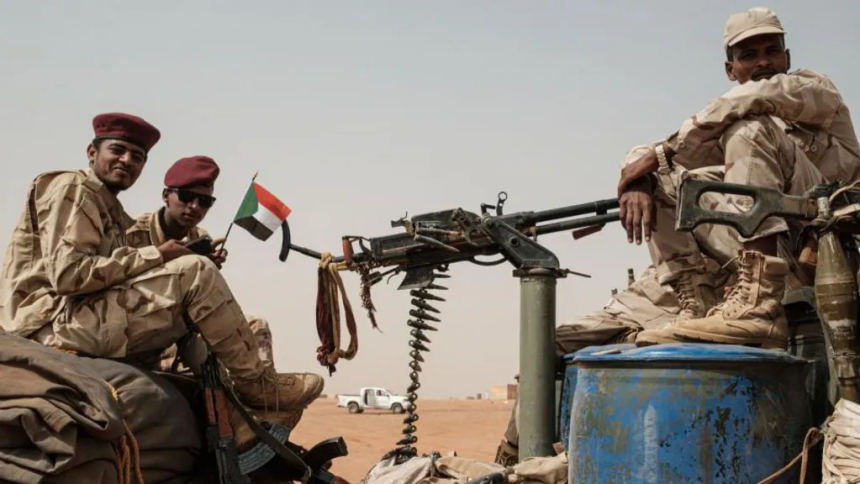
Colombian mercenaries were recruited by a United Arab Emirates-based company and transited through Emirati military bases to support paramilitary troops who committed atrocities in Sudan, a leading rights organisation alleges.
According to Human Rights Watch (HRW), the findings are further evidence of UAE-backing for the Rapid Support Forces (RSF), which has been accused of war crimes during the Sudanese civil war.
The UAE denies claims it recruited and trained foreign fighters in its territory.
“The UAE does not permit its territory to be used for the recruitment, training, financing or transit of foreign fighters to any conflict, including Sudan,” its ministry of foreign affairs said.
The HRW investigation was conducted through interviews with Colombian mercenaries between March and September 2025 as well as an analysis of social media posts identifying key locations and weapons in videos and images.
War broke out in Sudan on 15 April 2023, following growing tension between the paramilitary RSF forces and the Sudanese army.
Since then more 150,000 people are believed to have died from the violence and more than 12.9 million have been displaced.
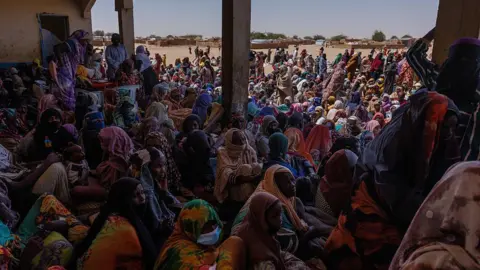
The HRW report follows last month’s research by security analysis organisation, the Conflict Insights Group (CIG), which also highlighted the alleged involvement of Colombian mercenaries in Darfur, Sudan’s western region now largely held by the RSF.
Colombian President Gustavo Petro was quoted last year as calling the mercenaries “spectres of death” and describing their recruitment as a “form of human trafficking”.
HRW says airports in the UAE, Libya, Chad and Somalia were used as transit points for the mercenaries before travelling to the frontlines in the Darfur region.
“They didn’t stamp our passports,” a mercenary told the rights group, describing his journey through the UAE capital, Abu Dhabi.
“We went in and went out and there was a bus waiting for us to take us to a military base.”
Investigations by the rights organisation point to the involvement of a complex network of Colombian and Emirati companies which advertised “drone pilot work in Africa” targeting former Colombian army men.
HRW alleged that an Abu Dhabi-based company recruited the Colombian contractors who were deployed to Sudan to “provide the RSF with tactical and technical expertise, serving as infantry and artillerymen, drone pilots, vehicle operators, and instructors”.
According to HRW, the mercenaries were then trained in UAE military facilities in Ghiyathi and Al Wathba before covert deployment to war zones in Sudan where gross human rights violations such as mass extrajudicial killings, rape and gang rape, sexual slavery, looting and destruction of civilian infrastructure were allegedly committed.
The RSF has faced particular international outrage following its violent capture of the city of el-Fasher last year.
The United Nations Human Rights Office estimates that more than “6,000 were killed within the first three days of the RSF offensive”.
“In November and December 2025, six el-Fasher residents told Human Rights Watch they saw people they believed were Colombians in the city in October 2025, when mass killings were taking place,” the HRW report states.
A survivor detained by the RSF who is quoted in the report said he saw “foreign fighters” who “looked on silently” as RSF fighters opened fire on crowds. Another reported seeing “white fighters” alongside RSF fighters who killed three.
“They were there when the executions happened, but they didn’t execute.”
RSF leader Gen Mohamed Hamdan Dagalo last year declared an investigation into what he called violations committed by his soldiers during the capture of el-Fasher.
The HRW report also says munitions belonging to the UAE armed forces were found after the capture of Colombian mercenaries inside Sudan. Some of the munitions were manufactured in Serbia and Bulgaria but purchased by the UAE, according to HRW.
HRW has called for the UN, African Union, and the UK and US governments to speak out about the UAE’s alleged involvement in the war in Sudan.
In December 2025, the US imposed sanctions on a network and individuals – primarily of Colombian nationality – it said was recruiting former Colombian soldiers and training them to fight in Sudan.
The UAE told the BBC allegations that Emirati companies were involved in supporting the RSF had been investigated.
“Where allegations have been made about specific entities, the relevant authorities have investigated, including by making inquiries with companies cited in open sources,” the foreign ministry said in a statement.
“Any individual or entity – Emirati or foreign – that were to act in a way that could reasonably be interpreted as providing operational support to an armed non-State actor would be doing so without state authorisation, in violation of Emirati law, and would be subject to criminal investigation and prosecution.”
The statement added that the country “remains committed” to working with its partners to “alleviate the suffering of the Sudanese people” by securing a lasting ceasefire and help create what it called an “inclusive, Sudanese-owned transition to an independent civilian-led government”.