Mr Haruna Iddrisu, the Minister of Education, says the Government is making progress to revolutionise the education system with digitalised skills to meet 21st-century learning outcomes.
The government, he said, had prioritised the digitisation, modernisation, and humanisation of the country’s education system.
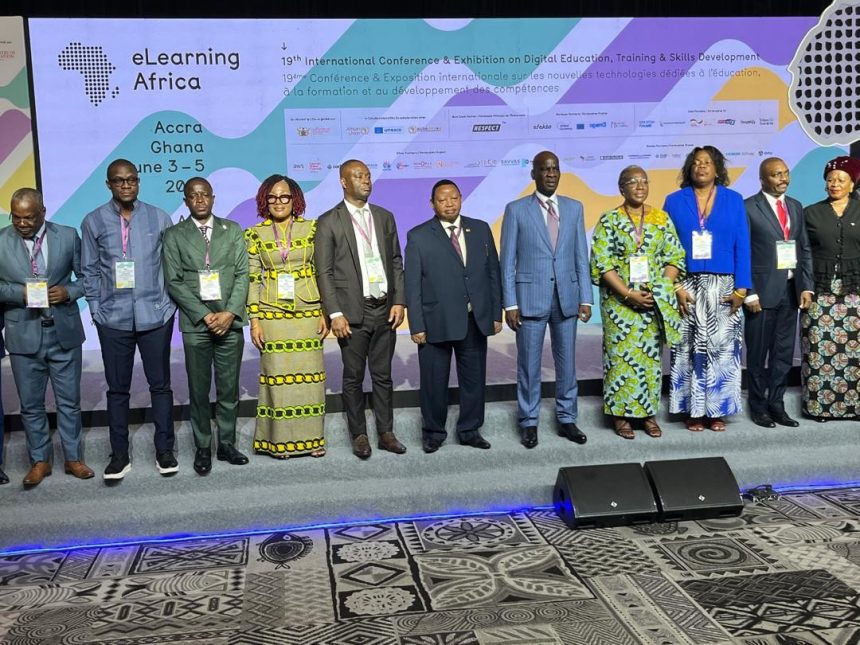
The Minister said this on Wednesday at the opening of the 19th edition of eLearning Africa in Accra.
The conference is on the theme: “Africa’s Time, Africa’s Terms: Learning for Sovereignty, Strength and Solidarity”.
He said government collaboration with Mastercard Foundation EdTech Fellowship supported 36 Ghanaian EdTech ventures with over 690,000 learners reached, with nearly half being girls from rural and underserved communities.
The Government launched the Basic Science, Technology, Engineering and Mathematics (BSTEM) programme in August 2025, integrating coding, artificial intelligence, and robotics into basic education.
He said the Senior High School Transcript Portal and related Subject Specific App were operationalised and being used by more than 70 per cent of teachers nationwide.
Mr Iddrisu said the national curriculum microsite had reached over 8.8 million downloads, with professional learning community participation at 88 per cent.
“Tablet deployment in Senior High Schools expanded from 30 to over 420 schools within one year.
“Critical fact is the mobile penetration rate of 110 per cent,” he said.
Across Africa, approximately 60 per cent of the population is under the age of 25, yet only about 38 per cent of Africans use the internet, while between 70 and 80 per cent of young people in Sub-Saharan Africa lack basic digital skills.
“Decisions regarding data, digital platforms, and artificial intelligence were often made outside our continent,” he said.
“We must invest in artificial intelligence literacy at all levels, establish ethical frameworks rooted in African values, and ensure the inclusion of African languages in emerging technologies.”
Mr Iddrisu noted that Ghana was committed to developing a National Artificial Intelligence in Education Policy to guide ethical deployment and safeguard learner data.
He said Africa positioned its young people to thrive through TVET institutions to deliver industry-aligned digital skills.
The minister said stronger partnerships between universities and the private sector, and regulatory environments, were key in enabling startups to flourish.
“Ghana will continue to invest in professional development, digital pedagogy, mentoring, and targeted support for professional teachers,” he said.
Mr Iddrisu indicated that Ghana was working to ensure that no learner was left behind through expanded rural internet access, accessible digital platforms for learners with disabilities, and deliberate support for girls in STEM.
“Through our EdTech programmes, data-driven investments have reached more than 105,000 rural learners and nearly 20,000 persons with disabilities,” he said.
Dr Ida Opoku Mensah, the Conference Chair, said the event would shape the future of society for generations.
The continent needed to champion sovereignty in the learning environment to reflect their identity as Africans, she said.