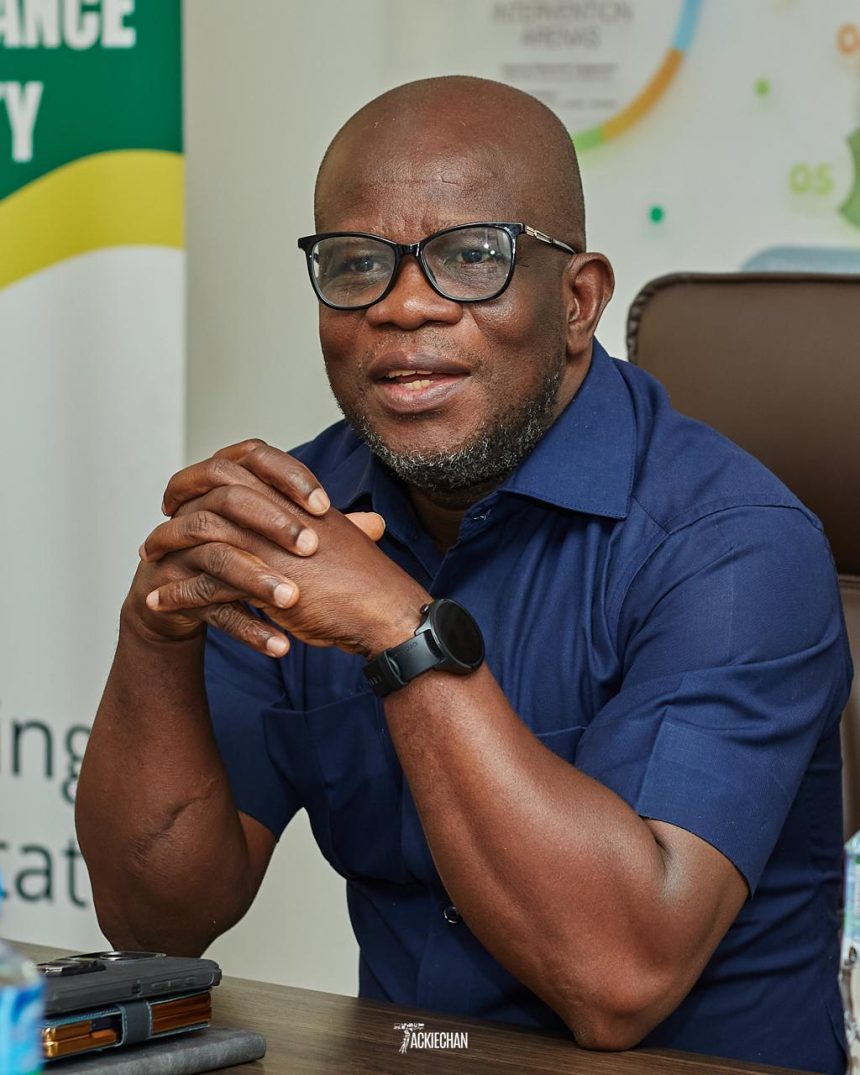
The Director-General of the State Interests and Governance Authority (SIGA), Prof. Michael Kpessa-Whyte, has publicly rejected a purported award after discovering that the recognition came with a price tag.
In a detailed statement, he urged fellow public officials to shun similar schemes that commodify public service.Prof. Kpessa-Whyte revealed that he was recently named “Best CEO of the Year” by an organisation calling itself the “Ghana Ministers of State Excellence Honours.”
The invitation, which arrived early this month, requested his presence at a ceremony at the La Palm Royal Beach Hotel.
However, when his staff sought clarification, they uncovered what the SIGA boss describes as a troubling condition: attendance and receipt of the honour would require a sponsorship package of GHC50,000 or the purchase of a dinner table of eight for GHC25,000.
“I opted not to be part of it,” Prof. Kpessa-Whyte stated.
While acknowledging that genuine recognition can encourage excellence, the Director-General questioned the transparency of the process.
He noted that organisers provided no information on the assessment criteria, the composition of the selection panel, the performance indicators used, or even the award period.
“I did not consider myself the ‘Best CEO,’ because in public service there is always much more work to be done,” he said.
He warned that when payment becomes a condition for visibility or receipt of an honour, “the exercise risks losing its moral authority. It begins to look less like an award and more like a pay-to-be-recognised arrangement.”
Prof. Kpessa-Whyte cautioned that state resources must not be diverted into “needless ceremonies of personal glorification.”
He argued that every cedi entrusted to a public institution should be treated as a sacred resource for advancing the mandate of that institution and improving the lives of Ghanaians.
“Public funds are not meant to purchase applause. They are not meant to finance vanity,” he said.
Prof. Kpessa-Whyte also urged all public appointees, heads of institutions, and civil servants to ask critical questions before associating with award schemes, including the credibility of organisers, assessment methodology, and whether payment is a condition for participation.
The SIGA boss reframed what constitutes meaningful recognition for public office holders.
According to him, the genuine honours lie elsewhere: a public institution that works better, a citizen who receives more efficient service, a young person who gains opportunity, and the restored confidence of the Ghanaian people.
“History will not remember us for the number of awards we collected,” he said.
“It will remember us for whether we used the opportunity of office to make Ghana better.”
He called on public officials to resist the “creeping culture of purchased prestige” and focus instead on delivery, reform, and service, not decoration or self-celebration.
Prof. Kpessa-Whyte framed his rejection within the broader context of Ghana’s efforts to “reset the country, rebuild public trust, restore discipline in public administration and redirect national resources toward the welfare of citizens.”
He stressed that the greatest honour for those serving in the current administration must be “the successful delivery of the reset agenda,” not ceremonial grandeur.
“That is the only honour worth pursuing,” he concluded.