Ghana’s annual waste generation is expected to jump from 4.75 million metric tons in 2025 to 8.55 million metric tons by 2050, the Ghana Circular Economy Center (GCEC) has predicted.
The GCEC is a flagship project supporting Ghana’s transition from a linear “take–make–dispose” model to a regenerative, circular economy.
Implemented by the United Nations Industrial Management Organisation (UNIDO), in partnership with the Ministry of Environment, Science and Technology (MEST) and funded by Global Affairs Canada, the five-year project (2022–2027) promotes sustainable and resilient enterprises and inclusive economic growth.
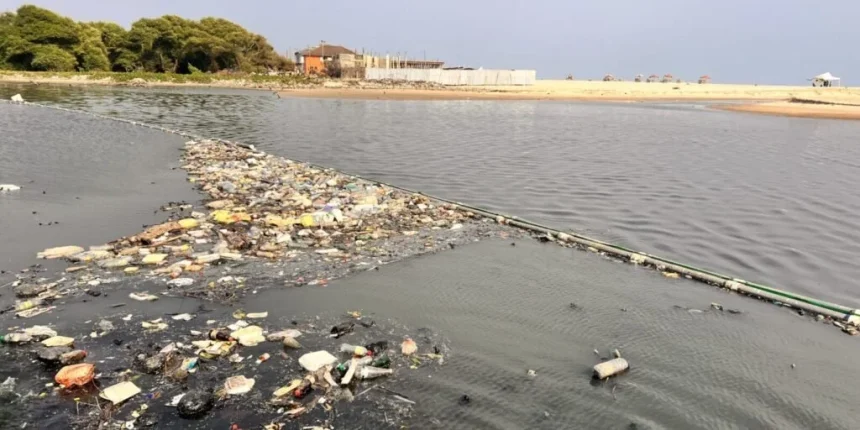
According to Mr Joseph Yeboah, the Strategic Partnerships and Engagements Lead of the UNIDO GCEC Project, the nation ought to take proactive measures to control the growing waste piles in urban areas as well as waterways being polluted with plastics and debris.
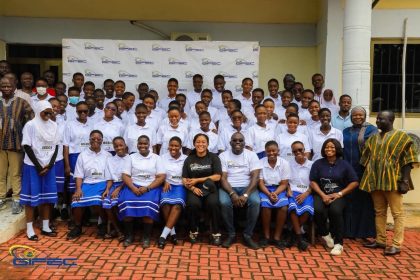
He was speaking at the closing session of a two-day foundational training on circular economy in Sunyani, attended by informal workers in the plastic value chain, organised by the UNIDO in partnership with the MEST.
Earlier, a similar training was also held for scrap dealers and plastic waste collectors in the Sunyani Municipality.
Mr Yeboah said the country’s population was likely to reach 55.5 million in 2050 from 35.3 million in 2025, urging the need for the nation to invest more into waste management to prevent future disasters.
On plastic waste, he expressed worry that only five percent of the 17 percent plastic waste collected annually was recycled, saying that annually the nation generated about 1.1 million metric tons of plastic waste.
He called for strong circular interventions to tackle the local evidence of environmental pressures like recurrent flooding and its attendant consequences on the nation.
Mr Yeboah said the country’s textile sector also imported about 144,000 tons of secondhand clothes annually, with about 23 percent becoming waste within weeks, especially at the Kantamanto Market in Accra.
He said that over 4,000 textile “tentacles” had washed into Korle Lagoon and the Jamestown beaches in Accra since 2021 with 100 percent microfibre pollution above global coastal averages detected in nearby waters.
In an overview, Mr Yeboah explained that the GCEC project implementation targeted key sectors like incubating, piloting, and validating circular solutions while empowering the financial sector, women, and youth to drive circular business growth.
With a budget of $5.3 million, the Centre contributes to Ghana’s development priorities and the SDGs (5, 8, 9, 12,13) by creating green jobs, reducing waste, enhancing competitiveness, and fostering sustainable production and consumption.
The GCEC was established at Ho Technical University and serves as a testing ground for new circular businesses, creates visibility for circular solutions and supports the development of strategic partnerships to advance the transition to a circular economy in Ghana.
The Centre works with the Kwame Nkrumah University for Science and Technology, University of Cape Coast and The Or Foundation as the technical leads for the priority sectors.
Ghana’s annual waste generation to hit over 8 million metric tons by