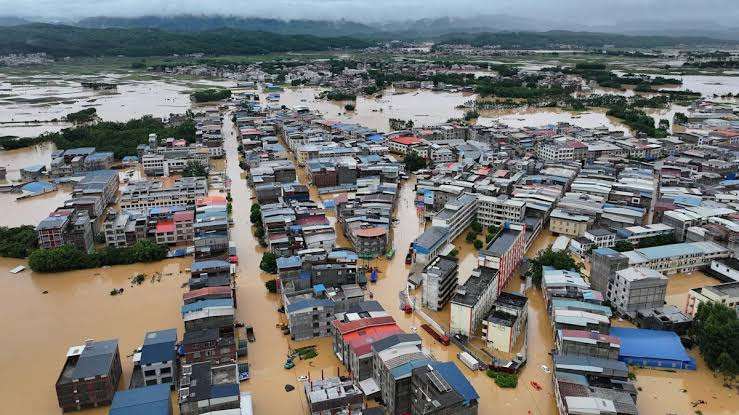
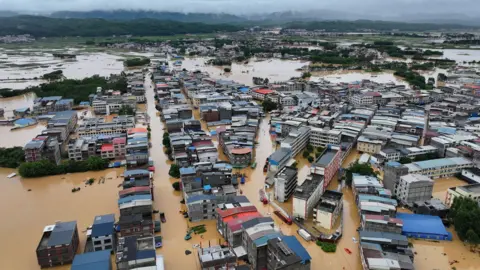
On Sunday, heavy rain began falling on Renhe village in the southern Chinese province of Guangxi.
The villagers were used to it. But the rain didn’t stop – and the water suddenly rose.
By the early hours of Monday, the water had reached their knees. By dawn, it had completely submerged the first floor of their homes.
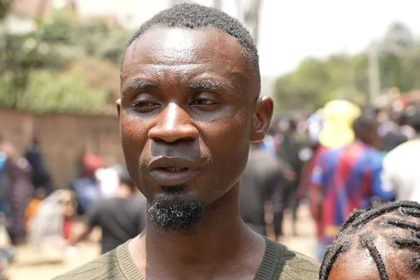
“The floods happened so rapidly, the water just came so fast. The villagers didn’t have time to take food with them when they were running away,” a woman from Renhe, whose surname is Zhou, told the BBC.
Zhou’s family is among tens of thousands of people in Guangxi displaced from their homes since Typhoon Maysak swept the region over the weekend, causing rivers to swell and dam walls to break. At least four people have died.
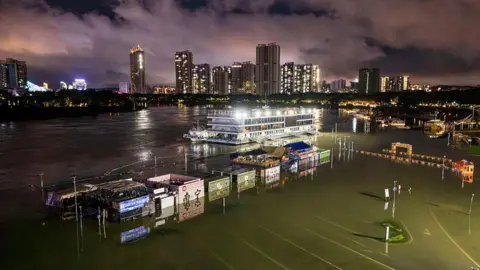
The typhoon has inundated the city of Nanning and surrounding villages, with residents calling for rescue from their rooftops.
It has also triggered thunderstorms, and even tornadoes, in the central province of Hubei – hundreds of kilometres away.
At least 17 people have died, hundreds more have been injured and tens of thousands have been evacuated, according to state media.
The devastation from days of extreme weather has prompted President Xi Jinping to order “all out” rescue and relief operations.
Typhoons that cause widespread flooding are common in China at this time of the year and Maysak is the first to make landfall in the country for the 2026 season.
State media said it has been characterised by “its sudden onset and intense, short-duration winds”.
Another storm, Super Typhoon Bavi, is churning across the Pacific, on course to hit China’s eastern coast later this week, according to forecasts.
Authorities in Nanning have warned that “extremely heavy rain” could hamper rescue efforts.
Extreme weather, which experts link to climate change, have increasingly threatened China’s residents and economy – especially its trillion-dollar agriculture sector.
‘We couldn’t rescue everyone in time’
Residents from Guangxi province have told the BBC that thousands remain trapped on rooftops, some in mountain villages, because of the floods.
The official count estimates 60,000 people have been evacuated and at least 90,000 in total are affected by the deluge.
Zhou, who is currently living in another province, said some of her family members are still trapped in their homes in Renhe and have limited food. Her four-month-old niece has gone for more than a day without milk.
“Other villagers are gathering at higher ground, but they are running out of supplies as well. There are too many villages affected, and not enough rescue workers.”
Another woman, whose surname is Huang, from the town of Yunbiao said it took just 10 minutes for floods to submerge villages in her area.
“We simply couldn’t rescue everyone in time. There were too few rescue personnel, and the lifeboats they brought were too small, they couldn’t travel very far.”
“Most of us can’t get in touch with our families because they have no internet, no communication, no electricity,” she said.
State media has been airing footage of rescuers at work, wearing life vests and helmets and riding inflatable boats.
Xi had underscored the importance of “treating the injured, resettling affected residents, and carrying out disaster prevention and relief work effectively”.
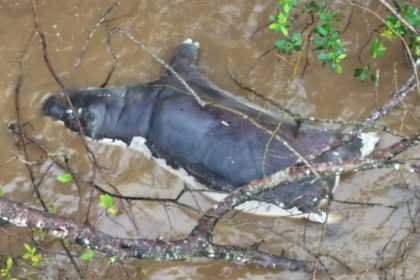
Several are also concerned about the presence of snakes in the waters.
Besides wild snakes, the floods have also allowed snakes from some farms in the city to escape, according to a report on state media.
Certain snake species are farmed in China for traditional medicine, meat and anti-venom.
Huang sent the BBC a video from her village’s WeChat group, which showed several residents looking alarmed as a large black snake slithered on their mud-covered floor.
‘Things started flying’
Meanwhile in Hubei province, at least two tornadoes have formed, wreaking havoc across cities.
Meteorologists said that it was caused by cold air from the north colliding with warm air brought in by Typhoon Maysak in the south.
Tornadoes are rare in the region, with the last one recorded in 2021 according to state media.
Videos of strong winds whipping through the cities of Ezhou and Huanggang have been circulating on Chinese social media.
One clip, apparently filmed from a restaurant, showed outdoor tables and chairs tossed around by the tornado and electrical sparks flying in the air, as diners screamed in terror.
Local media reported that a man in Huanggang was “sucked” out of his high-rise apartment and plunged 12 storeys to the ground, when the strong winds shattered his windows and blew the man along with his furniture out of the apartment. He is reportedly now in intensive care in the hospital.
A student in Huanggang told the BBC that he had thought it was “just an ordinary thunderstorm”, until he saw “things started flying through the air outside” the dormitory window.
“A lot of students were cut by flying glass,” he said. “It wasn’t until everything had finally stopped that I realized I had just lived through a disaster.”
Some parts of northern China have also seen extreme weather in recent days.
On Saturday, a flash flood in Tongliao city in Inner Mongolia left two cattle farmers dead while record rainfall in Fushun city left three people dead, state media reported.
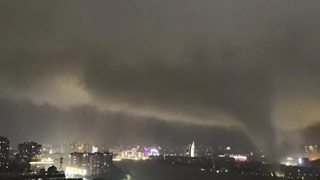
0:37Watch: Moment rare tornado lashes central Chinese city
As residents in areas affected by extreme weather wait for aid and rescue, they have been desperate to find out about their loved ones.
Zhou, the villager from Renhe, said she had asked a friend to swim through the floodwaters to check on her relatives.
“He shouted to my father from afar and learned that they are fine for now, though they are surrounded by water,” she said.
But the fate of their neighbours down the road, an elderly woman and her two young granddaughters, is unknown. Zhou said that “even by swimming, people can’t spot them.”
A young woman, who requested anonymity, told the BBC that she had not heard from her parents in Gantang town in the last 24 hours.
The last she had heard was that they were sheltering on the third floor of their building, but the water had already reached the second floor.
“I can’t reach out to them. I don’t know their situation at all. I lost contact with them on Monday morning,” she said. “Now I’m just fretting helplessly, there is nothing I can do.”