
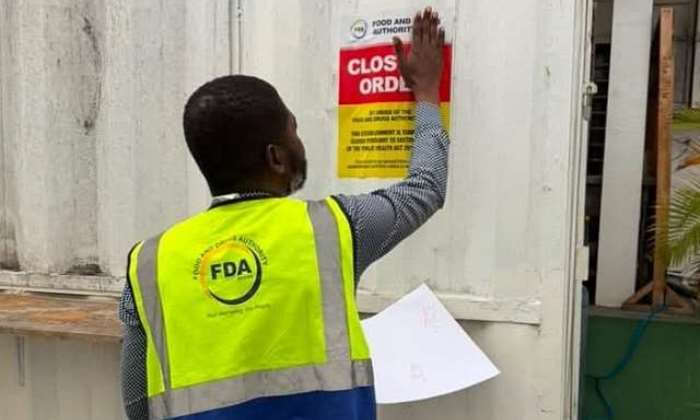
The Food and Drugs Authority (FDA) has urged food warehouse operators to adopt good storage practices and comply with regulatory requirements to protect public health, prevent contamination and improve business performance.
Ms Anita Owusu-Kuffour, Eastern Regional Head of the FDA, called on managers and employees of food storage facilities to adhere to good warehouse practices and regulatory requirements to ensure food safety and operational compliance.
She said compliance with established standards would help operators avoid legal challenges, build customer confidence and enhance business growth through increased patronage.
Ms Owusu-Kuffour made the call at a training workshop organised by the Authority for managers of food storage facilities in the Eastern Region.
Participants were taken through topics including good storage practices, documentation requirements for dry food storage warehouses and licensing requirements for food storage facilities.
She said the Authority would conduct inspections after the training to assess participants’ compliance with the knowledge and skills acquired.
Ms Owusu-Kuffour explained that the FDA was mandated to ensure adequate and effective standards for food, drugs, cosmetics, household chemical substances and medical devices.
She said the Authority also monitored compliance through Metropolitan, Municipal and District Assemblies and other state agencies, and advised the responsible Minister on measures to protect consumer health and safety.
Mr Joseph Gyau, Principal Regulatory Officer at the FDA’s Eastern Regional Office, said a food storage warehouse referred to any premises, establishment, building, room, area or facility where food was stored for wholesale distribution to wholesalers or retail outlets.
He said the surroundings of every warehouse should be kept free from conditions that could contaminate food products.
Such conditions included improperly stored equipment, litter, refuse, waste, uncut weeds and overgrown grass, which could attract or harbour pests, he said.
Mr Gyau said hazardous substances such as corrosive and caustic chemicals, lighter fluids, insecticides, pesticides, liquid detergents, bleaches and dyes must be stored separately from food products to prevent contamination.
He added that all food items, except those stored on shelves, cabinets or metal racks, should be kept at least 50 centimetres away from walls.
He said handwashing facilities should be provided adjacent to or inside toilet areas and maintained in a clean and good state of repair.
Mr Gyau urged warehouse managers to provide designated areas for storing damaged, unwholesome or non-conforming food products pending disposal.
Operators were also advised to implement programmes for the timely disposal of unwholesome food to prevent unsanitary conditions and the breeding or harbouring of pests.
On pest control, Mr Gyau said all pest management activities should be undertaken by properly certified individuals or firms using approved pesticides.
The pesticides, he added, must be applied in a manner that protected stored food products from contamination.
Speaking on documentation, Ms Susuana Botchway, Eastern Regional Regulatory Officer of the FDA, described record-keeping as essential for effective stock control and regulatory compliance.
She said accurate documentation enabled operators to monitor products received and distributed and identify and quarantine rejected or non-conforming products.
Ms Botchway encouraged warehouse managers to cultivate a strong documentation culture to improve traceability, accountability and compliance with regulatory standards.