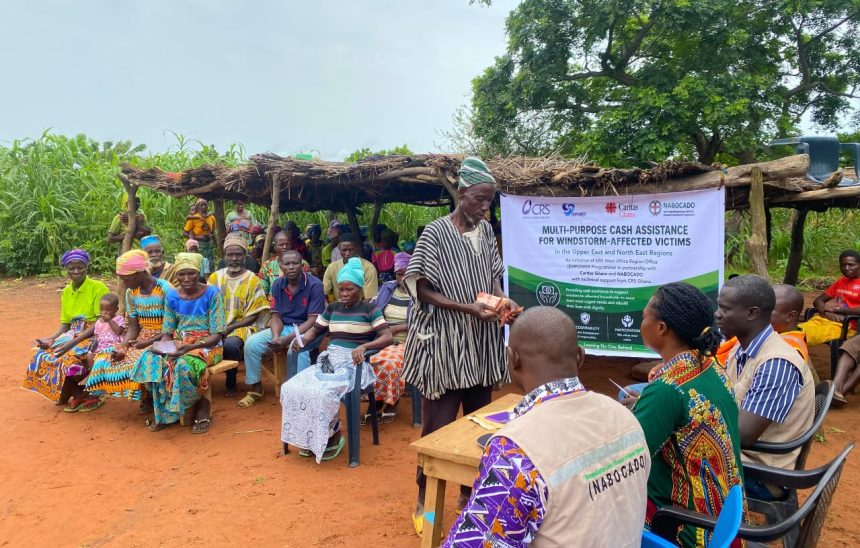
Catholic Relief Services (CRS), in partnership with the Navrongo-Bolgatanga Catholic Diocesan Development Organisation (NABOCADO), has provided multi-purpose cash assistance to 478 households affected by severe windstorms that struck parts of the Upper East and North East regions in May 2026.
The support, under the Multi-purpose Cash Assistance for Windstorm-Affected Victims Project, is being implemented through the CRS West Africa Regional Office’s EMPOWER Programme in collaboration with Caritas Ghana and NABOCADO, with technical support from CRS Ghana.
The beneficiaries, selected from 40 communities across five districts in the two regions, received unrestricted and unconditional cash support of GH¢1,946.00 each to enable them address their most urgent needs and recover from the effects of the disaster.
The cash disbursement began on August 19, coinciding with World Humanitarian Day, a move the organisations said was intended to demonstrate solidarity with people affected by the devastating windstorms.
The beneficiary areas are the Talensi, Nabdam and Bawku West districts in the Upper East region, and the Bunkpurugu/Nakpanduri district and East Mamprusi Municipality in the North East region.
Speaking on the sidelines of separate presentation ceremonies, Mr Theophilus Abolga, Director of Justice, Peace and Humanitarian Response at NABOCADO, said the intervention followed a post-disaster assessment conducted by the organisation, which identified more than 2,000 affected households across the targeted communities.
He explained that due to limited resources, vulnerability criteria were developed to prioritise households most in need, including persons with disabilities, the aged and other vulnerable groups.
“Each of these households is receiving an amount of GH¢1,946. The amount is unrestricted and unconditional. It is for them to use for their most critical and pressing needs,” he said.
Mr Abolga said the windstorms caused extensive destruction in the affected communities, damaging homes, bedding and cooking facilities, while displacing some families.
He noted that some victims had to seek temporary shelter in churches, schools and open spaces after their homes were destroyed.
The Director said resource constraints made it impossible to support all affected households and appealed to humanitarian and civil society organisations to assist victims who were not covered under the programme.
Mr Sebastian Tule, Health Programmes Coordinator and Emergency Response Team Member at NABOCADO, said the organisation would undertake post-distribution monitoring in the coming weeks to assess whether the cash assistance had met beneficiaries’ needs and evaluate the effectiveness of the intervention.
Mr Francis Tobig, the Nabdam District Chief Executive, commended NABOCADO and CRS for supporting vulnerable persons affected by the windstorm.
He said the intervention would provide relief to the beneficiaries but stressed that many communities were still struggling to recover from the disaster.
Mr Tobig appealed to other organisations to provide additional support to help affected households rebuild their lives and livelihoods.
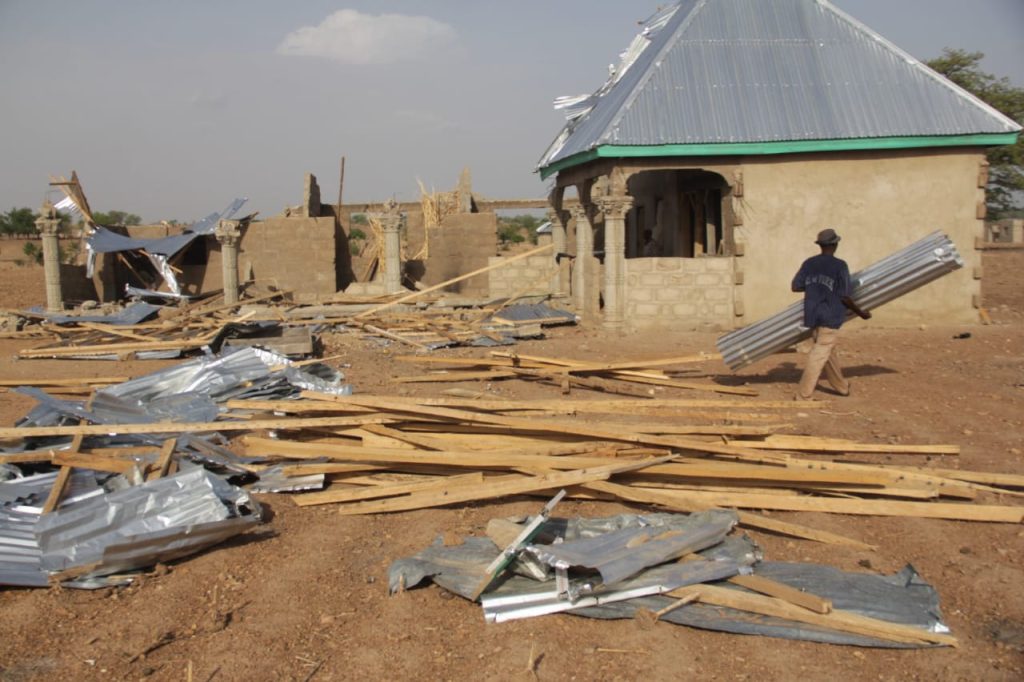
The beneficiaries expressed appreciation to NABOCADO and its partners, saying the support would help them recover from the impact of the windstorm.
Ms Assibi Atambire, a beneficiary and person with disability, said the storm destroyed her room, which was already old, as well as her food supplies.
She described the intervention as timely and said it would help ease the hardship caused by the disaster.
GNA