Dr George Mahama, an Agronomist with the Savannah Agricultural Research Institute of the Council for Scientific and Industrial Research (CSIR-SARI), Wa Station, has urged farmers to complement improved seed varieties with Good Agronomic Practices (GAPs) to achieve their full yield potential.
He cautioned that even a high-yielding variety could not produce the expected results if farmers did not follow recommended agronomic practices.
He indicated that proper site selection with well-drained fertile soil, use of appropriate spacing, timely weeding, regular monitoring of pests, and use of integrated pest management strategies were essential to maximising crop output.
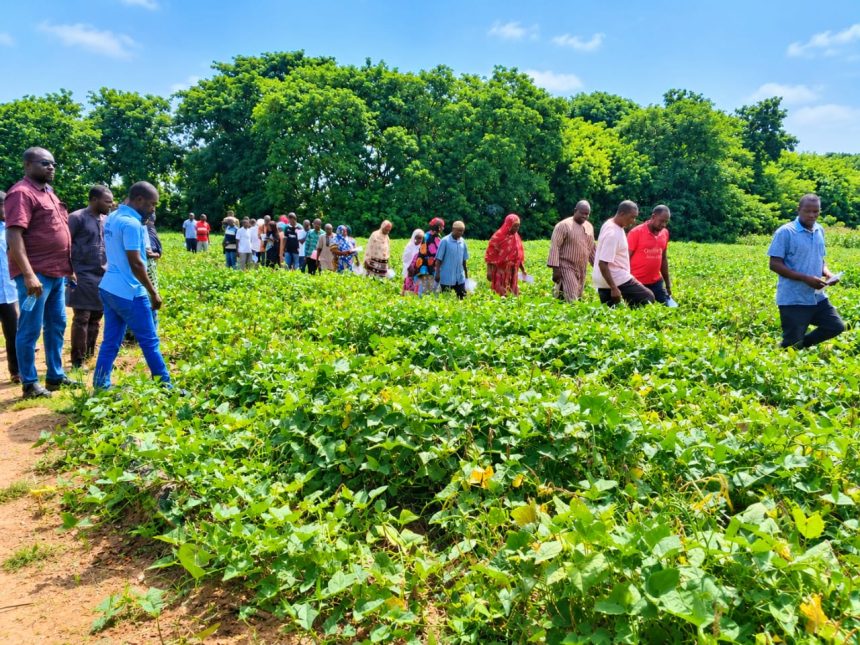
Dr Mahama advised a participatory cowpea candidate selection exercise organised by the CSIR-SARI, Wa Station, to enable farmers to select candidate cowpea lines for release and cultivation in Northern Ghana.
The exercise was aimed at incorporating farmers’ varietal preferences into the release of improved cowpea varieties with desirable traits for easy adoption.
The initiative was under the Cowpea Breakthrough Project being implemented by the CSIR-SARI, with funding from the Gates Foundation through the International Institute of Tropical Agriculture (IITA).
The farmers were expected to select five preferred breeds from about 20 cowpea candidate lines, which were bred to be high-yielding, drought-tolerant, resistant to charcoal rot and Striga, and early and medium maturity, among others.
“Now that we say farming is a business, that means that we should take good agronomic practices seriously because if you have all these attributes and still you are not able to put in the best agronomic practices, you may not be able to achieve the expected yield,” Dr Mahama explained.
He therefore urged farmers to ensure that all recommended agronomic practices were followed throughout the production cycle to maximise their investments and improve productivity.
Dr Anslem Bawayelaazaa Nyuor, a Socio-Economist at the CSIR-SARI, Wa Station, observed that farmers had considered agriculture as a business and, therefore, needed to consider production costs and the potential income from the varieties they cultivated.
He reiterated the economic value of the candidate lines, noting that market-attractive traits were among the major considerations influencing the farmers’ choices during the selection exercise.
Mr Frederick Vozie Domo, the Wa Municipal Director of Agriculture, said the field day had provided farmers an opportunity to observe the performance of different cowpea lines, particularly their yield potential and maturity patterns.
He said the eventual release of those improved varieties would enable farmers to adopt and produce them to improve their incomes and contribute to food and nutrition security.
Some of the farmers who participated in the exercise mentioned large seed size and uniform and early maturity as some reasons that informed their choices of the candidate lines.
Mr Amadu Salifu, the Upper West Regional Chairperson of the Peasant Farmers’ Association of Ghana, expressed gratitude to the CSIR-SARI and its partners for the continuous support to farmers through the engineering of improved seed varieties.