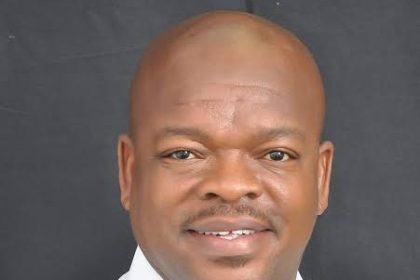

Director of the Institute of Statistical, Social and Economic Research (ISSER), Professor Robert Darko Osei, has warned that Ghana must urgently diversify its exports and move beyond depending on gold to sustain the economic gains recorded in 2025.
Launching the 2025 State of the Ghanaian Economy Report (SGER), Prof. Osei said the country’s $10 billion merchandise trade surplus was largely attributable to gold exports, a sector Ghana does not significantly control, while the share of manufactured goods in total exports fell below six per cent in 2025.
He called for deliberate measures to expand manufacturing, increase domestic value addition and build external reserves to cushion the economy against future shocks.
While acknowledging major macroeconomic improvements, inflation down from over 23 per cent in 2024 to 5.4 per cent in 2025, a stronger cedi, and lending rates falling from over 30 per cent to about 20 per cent, Prof. Osei warned that credit remained too costly for businesses to be competitive.
He blamed persistent non-performing loans, which force banks to price default risk into lending rates.
He urged the government to institutionalise fiscal discipline, strengthen domestic revenue mobilisation and protect public investment.
Prof. Fred Dzanku, Head of ISSER’s Economics Division, said mining revenues had not consistently translated into public investment or better social services, calling for improved mineral valuation, production monitoring, tax compliance and transparency.
He noted that recovery continued into 2026 with first-half growth of about 6.1 per cent, but warned the gains were uneven and heavily dependent on gold receipts.
Belinda Boamah of the National Investment Bank (NIB), who chaired the event, urged the government to convert stability into productive investment and decent jobs for young people, ensure mineral wealth generates lasting development through transparent revenue management and savings during favourable periods, and called on financial institutions to provide affordable long-term financing for agriculture, manufacturing and value addition.