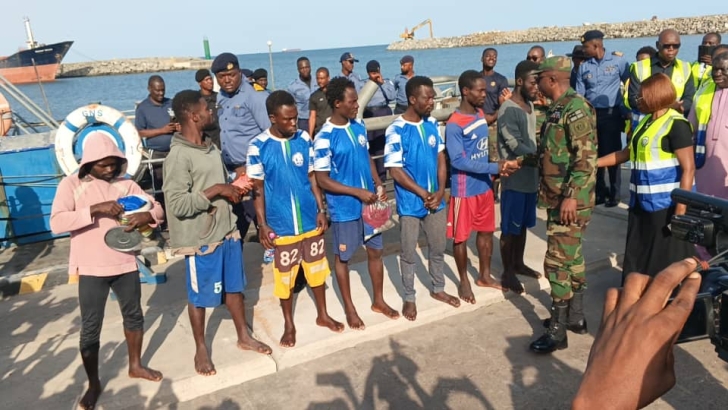
Seven Ghanaian fishermen who went missing for two weeks after their canoe’s engine failed have arrived safely at the Fishing Harbour in Tema, following a coordinated multinational search-and-rescue operation across the Gulf of Guinea.
The fishermen, Kofi Emmanuel, 32; Uncle Amoah, 45; Kwamena Nkum, 29; Kofi Aboagye, 36; Doboa, 35; Agya Badu, 42; and Kwamena Akyem, 40, were aboard the canoe Second Chance when it broke down and drifted into Beninese waters.
They set out on a fishing expedition from Sekondi to Axim in the Western Region on October 9, 2026, but the engine failure left them at the mercy of the wind and sea currents.
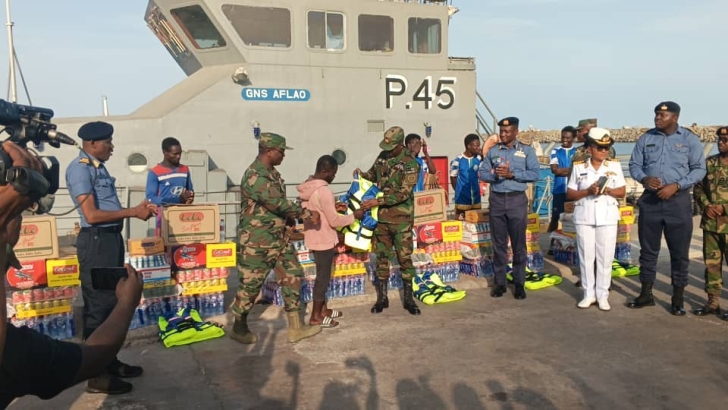
Naval Captain Festus Osei-Brobbey, Director of Naval Training of the Ghana Navy, told a press conference in Tema on Thursday, October 22, 2026, that the Navy received a distress alert from the Fisheries Commission on October 20, indicating the canoe had drifted eastwards towards Togo and eventually into Benin.
Three Ghana Navy ships were deployed to search for the missing fishermen, while the Navy’s Special Boat Squadron, in collaboration with National Security and the Ghana Air Force, conducted maritime air patrols.
The Ghana Maritime Authority (GMA), Fisheries Commission, Marine Police Unit, Ghana Ports and Harbours Authority (GPHA), National Signal Bureau, and the navies of Togo and Benin also participated.
The operation was coordinated under the ECOWAS Integrated Maritime Strategy and the Yaoundé Architecture framework, with support from regional maritime coordination centres in Zones E and F and the French Embassy.
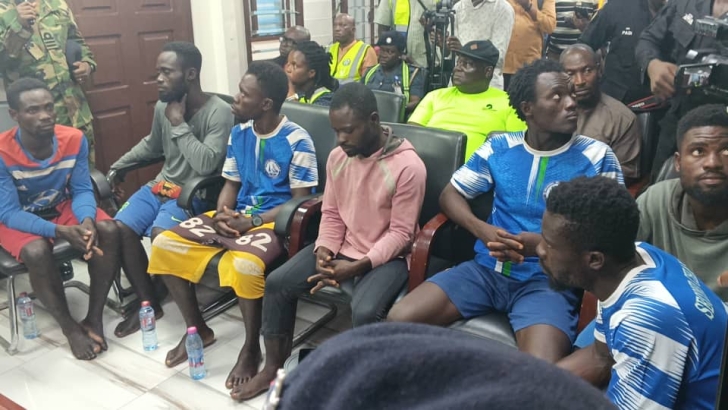
At about 10:36 p.m. on October 21, the Ghana Navy received confirmation that the fishermen had been located by the Beninese Navy.
They were rescued through a joint effort involving the Beninese and Togolese navies and local Beninese fishermen.
Ghana Navy Ship Aflao received them from a Togolese naval vessel at the Ghana-Togo maritime border at about 6:49 a.m. on Wednesday, October 22.
All seven were in good condition and received food and medical attention aboard the Ghanaian vessel.
Naval Captain Osei-Brobbey said the operation exposed gaps in distress signalling, communication systems and night-vision capabilities, emphasising the need for improved naval assets to strengthen maritime surveillance and emergency response.
He called for appropriate ships, high-speed interceptor boats and long-endurance maritime drones to improve wide-area patrols, early detection and response times.
He reaffirmed the Navy’s commitment to protecting fishing communities and thanked the participating agencies and regional partners.
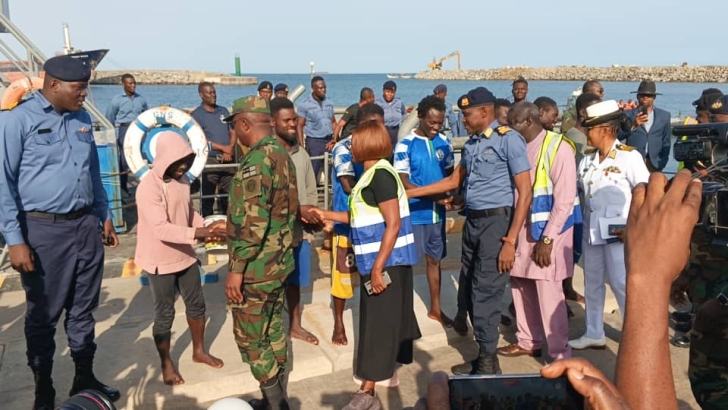
Professor Benjamin Betey Campion, Executive Director of the Fisheries Commission, said the Commission had received technical quotations and bids for distress-tracking devices to enable fishermen to communicate their locations and send emergency alerts to security agencies.
He said the Commission was assessing the options to ensure the devices were effective and affordable, with further information to be communicated in the coming months.
Kwamena Akyem, leader of the rescued fishermen, said the crew resorted to prayer during the ordeal and threw their catch back into the sea to reduce the weight of the canoe.
He expressed appreciation to the governments of Ghana, Benin and Togo and the participating agencies for their response.
The GMA and the Ghana Navy supplied the fishermen with food, toiletries, drinking water and other essential items.
Each fisherman was also given a life jacket, while the GPHA arranged medical examinations. The GMA provided overnight accommodation and meals before their onward journey to Sekondi.