
MTN Ghana has called on university students and young innovators to develop artificial intelligence (AI) solutions that address local challenges and promote inclusive access to digital services.
Mr Kwame Menu, Senior Manager for Digital Analytics and Monetisation at MTN Ghana, said the initiative was aimed at encouraging young Africans to move beyond consuming technologies developed elsewhere to creating solutions that responded to the continent’s needs.
He made the call in an interview with the Ghana News Agency (GNA) on the sidelines of the MTN T3kyer3ma Pa Hackathon and AI Summit 2026, held at the University of Ghana.
He said the hackathon formed part of MTN’s ambition to lead digital solutions for Africa’s progress by providing opportunities for students to collaborate, experiment, and develop practical innovations.
Mr Menu said AI platforms such as ChatGPT, Gemini and Claude demonstrated what individuals could achieve through innovation, adding that Ghanaian students had the potential to develop technologies that could gain similar recognition globally.
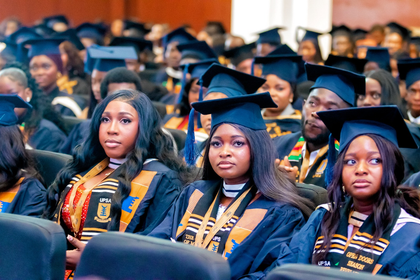
Students from the University of Cape Coast, the Kwame Nkrumah University of Science and Technology, and other institutions participated in the event.
He said a major consideration in the competition was inclusion, particularly the development of digital solutions that could be accessed and used by persons with disabilities.
The hackathon, named T3kyer3ma Pa, meaning “Good Tongue”, reflects the emphasis on communication and accessibility in developing technology solutions.
Mr Menu cited an application being developed by some participants that would enable users to purchase airtime and data through voice commands.
He said the technology could allow persons with visual impairment to request airtime or data using spoken instructions without navigating their mobile phone screens.
“This opens up digital services to more people and enables persons with visual impairment to perform everyday tasks more independently,” he said.
Mr Menu said MTN would continue engaging teams behind promising innovations after the hackathon through incubation, mentorship and exposure to industry opportunities.
He said the company would undertake monitoring, evaluation, and learning to assess the progress and practical impact of the solutions.
The objective, he said, was to help participants transform their prototypes into usable products and services that could improve people’s everyday lives.
Dr Clement Abas Apaak, Deputy Minister of Education, who represented the Minister of Education, Mr Haruna Iddrisu, said Ghana needed to empower young people to develop technologies rather than remain passive consumers of innovations created elsewhere.
Addressing the summit, he said the growing influence of AI on education required a fundamental shift in how learners were prepared for the future.
He said an education system focused mainly on memorisation and reproducing information was no longer sufficient, stressing the need to equip learners with critical thinking, problem-solving, collaboration and adaptability skills.
Dr Apaak said AI offered opportunities to support teachers in preparing learning materials, conducting research and developing practical applications, but also presented challenges relating to misinformation, algorithmic bias, and academic integrity.
He said the future of education must therefore combine technological competence with human judgement, innovation with integrity, and digital skills with ethical responsibility.
The Deputy Minister identified four priorities for preparing Ghana’s education system for an AI-driven future: early technological competence, inclusive access, strengthened technical and vocational education, and stronger links between digital skills development and employment.
He said learners needed opportunities to explore coding, robotics, electronics, and other practical applications of science and technology from an early stage.
He also called for digital learning opportunities to be extended to basic schools, supported by investments in teachers’ capacity and the necessary infrastructure.
Dr Apaak said initiatives to expand access to education must also address the needs of disadvantaged communities and persons with disabilities to ensure that talents were not limited by financial or physical barriers.
On employment, he said technical and vocational education remained essential to developing the technicians and skilled workers required to maintain systems and translate technological ideas into practical products and services.
He cited the One Million Coders Programme as an initiative that could help connect digital skills development with practical experience and employment opportunities.
Dr Apaak urged universities to strengthen applied research and collaborate with industry and communities to ensure that innovations addressed real challenges.
He also encouraged industry players, including MTN Ghana, to invest in mentorship, internships and student-led innovations to help promising ideas progress beyond demonstrations into commercially viable products and services.
He cautioned that digital education policies must also consider the realities of learners without reliable electricity, computers, or affordable internet access.
He said the success of educational technology should be measured by its ability to improve learning outcomes, support teachers, and extend opportunities to excluded communities.
The Deputy Minister urged participants to develop solutions that could help teachers identify learning difficulties early, improve access to education in rural communities, and use local language technologies to support learning.
He said Ghana had an opportunity to place local talent at the centre of technological solutions needed by the country and the African continent.
GNA