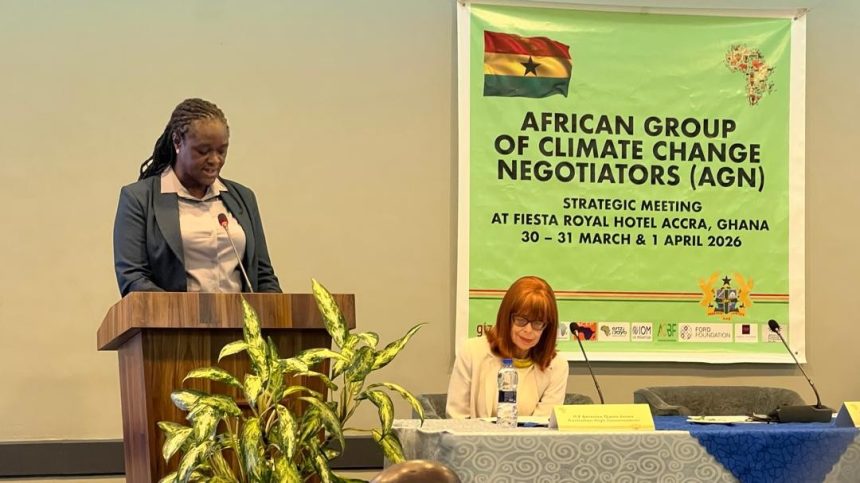
Ghana is hosting a high-level three-day strategic meeting of the African Group of Negotiators (AGN) aimed at strengthening Africa’s common position ahead of key global climate negotiations.
The Common African Position prioritises immediate adaptation, climate finance, and “loss and damage” support, recognising the continent’s high vulnerability despite minimal emissions.
The meeting, which runs from March 30 to April 1 in Accra, brings together UNFCCC National Focal Points, African Lead Coordinators, and development partners to consolidate Africa’s negotiating platform ahead of COP31 in Antalya, Turkey, and COP32 in Addis Ababa, Ethiopia.
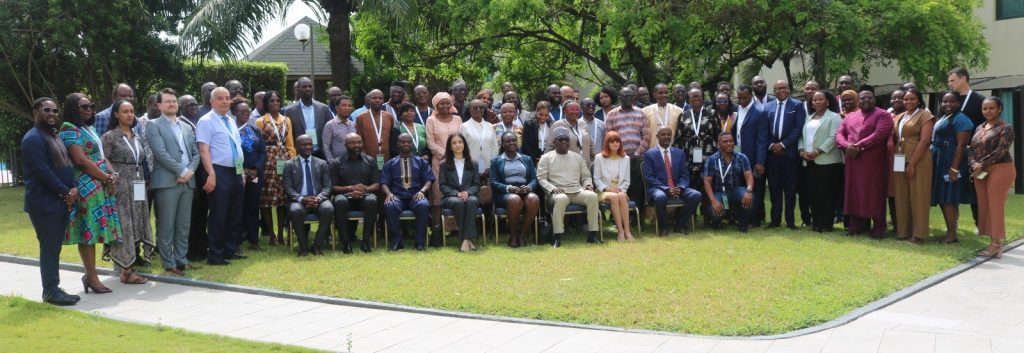
COP32, which will be hosted on the continent, is expected to provide a critical opportunity for Africa to advance its interests in global climate negotiations.
Opening the meeting, Professor Nana Ama Browne Klutse, Chief Executive Officer, Environmental Protection Authority, said the gathering came at a defining moment for Africa’s engagement in the global climate process.
She emphasised that the continent’s strength in climate negotiations had always been its unity and urged participants to maintain a coordinated and strategic approach.
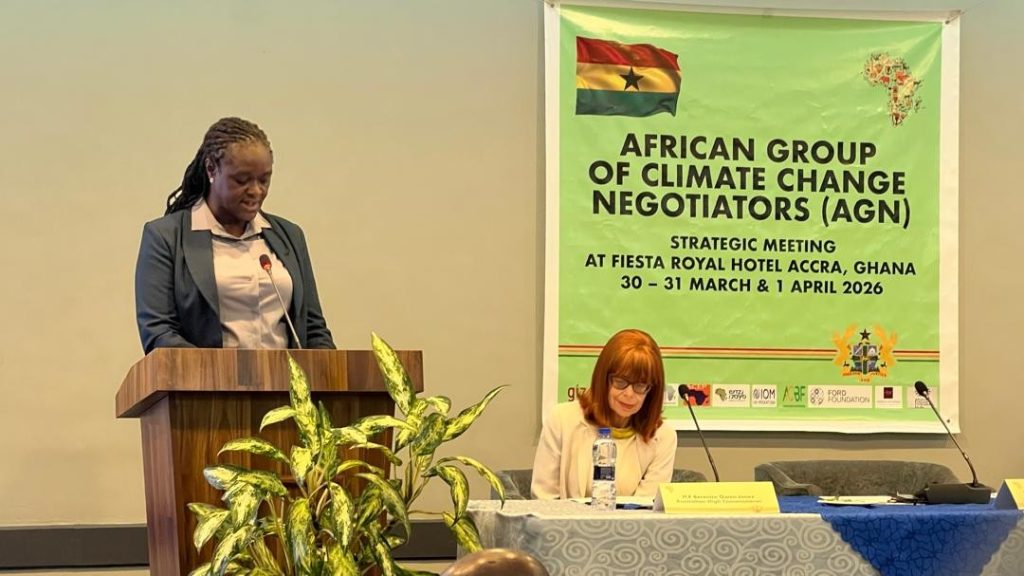
“Africa continues to bear a disproportionate burden of climate impacts despite contributing the least to global emissions. This is not only a development challenge but a matter of equity and climate justice,” she said.
Prof. Klutse emphasised the need for the continent to push for scaled-up, predictable and quality climate finance, stronger adaptation action, and enhanced access to technology and capacity-building support.
She also highlighted the importance to capitalise major climate funds under the United Nations Framework Convention on Climate Change, including the Adaptation Fund, Green Climate Fund, Loss and Damage Fund, and the Global Environment Facility.
The meeting marks a historic milestone for Ghana, as Nana Dr. Antwi-Boasiako Amoah assumes leadership of the AGN, the first time the country is chairing the group since signing the UNFCCC in 1992.
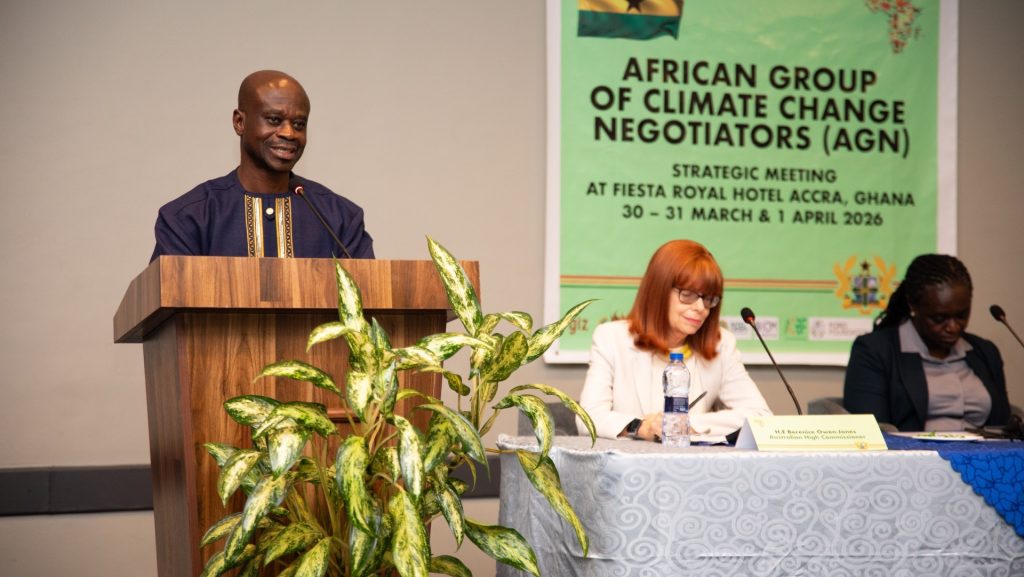
In a keynote address, Mr Baba Issifu Seidu, the Minister of State at the Office of the President for Climate Change and Sustainability, said the global climate process had entered a more consequential phase focused on implementation, accountability and delivery.
“Africa must position itself not only as a participant but as a driver of key outcomes across negotiation tracks,” he stated.
He outlined priority areas for the engagement, including the Global Goal on Adaptation, climate finance under the New Collective Quantified Goal (NCQG), and the Mitigation Work Programme.
The Minister noted that climate finance must be predictable, accessible and adequate, noting that without finance, adaptation and mitigation efforts would not deliver the needed impact.
He further called for equity in global climate action, stating that Africa could not be expected to pursue low-emission pathways that constrained development without sufficient support.
The AGN Chair, Nana Dr. Antwi-Boasiako Amoah, pledged to lead with inclusivity, transparency and collaboration, while prioritising key issues such as youth engagement, just transition, climate finance, and equitable development.
He said the meeting would shift Africa’s engagement from a reactive approach to a more strategic and forward-looking framework, anchored in long-term planning and political coherence.
“This session will help us connect negotiations across issues, identify trade-offs, and sharpen Africa’s priorities in a coordinated manner,” he noted.
The meeting is structured into open and closed sessions. The opening day features partner dialogue and discussions on Africa’s engagement in global platforms, including the G20, while subsequent closed sessions will focus on thematic alignment, drafting negotiation positions, and strengthening coordination within the AGN.
Participants are expected to develop a practical roadmap for updating Africa’s common negotiating platform, define priorities, and agree on an action matrix with clear responsibilities and timelines ahead of upcoming UN climate negotiations.
The meeting will also strengthen engagement with partners to mobilise technical, political and financial support for Africa’s climate agenda for the 2026–2027 period.
The outcomes are expected to position Africa to engage more effectively and influence global climate decisions as the world prepares for COP31 and COP32.