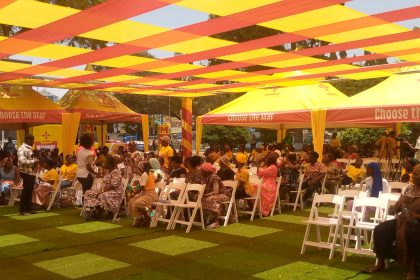

Dr. Charity Binka, Executive Secretary of the Africa Media and Malaria Research Network (AMMREN), has called for stronger engagement of Civil Society Organisations (CSOs), community groups and the media in the national fight against malaria.
Dr Binka stressed that the key to eliminating the disease lies in changing public attitudes and behaviour towards treatment and adherence to the use of medication.
The Executive Director told the Ghana News Agency in an interview during malaria elimination dialogue, that although Ghana already possessed the essential tools required to eliminate malaria, it continued to lag due to widespread behavioural
challenges, including self-medication, drug abuse and poor health-seeking practices.
“We have everything, mosquito nets, effective medicines, investment, and proven strategies. What we lack is the right behaviour. People treat every fever as malaria, they rely on herbs, or they go straight to the pharmacy without testing. This abuse of medicines places an enormous burden on treatment efforts,” she said.
Dr. Binka explained that many malaria medicines were heavily subsidised and even those not subsidised remained costly for the average household, adding that misuse of medicines undermined the effectiveness of drugs, accelerated resistance, and risked rendering life-saving treatments ineffective in the future.
She said addressing these gaps would need a stronger collaboration with CSOs to strengthen their understanding of malaria elimination strategies and to work closely with communities, where they hold trust and influence.
She highlighted successful examples from Rwanda, where retired professionals, including teachers and nurses had been trained as first points of care within their localities.
“These community members are trained to conduct rapid diagnostic tests, provide initial guidance and ensure that children with fever receive timely support. This simple system prevents complications such as convulsions and saves lives,” she said.
Dr. Binka added that Ghana could adopt similar models by empowering community-based organisations (CBOs) and retired but active citizens to support health education, promote testing and discourage self-medication while encouraging volunteers within churches, mosques and social gatherings to help disseminate accurate information on malaria prevention and proper treatment.
“Not every headache or warm feeling is malaria. People must test before taking medicine. But testing must also be accessible. Many people avoid hospitals because of long waiting times, so pharmacies and community testing points must be supported to fill the gap,” she emphasised.
Dr Binka also stressed the need for CSOs and CBOs to build trust within communities to enable residents feel confident seeking advice from them, saying, “When community members know that a trained person nearby can help them, they go. Trust is key,” she noted.
The Executive Director further underscored the critical role of the media, urging journalists to move beyond event coverage and become long-term partners in malaria elimination efforts, adding that researchers were often reluctant to engage the media for fear of misrepresentation, indicating that strong relationships between the two groups would encourage better information sharing.
“The media must be part of the agenda. They should be trained alongside others so they understand the science and communicate it accurately. When trust is built, researchers are more willing to call journalists to share important findings,” she said.
Some Queen Mothers said eliminating malaria would involve education and re-enactment of sanitation by-laws strict implementation to disabuse the minds of community members.
Naana Korlekie Korley, Queen Mother of Ada Terkpebiawe called for deployment of sanitation officers to educate and reshape attitudes of communities and sanction people who flout regulations.
Naa Korkor Aadzieoyi I, Queen Mother of Adabraka, also suggested the need to reinforce communal clean-ups and other policies to help keep the communities clean as one of the measures in ensuring the elimination of malaria in Ghana.