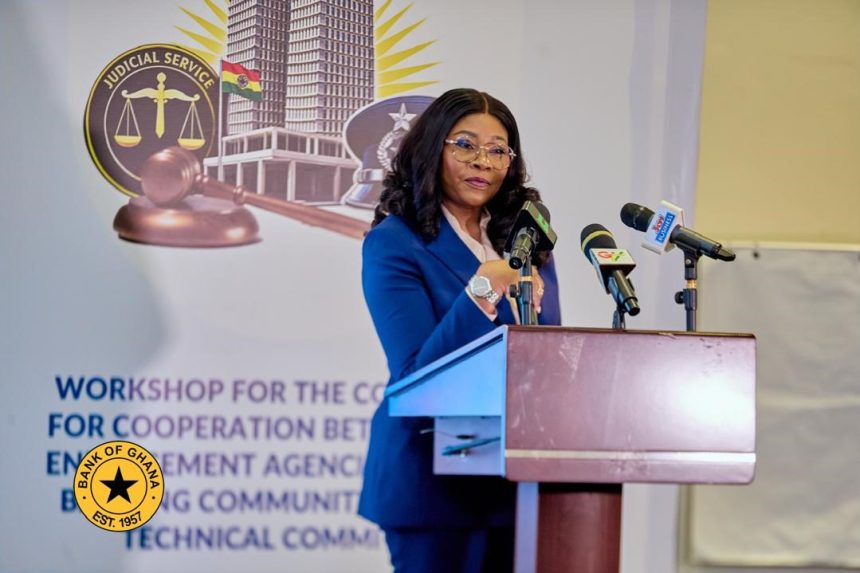
Mrs Matilda Asante-Asiedu, the Second Deputy Governor of the Bank of Ghana, has called for enhanced multi-stakeholder collaboration to safeguard the integrity of Ghana’s financial system against the growing threat of unlicensed financial operators.
Speaking at a workshop of the Committee for Cooperation between Law Enforcement Agencies and the Banking Community (COCLAB) in Accra on Thursday, the Deputy Governor commended the Technical Committee for convening the meeting under the theme: “Promoting Financial Integrity through Multi-Stakeholder Collaboration.”
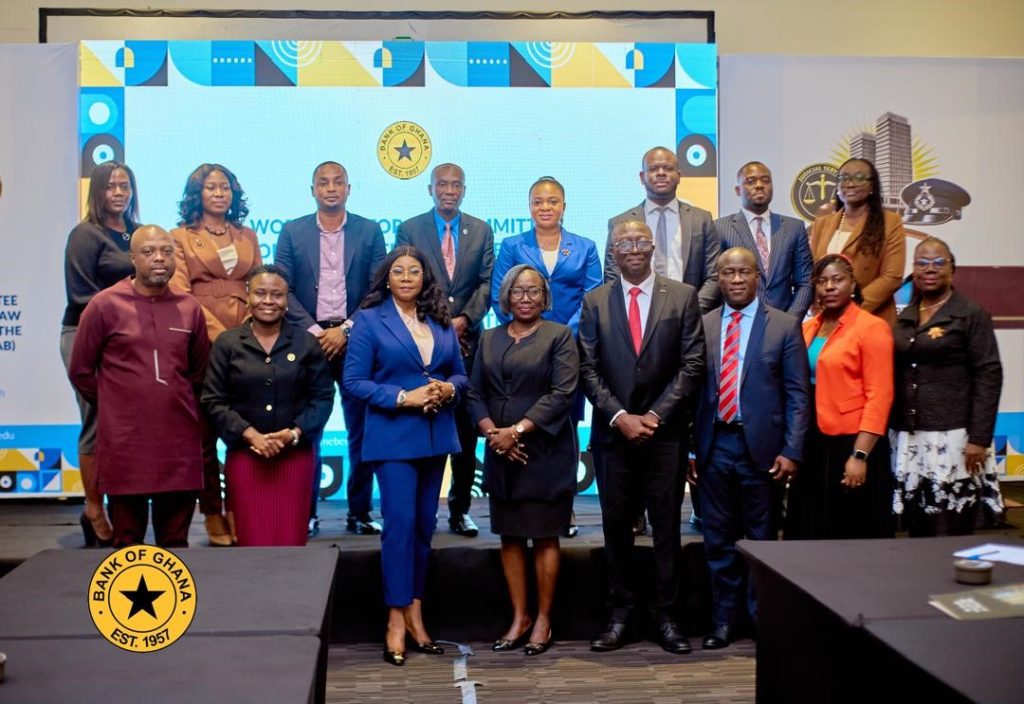
She said the theme was timely, as unlicensed entities were increasingly exploiting regulatory gaps to undermine trust, exploit consumers, and threaten financial stability.
“Ghana is currently on a trajectory of great macroeconomic outcomes. Economic growth is estimated at about 5.5 percent, inflation has eased and remains anchored within the target band at 6.3 per cent, and overall financial stability remains steady. However, periods of recovery also attract bad actors,” she noted.
The Deputy Governor highlighted the rapid expansion of Ghana’s financial sector, with total assets rising from GHS102.1 billion in 2015 to about GHS461.51 billion as of October 2025, driven by digitalisation and innovation.
Banking sector credit grew by 15.86 per cent as at September 2025, while consumer confidence reached an all-time high of 119.2 in June 2025.
She said digital finance had transformed access to credit and payments, with online banking transactions surging from GHS10.9 billion in February 2024 to GHS28.8 billion in February 2025.
However, these developments had exposed regulatory gaps, enabling criminal operators to exploit vulnerable borrowers with punitive terms and abusive recovery practices.
“In 2024 alone, the Bank of Ghana received over 50 complaints related to unregulated savings, investment, and lending schemes,” she revealed, adding that such entities often mimic legitimate financial products while imposing exorbitant charges.
Mrs Asante-Asiedu urged COCLAB to establish structured multi-agency working groups to analyse the modus operandi of illicit actors and recommend joint enforcement measures.
She also proposed elevating selected COCLAB engagements to the Heads of Institutions’ level to ensure accountability.
“This agenda takes on added urgency as Ghana prepares for its third-round Mutual Evaluation by the Inter-Governmental Action Group Against Money Laundering in West Africa (GIABA) in the first quarter of 2026,” she said.
She called on all stakeholders—regulators, law enforcement agencies, the banking industry, telecommunications operators, and the media—to move beyond dialogue to execution, stressing that only a unified and sustained approach would preserve confidence in the financial system.
Justice Afia Serwaa Botwe, an Appeals Court Judge, also underscored the need for multi-stakeholder collaboration to address the growing menace of unlicensed financial institutions and fraudulent operations in Ghana’s financial sector.
She said such engagements were critical to breaking the silo mentality and fostering a networked approach to safeguarding financial integrity.
“When we come to meetings like this, we see that we are a linked group of professionals with a view to making things better in our financial space,” she said, recalling her experience with banking fraud cases and unlicensed entities such as Prime Hedge, which defrauded depositors with promises of high returns.
The Judge commended CoCLAB for its role in streamlining the banking and financial sector, adding that the fight against unlicensed operations was “hydra-headed” and required coordinated enforcement and preventive measures.
Dr. Kwasi Osei-Yeboah, Head of Financial Stability Department at BoG, who delivered the welcome address, described the activities of cloned financial institutions as a significant risk to the integrity of Ghana’s financial system.
He urged participants to “think broadly and purposefully” to identify pragmatic solutions that would sanitise the sector.
He noted that while technology had improved financial inclusion and convenience, it had also created loopholes exploited by bad actors. “We must recalibrate our strategies to keep ahead of the curve,” he said.