
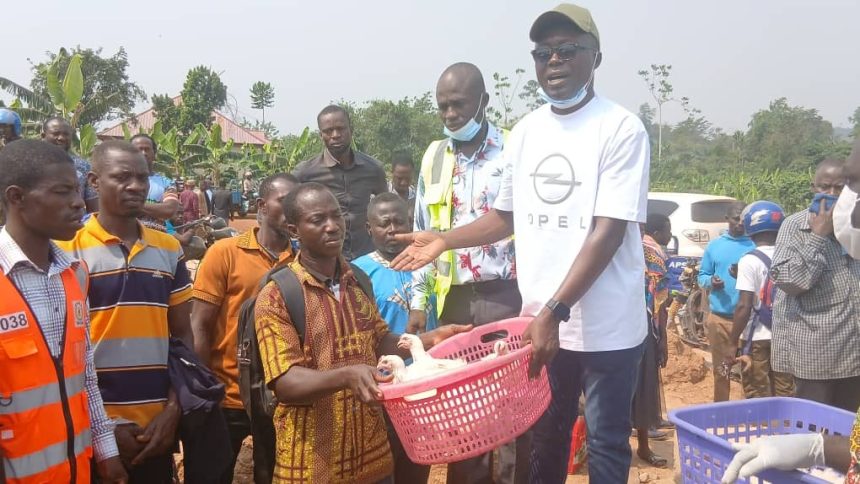
Residents of the Bosome Freho District have warmly welcomed the government’s ‘Nkoko Nketenkete’ initiative, describing it as a timely intervention that will boost local poultry production, create jobs and reduce dependence on imported poultry products.
The programme, launched at Anumso by the District Chief Executive (DCE), Mr. Charles Appiah-Kubi, forms part of a nationwide plan to distribute about three million birds across 276 constituencies, with an estimated 60,000 households expected to benefit.
The initiative is designed to make poultry products more affordable, while increasing access to protein-rich food for Ghanaians.
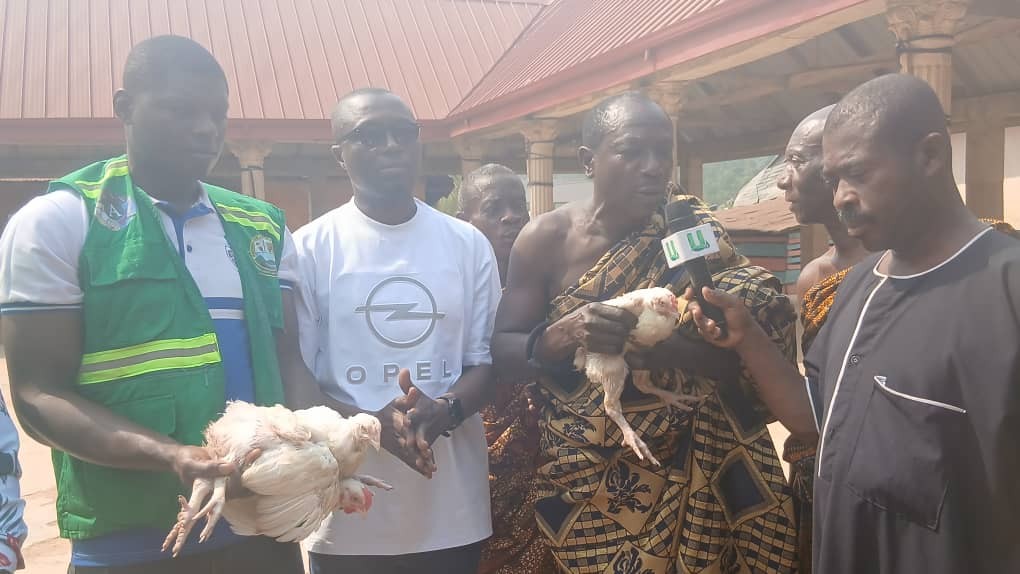
Mr. Appiah-Kubi, addressing beneficiaries at the launch, assured farmers of the government’s readiness to support them across all areas of agriculture to ensure a steady supply of food on the market.
He noted that the programme aligned with the vision of President John Dramani Mahama to revive backyard farming as a means of reducing poverty among smallholder farmers and strengthening household incomes.
“The revival of backyard farming is central to our efforts to increase food availability, reduce poverty and empower local communities,” the DCE stated.
Mr. Appiah-Kubi explained that beyond distributing birds, the programme also provided guidance and support to ensure sustainability and long-term success.
He urged residents of Bosome Freho to fully embrace the initiative as a tool to tackle poverty within farming communities through improved agricultural practices, job creation, and increased income.
Calling for collective effort, the DCE stressed that community cooperation would be key to achieving meaningful economic development in the district.
The DCE cautioned beneficiaries to handle the birds with care, describing them as fragile and emphasising that, their proper management was crucial to the programme’s success.
Nana Akwasi Adu, the Adontenhene of Anumso, on behalf of the Anumso traditional council, expressed appreciation to the government for introducing the initiative.
He acknowledged its potential to positively transform the livelihoods of residents.
Nana Adu recalled that poultry farming was once a common household practice in the area but had declined over the years due to modernisation and waning interest among the youth.
He noted that the initiative presented a valuable opportunity to revive traditional farming practices and make them attractive and relevant once again.