
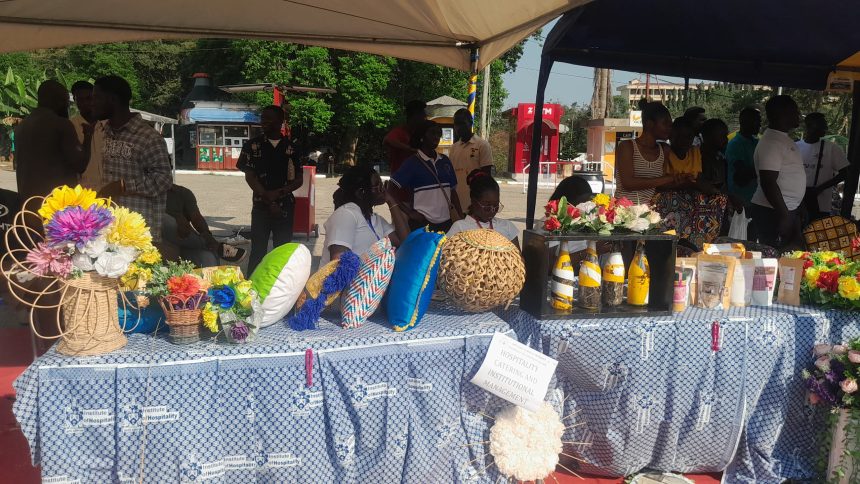
In a remarkable display of creativity, innovation, and ingenuity, the Cape Coast Technical University (CCTU) has held its maiden innovation fair to exhibit some fascinating inventions and solutions by its students and faculty.
The fair demonstrated the university’s technical capabilities and potential to innovatively address several societal and industrial problems to spur development, making a strong case for stronger academia-industry collaborations and greater investments in technical education.
The event, held on the theme: “Bridging academia and industry for national development,” formed part of activities climaxing the school’s 40th anniversary celebration.
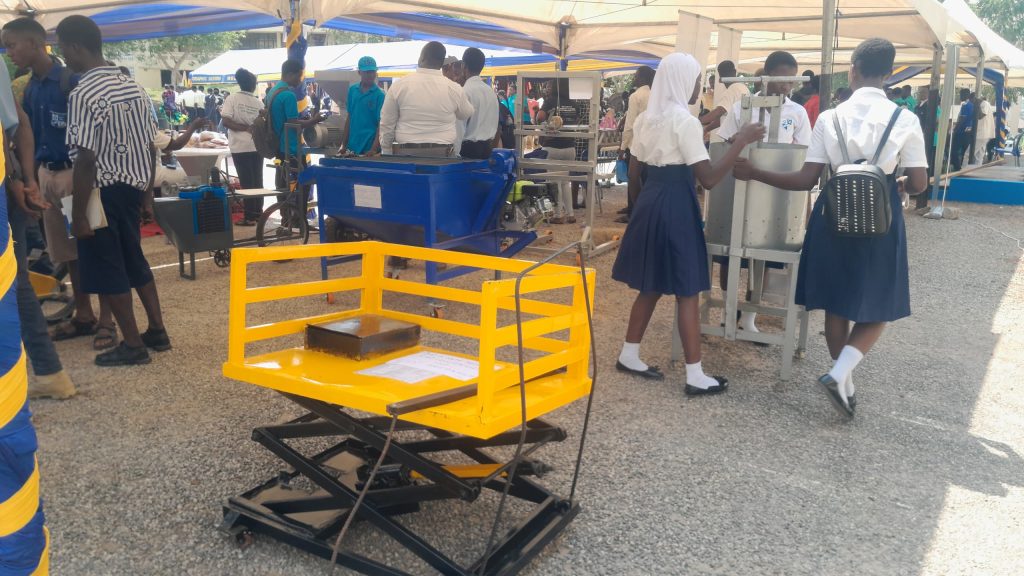
Secondary and technical school students and industry players who attended the fair were stunned by the various prototypes and products which provided solutions in food and agriculture, environment and climate change, health, civil engineering, energy, fashion, and many other fields.
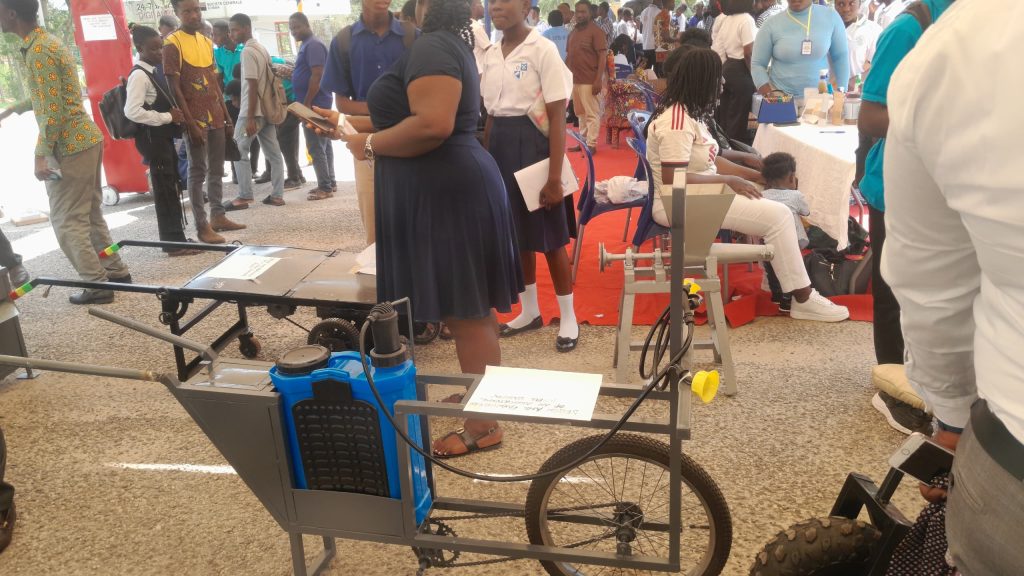
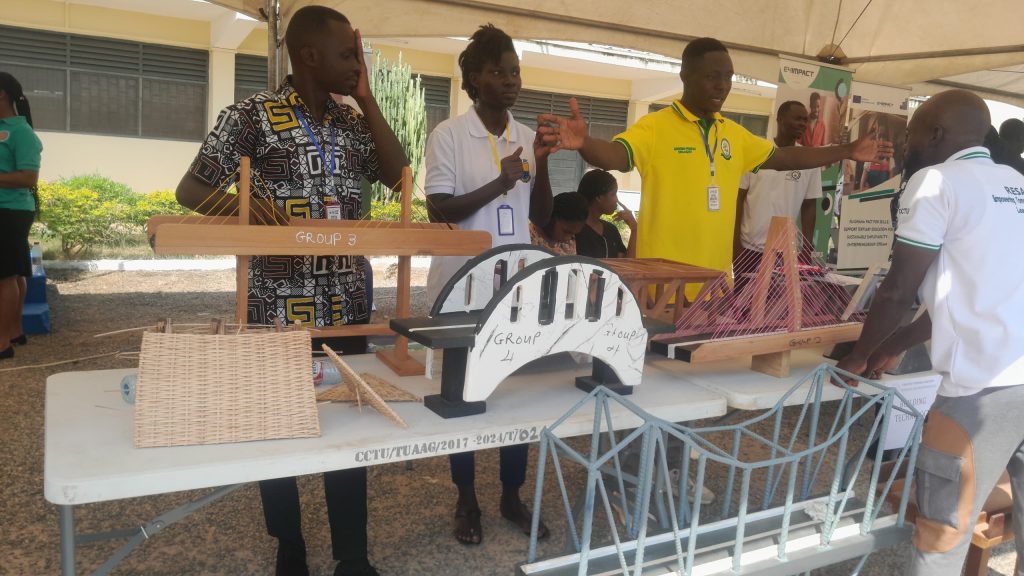
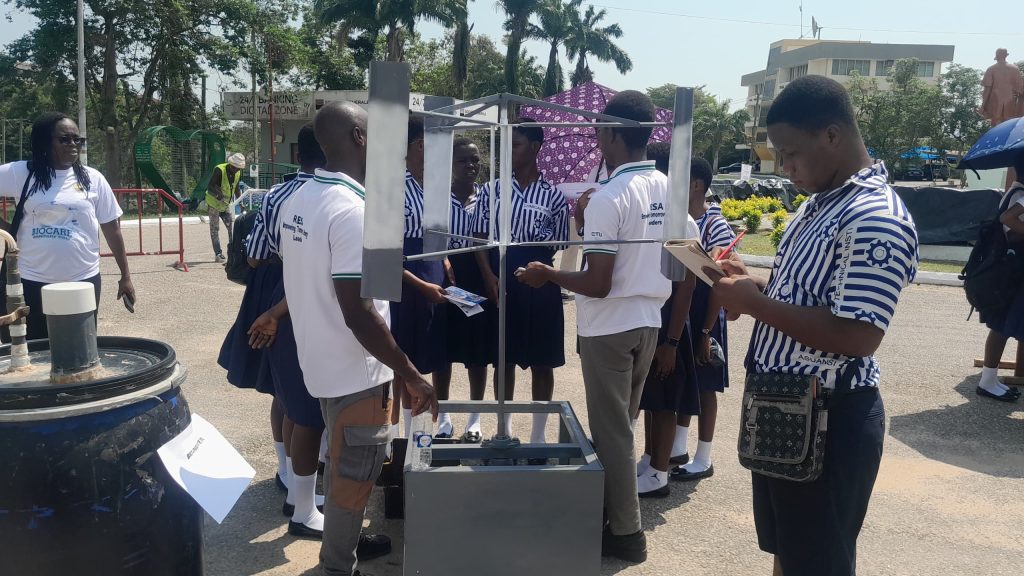
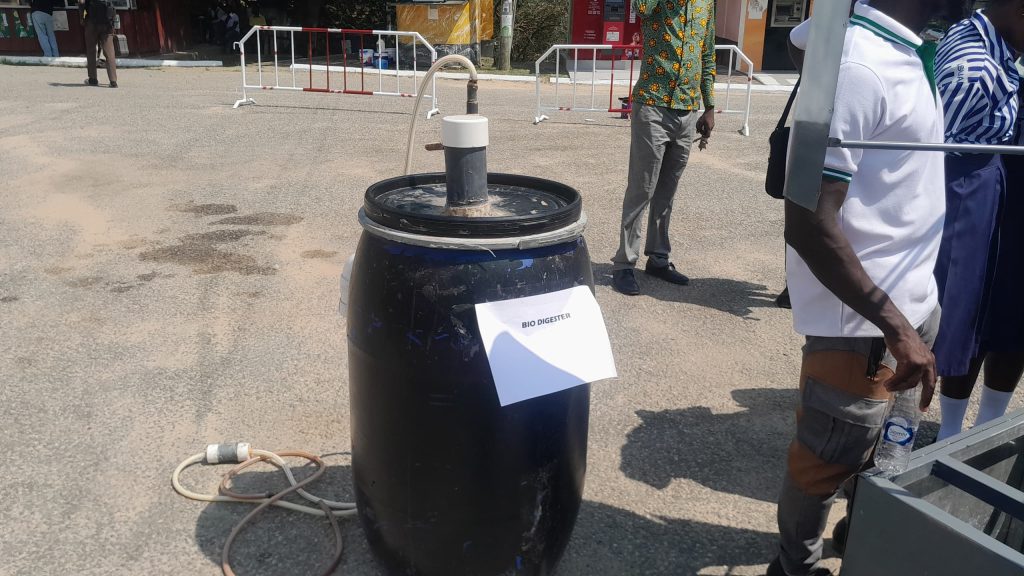
They included an electric motorbike, solar cooker, street sweeper, trailer, solar trike, solar wheelbarrow, solar refrigeration silo, solar food dryer, fufu pounding machine, bio-digester, bridges, and knockdown shelter for medical emergencies.
Also on display were artworks, customised souvenirs, amazing clothing designs, naturally processed foods, natural preservatives, weedicides, and pesticides, sanitary made from bamboo, plantain, and ginger fibres, among others.
The Mechanical Engineering Department which produced the solar trike, solar wheelbarrows, solar refrigeration silo, and prototypes were adjudged winners of the exhibition.
With the emergency knockdown shelter for Hospitals, the Construction Management Department came second while the Renewable Energy Department emerged third with its solar dryer and bio-digester.
Professor Kwaku Adutwum Ayim Boakye, the Vice Chancellor of the School, noted that the fair was an indication of their renewed commitment to aligning academic programmes, research and innovation with the needs of industry and the country.
He maintained that for Ghana to become truly developed, it needed to convert knowledge into real solutions and impactful products, stressing that the divide between research and practical application must no longer exist.
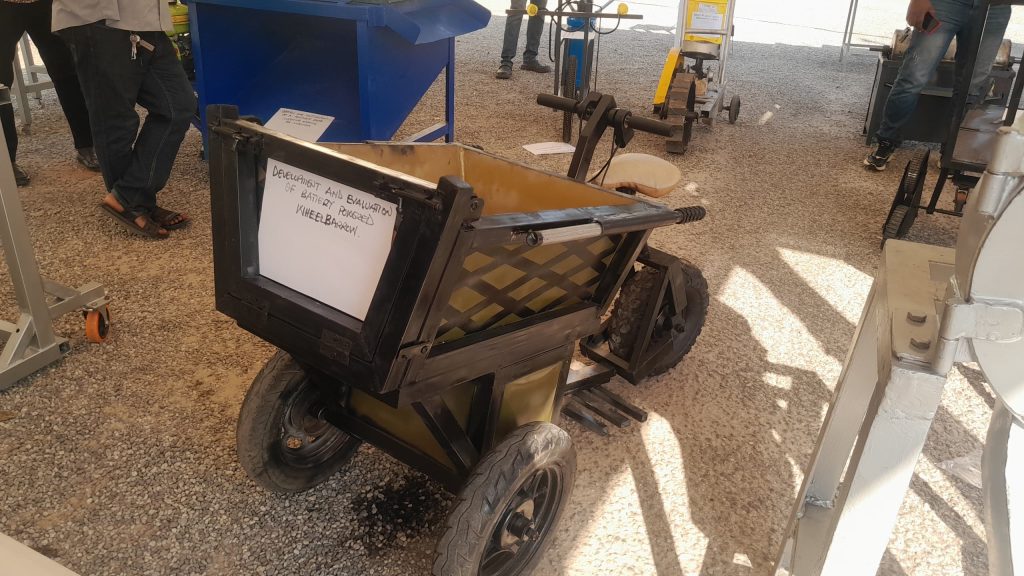
He indicated that the solutions and prototypes were not just for academic display but had been designed to be “practicable, scalable, market-ready and industry-relevant.”
To meet the demands of the 21st century, Prof Boakye, among other things, announced the completion of preliminary activities for the establishment of university-wide innovation hub.
“Next year, we will establish an omnibus modern multipurpose laboratory for all disciplines,” he added.
The Vice Chancellor expressed the school’s readiness to deepen partnership and collaboration with industry through joint research, industrial attachment, curriculum alignment and realignment and technology incubation.
Prof. Peter Appiah Obeng, Ghana Institution of Engineering, lamented the widening gap between industry and academia and called for urgent actions to bridge it.
He emphasised the need to redefine academic research to respond to the pressing challenges of industry.
He also called for reforms in academic incentives to reward innovation and practicality rather than mere publications.
“A lecturer who spends time helping a company solve a problem or who files a patent or starts a spin-off company may not be as much reward academically as one who publishes papers that probably did not translate into any real world application,” he observed.
Prof. Obeng further called on industry players to invest more money, time, expertise, mentorship, and partnerships in the universities to help produce an industry-ready workforce directly from the schools.
He entreated government and policymakers to create incentives such as tax breaks for companies which funded university research and other activities.
Ms Theresa Gabriel from the Department of Mechanical Engineering, winners of the exhibition, explained to the Ghana News Agency that the solar-powered refrigeration silo was designed to mitigate post-harvest losses of perishable crops, particularly in rural communities where electricity was lacking.
She was hopeful that when the project was eventually scaled up and commercialised, it would drastically reduce post-harvest losses in rural communities.
For her part, Ms Emelia Addy from the Department of Food Science and Post-harvest Technology, said the lack of investments was a major impediment.
In particular, she said they needed a grant to procure machinery to produce their biocare sanitary pads on large scale to end menstrual poverty.
“Right now, we are looking for investors and grants to scale up because we know the potential in our innovation.
“We have gone for competitions and written a lot of applications for funds and sponsorship, but the responses have not been very favourable.

“If we can get someone to give us a grant to purchase the machines, we can do more to address the challenge,” she said.
GNA