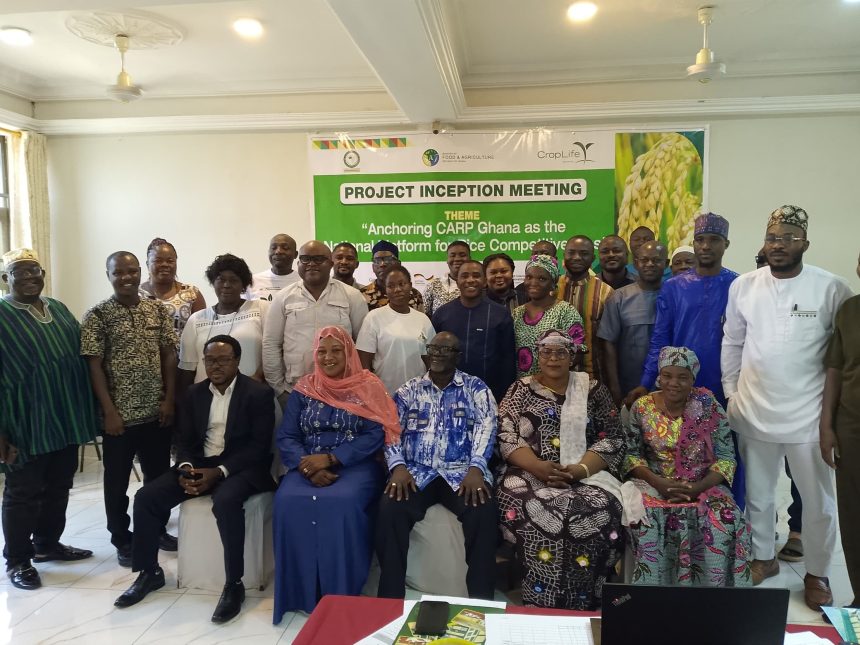
The Competitive African Rice Platform (CARP) Ghana has launched a three-year project aimed at strengthening the competitiveness of the country’s rice sector through enhanced market systems, institutional coordination, and private sector participation.
The project, dubbed “Anchoring CARP Ghana as the National Platform for Rice Sector Competitiveness,” seeks to position CARP Ghana as a central convener of actors across the rice value chain while driving inclusive growth and sustainable investments.
The initiative is being implemented with funding support from AGRA through the Bill & Melinda Gates Foundation.
The project spans all major rice-producing regions in Ghana and is expected to directly benefit about 25,300 stakeholders. These include 150 CARP Ghana member organisations—comprising processors, traders, millers, and service providers—as well as 150 small and medium-sized enterprises within the rice value chain.
Additionally, 20,000 smallholder farmers linked to structured markets and 5,000 women and youth entrepreneurs will receive targeted support through inclusive business models under the project. An estimated one million rice consumers are also expected to benefit indirectly through improved product quality, branding, and affordability.
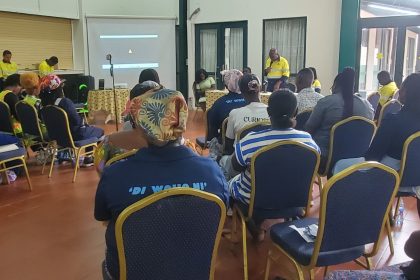
Mr. Victor Nantari, Market Systems Specialist at CARP, presenting the project scope during an inception workshop in Tamale, indicated that CARP Ghana would adopt a market systems development approach focused on catalysing long-term transformation rather than direct service delivery.
He explained that the project would facilitate the development of a private sector-driven platform to promote inclusive and competitive market growth while strengthening CARP Ghana’s institutional capacity and financial sustainability.
Mr Nantari noted that the initiative would also institutionalise regular policy and business dialogues among government, private-sector actors, and farmer organisations to improve coordination and information flow within the rice sector.
He added that the project would establish a facilitated market-engagement mechanism to deepen interaction among market actors, operationalise a market-intelligence system to guide investment decisions, and strengthen business-to-business linkages.
Mr. Habibu Mohammed Abdulai, National Coordinator of CARP, said the project would build CARP’s capacity in coordinating stakeholders across the rice value chain and position it as a key advocate for policy alignment with regional frameworks such as the ECOWAS rice development strategy.
Meanwhile, CARP Ghana used the inception workshop to elect new executives and board members to steer the affairs of the platform.
Dr. Charles Kwowe Nyaaba, a key stakeholder in the rice sector, underscored the importance of collective action in addressing industry challenges. He noted that CARP plays a critical role in representing Ghana’s rice value chain at the regional level and facilitating interventions such as capacity building, market linkages, and advocacy for infrastructure investments.
Dr. Nyaaba expressed optimism that effective implementation of the project would significantly improve the livelihoods of smallholder farmers and rice millers across the country.
Ms. Sepenica Darko, Team Lead at FarmerTribe, representing the North East Regional Rice Value Chain Platform, also lauded the initiative, stating that it would help address persistent challenges facing rice farmers, particularly in underserved regions.
She expressed confidence that the project would enhance productivity, market access, and overall resilience within the rice value chain.