
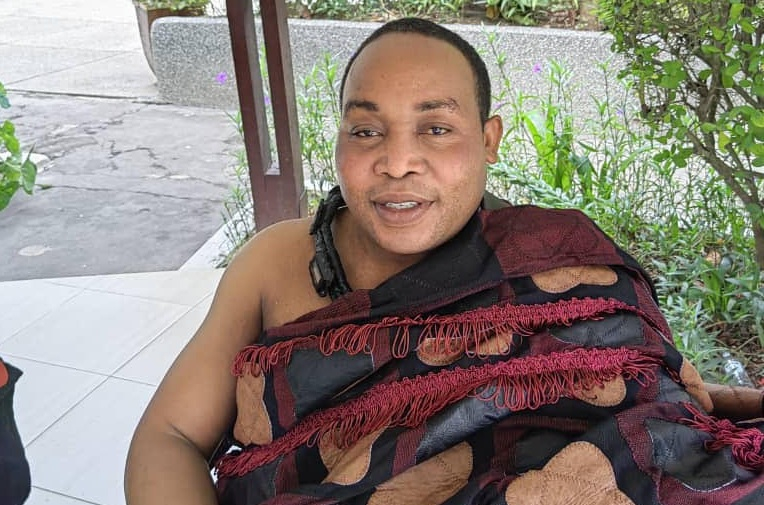
Nene Tetteh Osabutey Lanuer Okumo, Divisional Chief of the Dangmebiawe Clan, has called for an end to political interferences in chieftaincy matters, as they undermine the authority of traditional leaders and stall development in traditional areas.
Nene Okumo said persistent disputes within the Ada State have delayed progress and weakened unity, adding that the increasing politicisation of chieftaincy issues erodes public confidence in traditional institutions.
Nene Okumo made the call in an interview with the Ghana News Agency (GNA) at Big Ada, following a ruling by the Judicial Committee of the Greater Accra Regional House of Chiefs (GARHC), which annulled an earlier decision by the Ada Traditional Council (ATC) affirming his installation as Divisional Chief.
In a 17-page ruling, the Judicial Committee ordered a fresh hearing of the matter, stating that the ATC process breached the principles of fairness, noting that “the plaintiffs were not granted full opportunity to prove their case.
Responding to the judgement, Nene Okumo emphasised that the decision did not revoke his gazette nor restrain him from carrying out his duties, explaining that the case had been referred to the ATC for rehearing, and urged members of the Dangmebiawe Clan and the broader Ada community to remain calm and allow the due process to continue.
He assured the public of his respect for traditional institutions, stating that he was fully prepared to participate in the rehearing as directed by the GARHC.
He added that his focus remained on unity, stability, and the welfare of the Dangmebiawe Clan.
Nene Okumo noted that if the rehearing results in an unfavourable decision for him, he would pursue legal and procedural avenues for redress, underscoring his commitment to peaceful, lawful, and structured resolution rather than confrontation.
“The name Ada has gone far; Ada has existed for over 400 years. The development of this area is long overdue. The politics is too much,” he told the GNA.
He further observed that distorted historical narratives often contribute to conflicts among chiefs and called on traditional leaders, and their subjects to uphold peace, honesty, and mutual respect to accelerate development across all traditional jurisdictions.