
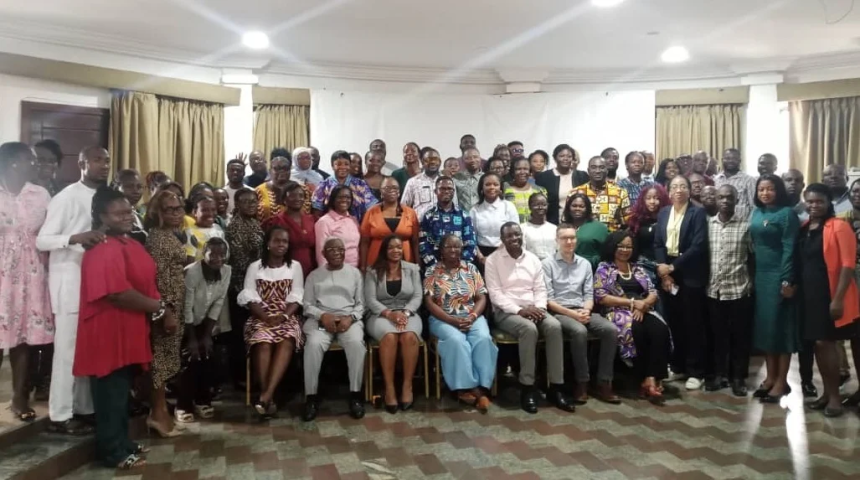
The Community-led Responsive and Effective Urban Health Systems (CHORUS) has urged policymakers to devise different approaches in the delivery of urban health.
This will also ensure health systems work across sectors, not in isolation.
Professor Helen Elsey, the Research Director of CHORUS and Prof of Global Public Health at the University of York, UK, said it was also relevant for private and informal health providers to be part of the solutions for a drastic change in health systems, especially in West Africa.
Prof Elsey made the call in an interview with the Ghana News Agency during a two-day Evidence to Impact Policy event held in Accra.
It was on the theme “Urban Health Systems: Research Evidence to Inform Urban Health Policy and Systems in West Africa”.
She said with Africa and Asia expected to absorb most of the world’s urban population growth, the stakes could not be higher.
“This is not business as usual,” the researcher emphasized. “If we want healthier cities, we must design health systems that reflect how people actually live, move and seek care.”
“For Ghana — and countries like Nigeria, Nepal and beyond — the evidence is clear. The future of health lies in cities, and the time to act is now,” she stated.
Prof Elsey advised governments to make communities central, not invisible and integrate CHORUS evidence into ongoing reforms and strategies aimed at improving PHC delivery and urban health equity.
She also commended the Ministry of Health and the Ghana Health Service for the introduction and implementation of the Network of Practice to improve healthcare delivery in the country.
The Network of Practice (NoP) seeks to strengthen primary healthcare by linking sub-district health centres (“hubs”) with community-based facilities. This initiative aims to achieve Universal Health Coverage (UHC) by 2030 by improving referral systems, enhancing quality of care, and reducing overcrowding at district hospitals.
The event saw researchers from Ghana, Nigeria, Bangladesh and Nepal share findings on various topics in health systems to learn from each other strengthen their urban health systems.
The CHORUS Research Consortium is a multi-country research initiative funded by the UK Foreign, Commonwealth and Development Office (FCDO).
Over the last six years, CHORUS has worked across Bangladesh, Ghana, Nepal, and Nigeria to address persistent barriers to equitable and resilient urban health systems in low- and middle-income settings.
In Ghana, the project focused on urban Primary Health Care strengthening in Ashaiman and Madina Municipalities within the Greater Accra Region.
It also witnessed key decision-makers engage including Ministry of Health leadership, GHS directors, municipal health authorities, and development partners, facilitate high-level dialogue on the implications for national policy and medium-term health sector planning, among others.
Dr Dominic Dormenyo Gadeka, Health Policy and Systems Specialist and Researcher University of Ghana School of Public Health and CHORUS Researcher and Team Lead, highlighting some key research activities they have embarked on over the period called for stronger multi-sector collaboration to Improve urban health outcomes.
He said the importance of conference was to ensure they break the silos in policymaking to generate practical, cross-sector solutions.
Dr Gadeka said “Health cuts across everything—what we eat, what we breathe, how we live, agriculture, education, finance, transport, and urban planning all have roles to play. Without inter-sectoral and intra-sectoral collaboration, progress will be slow.”
While rural health has historically received attention, the expert warned that the health of the urban poor was often worse than that of rural populations.
“There must be a deliberate effort to design policies that target the urban poor, adding that urban primary healthcare needs urgent attention,” he added.
The researcher called for strengthened urban primary healthcare, more community health workers, improve capacity of health workers and people-centred policies that leave no one behind.