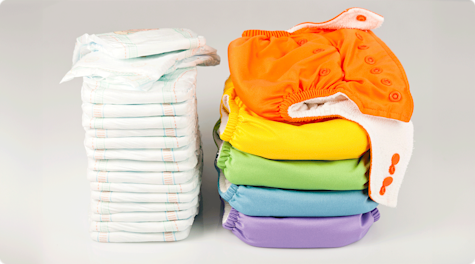
The use of traditional cloth napkins for babies is steadily declining in many communities as more mothers turn to disposable diapers and baby wipes for convenience and hygiene.
For decades, cloth napkins served multiple purposes beyond basic hygiene. Many mothers recall that washing and drying napkins in open spaces was a subtle way of informing neighbours and relatives that a new baby had arrived.
While cloth napkins were once a common and essential item for newborn care, their use is now largely associated with older parenting methods.
A random survey conducted by the Ghana News Agency (GNA) in Nungua indicated a noticeable shift in childcare practices, particularly among young mothers, who preferred modern alternatives, and older women, who preferred the cloth napkins.
Madam Efua Mensah, a teacher and a mother of four who raised her older children using cloth napkins, explained that the practice was both economical and culturally significant and said the napkins could be washed and reused for years, often passed down from one child to another within the same family.
According to her, although the washing process was time-consuming, it helped families save money, saying that the visibility of drying napkins created a sense of community awareness and support, as neighbours would often visit to offer assistance or share in the joy of childbirth.
Madam Juliana Lawer, a baobab drink seller and experienced mother, noted that cloth napkins were more environmentally friendly than disposable diapers, which did not contribute to waste accumulation, admitting, however, that maintaining them required constant washing, especially during the rainy season when drying could be difficult.
In contrast, some mothers who have transitioned to disposable diapers said the benefits outweigh the cost.
Madam Linda Owusu, a first-time mother, said diapers have made childcare significantly easier, explaining that with her busy schedule, she could not manage frequent washing and drying of cloth napkins.
She added that disposable diapers were more absorbent and reduced the risk of frequent skin irritation when used correctly. Although she acknowledged that the cost was high, she believes the convenience justified the expense.
Madam Grace Appiah, a seamstress, said that diapers had improved hygiene and reduced stress, especially during nighttime care, and said that baby wipes had also made cleaning faster and more efficient compared to traditional methods.
She, however, expressed concern about the long-term financial burden, noting that regular purchase of diapers and wipes strained household budgets.
Mrs Doris Amanquah, a trader, said she balanced both options by combining traditional and modern methods to suit their needs and mentioned that she used cloth napkins when she was home and diapers when going out.