A coalition of Civil Society Organisations has commended the Government and Parliament for revoking Legislative Instrument 2462, which permitted mining in forest reserves.
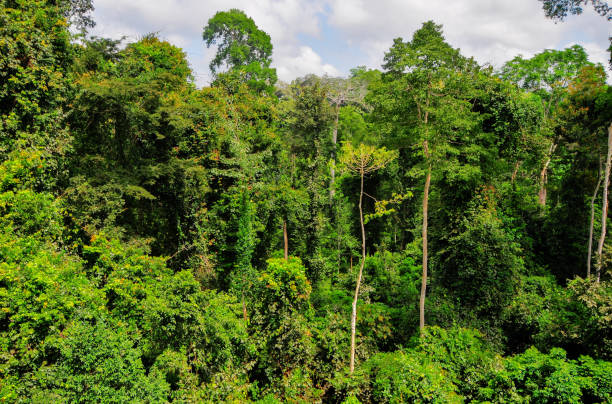
The 17 CSOs, in a joint statement copied to the Ghana News Agency, said the regulation exposed Ghana’s forest reserves, including Globally Significant Biodiversity Areas, to severe mining risks, describing its revocation as a “significant and progressive” step.
The Coalition said the repeal marked one of the most significant and progressive legislative reversals in Ghana’s recent environmental history.
“Civil society groups, at home and abroad, see this step as a decisive move toward restoring the integrity of Ghana’s fast-depleting forest estate,” it said.
The statement said the introduction of L.I. 2462 in 2022 undermined long-standing sustainable forest management efforts and contradicted Ghana’s Forest Development Master Plan (2016–2036), which sought to phase out all mining in forest reserves by 2036.
It said prior to 2022, only two per cent of gazetted production forest areas were opened to mining for a limited number of large-scale companies, while 98 per cent remained protected.
“Under L.I. 2462, 89 per cent of forest reserves became exposed to mining, resulting in unprecedented direct and indirect pressure on forest reserves, with over 50 out of 288 forest reserves seriously under siege from mining interests,” the Coalition said.
It said even after the 2025 amendment of L.I. 2462, about 80 per cent of forest reserves still faced significant risk, adding that the revocation should signal renewed commitment to partnerships and collaboration to protect Ghana’s forest ecosystems.
The Coalition urged President John Dramani Mahama to fulfil the pledge to review Act 703 to explicitly prohibit mining in forest reserves and ensure a shift towards mining practices that avoided forest destruction, biodiversity loss and environmental degradation.
“It is time to grow back Ghana’s forests. We therefore urge priority action to develop and implement a National Forest Protection Strategy in collaboration with national and international partners,” it said.
The statement said although L.I. 2462 had been revoked, persistent encroachment from artisanal mining, poaching and illegal logging continued to degrade forests and required urgent attention.
“Ensure that the ‘Tree for Life’ programme targeting forest reserves is well coordinated and fully implemented so that it genuinely contributes to forest restoration rather than serving as rhetoric,” the Coalition said.
It added that degraded areas outside forest reserves caused by mining should be mapped and restored to improve forest cover, biodiversity, and carbon dioxide sequestration.