At the forecourt of the historic Elmina Castle, where the Atlantic Ocean meets centuries of painful slave history and coconut trees sway gently in the coastal breeze, conch shells are being transformed into vessels of memory, hospitality, and artistic expression.
Arranged beneath trees and on open ground, some still bearing barnacles from the sea, the shells reflect coastal life and storytelling, standing in quiet contrast to the everyday activity around the castle, one of Ghana’s most visited heritage sites.
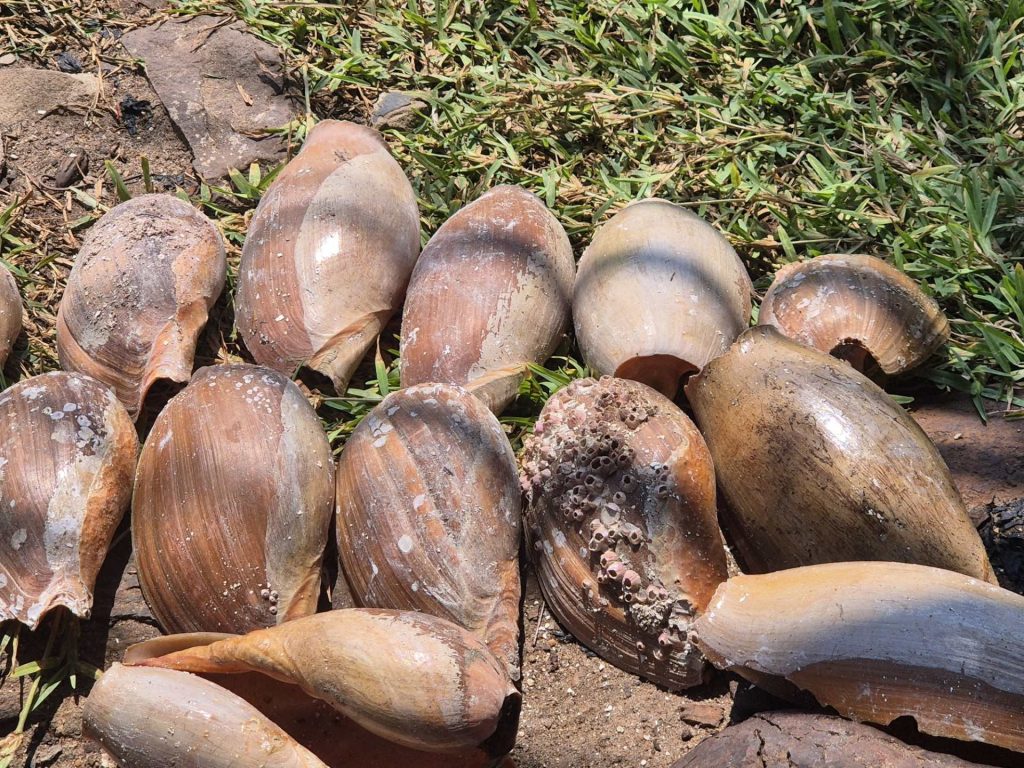
Mr Andrews Arkorful, a native of Elmina, told the Ghana News Agency (GNA) that the large sea snail shells are brought ashore by fishermen after the snails are removed for food.
“When the shells come from the sea, we scrub them on the sand with force to bring out their natural colour. We don’t apply any polish,” he explained.
He said the edges of the shells were later shaped with pavement blocks, leaving them raw and authentic, much like the painful history preserved within the walls of Elmina Castle.
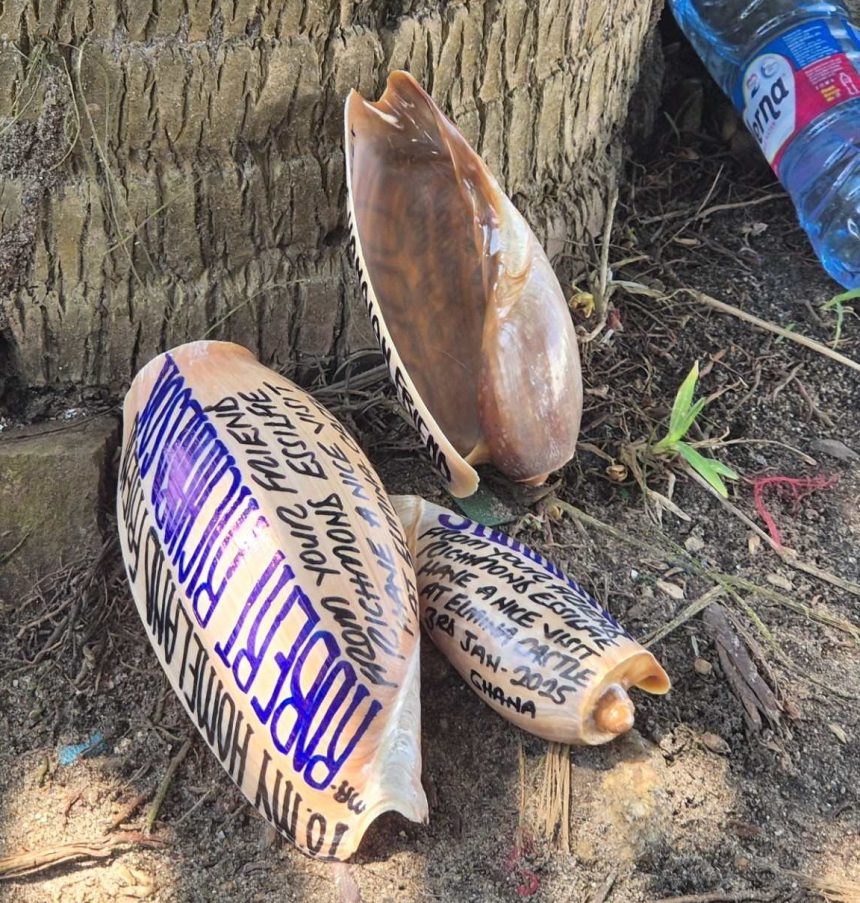
The GNA observed that some of the shells are inscribed with personal messages, names, and dates, turning them into souvenirs for visitors.
Messages such as “To my homeland friend Laudia, from Andrews: have a nice day at the Elmina Castle” reflect the emotional connections forged at the site.
Mr Arkorful explained that the young men usually approach tourists at the castle car park to welcome and engage them in conversation, asking for their names.
Upon the tourists’ return from the castle tour, they surprise them with a customised shell souvenir at no cost before introducing other handcrafted artefacts available for sale.
Beyond serving as an entry point for marketing their products, the initiative reinforces Ghanaian hospitality and leaves visitors with a lasting memory of their visit to Elmina.