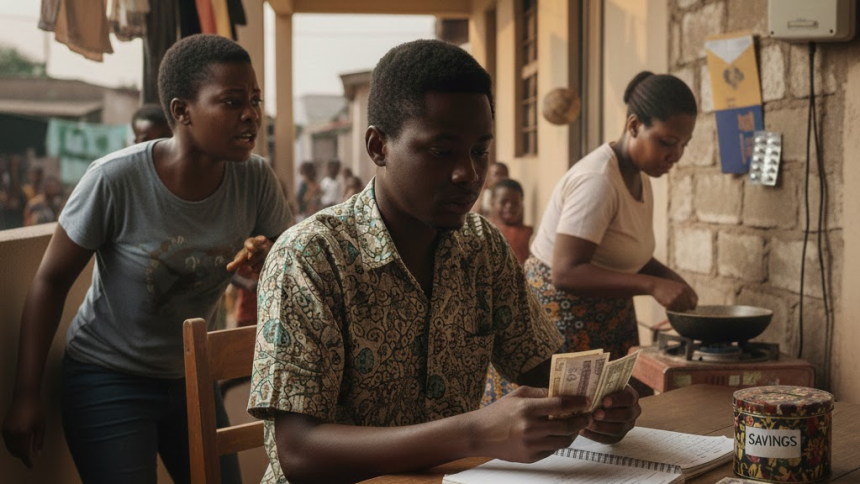
For many Ghanaian households, financial emergencies are not rare events. A sudden illness, an unexpected funeral, a major car repair, or a surprise school-related expense can arrive at any moment. These disruptions often force people to borrow at high interest, dip into business capital, or drain the little savings they have managed to build.
The idea of an emergency fund — money set aside strictly for unexpected situations — has become more important as economic pressures intensify. But what does an emergency fund look like in the Ghanaian context, where incomes vary widely and costs rise unpredictably? And where should this money be kept to ensure it’s both safe and accessible?
A closer look shows that building a workable emergency fund in Ghana requires a strategy that fits the country’s realities, not imported financial formulas.
Why emergency funds matter more in Ghana
In many economies, emergencies are occasional shocks. In Ghana, they are recurring features of life. Healthcare costs are substantial even with insurance, vehicle maintenance is unpredictable, housing-related expenses can be sudden, and extended family obligations arrive with little notice.
Without a dedicated buffer, these moments quickly unravel financial stability. People who appear financially comfortable can become vulnerable within weeks if they rely solely on borrowing or last-minute improvisation.
An emergency fund acts as a shock absorber. It prevents short-term disruptions from becoming long-term financial setbacks and protects savings intended for other goals, such as education, business expansion, or home building.
How much is enough? It depends on your life situation
Global financial advice often suggests saving three to six months of living expenses. While this is ideal, it is not always realistic for the average Ghanaian earner. A more practical approach is to build the fund in stages, based on one’s income, family responsibilities, and job stability.
Stage one: Start with one month of essential expenses
This is the foundation: money to cover food, rent, utilities, and transport for a month. Even this small cushion can prevent reliance on mobile loans or high-interest borrowing when a crisis hits.
Stage two: Aim for three months
For salaried workers or those with relatively steady income, three months provides a reasonable safety net. It buys enough time to recover from job loss, illness, or major household repairs.
Stage three: Six months or more for higher-risk situations
Self-employed individuals, freelancers, and informal sector workers face higher income volatility. They benefit from a larger emergency fund, especially if they support extended family or run businesses that depend on daily cash flow.
The specific amount will differ from one household to another, but the underlying principle is the same: build gradually, celebrate progress, and adjust as income or responsibilities change.
Where should Ghanaians keep an emergency fund?
An emergency fund should be accessible, safe, and separate from everyday spending. In Ghana, this means choosing a place that protects the money from impulsive use while allowing quick withdrawal when a true emergency arises.
- A dedicated bank savings account
A basic savings account with no linked ATM card helps create a psychological barrier against unnecessary withdrawals. Choosing a bank with stable digital platforms makes it easier to access funds when needed.
Pros: secure, regulated, easy to track
Cons: low interest, temptation if linked to mobile money
- A regulated digital savings platform
Several fintech platforms allow users to automatically save small amounts daily or monthly. Some provide higher interest than traditional banks.
Pros: convenient, encourages discipline
Cons: always confirm regulation and licensing; avoid platforms promising unusually high returns
- Money market or Treasury bill–based funds
These funds invest in short-term government securities, offering safety and moderate returns while allowing withdrawals with notice.
Pros: better returns than basic savings accounts, low risk
Cons: may require one to three days’ notice to access funds
- Short-term Treasury bills (91-day, 182-day)
Treasury bills remain one of the safest ways to store money in Ghana. While not instantly accessible, they protect funds from inflation better than ordinary savings.
Pros: secure, government-backed
Cons: access only at maturity unless sold early at a discount
- Trusted susu or micro-savings groups
Traditional susu systems still provide structure for people who struggle to save alone. However, they work best when managed by trustworthy, well-established collectors or groups.
Pros: culturally familiar, encourages discipline
Cons: vulnerable to misuse if not properly managed or regulated
Where not to keep an emergency fund
An emergency fund should not be placed in investments that are risky, illiquid, or easily influenced by emotions. This includes real estate contributions, long-term mutual funds, high-risk online schemes, business capital, or family-held money pools with no accountability.
If the money cannot be quickly accessed or could lose value suddenly, it does not qualify as an emergency fund.
How to start, even if money is tight
One misconception is that an emergency fund requires a large starting amount. In reality, most Ghanaian households build theirs slowly, sometimes with as little as GHS 20–50 a week. The key is consistency.
Automating transfers after payday helps. So does treating the emergency fund as a non-negotiable bill. Even small contributions accumulate into meaningful protection over time.
The peace of mind that comes with a buffer
An emergency fund does not stop crises from happening. It simply ensures they do not derail everything else. For many Ghanaians, it reduces dependence on mobile loans, prevents the erosion of savings meant for other goals, and lowers stress during difficult periods.
In an economy where uncertainty is part of daily life, an emergency fund is not just a financial tool. It is a form of quiet resilience — a deliberate act of preparing for the realities that every household eventually faces.
It is, in many ways, the first step toward financial stability in Ghana’s unpredictable economic climate.